Picture Book Nook: One Little Fantail by Anne Hunter, illustrated by Dave Gunson

There are some wonderful books that have been published about New Zealand birds, especially Ben Brown and Helen Taylor’s picture books.  There are very few, however, that are perfect for younger children and wonderful to read aloud.  One Little Fantail by Anne Hunter and illustrated by Dave Gunson is one of those books that entertains and informs young children about New Zealand birds.

One Little Fantail is a collection of delightful rhymes that introduce children to a variety of our native birds.  Anne Hunter’s rhyming text is a joy to read aloud and each poem rolls off your tongue.  I love the way that Anne can describe so much about each bird’s characteristics in just eight lines. The short, rhyming text makes the book perfect for sharing with younger children, as they don’t get bogged down in detail. You could get children to pretend to be each bird, based on the description that Anne gives you of each one.  For those inquisitive children, there are more interesting facts about each bird in the ‘Did you know…’ pages at the back of the book.

Each double page spread features a different bird, with their name in English and Maori.  Dave Gunson’s realistic illustrations are stunning and he perfectly captures the characteristics of each bird.  He captures the mischief of the Kea, the flitting of the Fantail, and the fierceness of the Kahu.

Book Design have done a brilliant job of designing One Little Fantail.  I especially like the way that the names of the birds fade into the background, while also being quite prominent on the page, and the way that the sounds each bird makes stands out in bold lettering.

One Little Fantail is a book should be in every preschool and school around the country.  Grab a copy and introduce your children to our magnificent native birds.

Children’s Laureate Malorie Blackman talks about Noble Conflict

Years after a violent war destroyed much of the world, Kaspar has grown up in a society based on peace and harmony. But beyond the city walls, a vicious band of rebels are plotting to tear this peace apart. It is up to the Guardians – an elite peacekeeping force – to protect the city, without ever resorting to the brutal methods of their enemy.

When Kaspar joins the Guardians, he has a chance encounter with a rebel – a beautiful girl named Rhea. Haunted from that moment on by strange visions and memories – memories that could only belong to Rhea – he realises he hasn’t been told the truth about what the rebels really want, and what he’s really fighting for.

Jonathan Stroud talks about his new series, Lockwood & Co.

When the dead come back to haunt the living, Lockwood & Co. step in . . .
For more than fifty years, the country has been affected by a horrifying epidemic of ghosts. A number of Psychic Investigations Agencies have sprung up to destroy the dangerous apparitions.

Lucy Carlyle, a talented young agent, arrives in London hoping for a notable career. Instead she finds herself joining the smallest, most ramshackle agency in the city, run by the charismatic Anthony Lockwood. When one of their cases goes horribly wrong, Lockwood & Co. have one last chance of redemption. Unfortunately this involves spending the night in one of the most haunted houses in England, and trying to escape alive.

Set in a city stalked by spectres, The Screaming Staircase is the first in a chilling new series full of suspense, humour and truly terrifying ghosts. Your nights will never be the same again.

The first book in Jonathan Stroud’s new series, Lockwood and Co., The Screaming Staircase, is one of my most anticipated books of 2013.  It sounds absolutely fantastic!  I loved Gareth P. Jones’ Constable and Toop and The Screaming Staircase sounds like a similar sort of story.  Ghosts and supernatural detectives – what more could I want?
The Screaming Staircase is due out in NZ on 20 September 2013.

Shuan Tan talks about Rules of Summer

I’m a huge Shaun Tan fan so I really can’t wait until October when Shaun’s latest picture book is released. The sample illustrations that have been released look amazing and it sounds like another wonderful Shaun Tan book.

Rules of Summer is available in New Zealand from 8th October 2013.

Check out the Rules of Summer website – www.rulesofsummer.com.au

On the road with the Canterbury NZ Post Children’s Book Festival Roadshow

Last week I spent the week out on the road with two awesome librarians, Saskia Hill and Susan Dodd, as part of the Canterbury NZ Post Children’s Book Festival Roadshow.  We decided that this year, we wanted to talk about and read the finalist books to as many children as we possibly could over the course of the Festival week.  We battled heavy rain, flooding, horrible traffic and a flat tyre to deliver our Roadshow to the kids of Canterbury.  We visited 11 schools, 13 preschools, presented 2 Books Before Bedtime Pyjama Parties and read to over 6000 children over the course of the week.

Part of our programme was performing Margaret Mahy and Gavin Bishop’s wonderful picture book, Mister Whistler.  I danced around as Mister Whistler, while Saskia read the book and got the kids interacting with the story.  Here’s a couple of photos of my performance.

It was an awesome experience and something that we hope to repeat again next year.  These were my highlights of the week:

  • Dressing up as Mister Whistler and dancing around while taking my clothes on and off.
  • Giving away heaps of copies of Kyle Mewburn’s Melu and Rachael King’s Red Rocks to kids all around Canterbury and seeing their faces light up.
  • Seeing kids so eager to answer questions about the finalist books so they can win a bookmark.
  • Meeting lots of enthusiastic teachers and librarians who love books.
  • Reading and talking about books with kids of all ages and doing it all with one of the coolest people around, Saskia Hill.

Here is a small selection of our photos from the week:

Best of luck to all the authors and illustrators on the shortlist for the awards.  I’m really looking forward to going to the awards ceremony here in Christchurch tonight.  I’ll be live Tweeting from the event so if you want to know the winners first, follow me – @zackids.

David Levithan and Andrea Cremer talk about Invisibility

http://www.youtube.com/watch?v=7NuZx-Wz3TI

This book sounds amazing and I’m a huge fan of David Levithan, so I will get this book the minute it’s released!  Invisibility by David Levithan and Andrea Cremer is released in NZ by Penguin Books in July.

Interview with Mandy Hager

Mandy Hager is the author of some of the best Young Adult books in New Zealand, including the action-packed The Nature of Ash (shortlisted for the 2013 New Zealand Post Children’s Book Awards).  Mandy’s latest YA novel is Dear Vincent, one of the most powerful and emotionally-charged books I’ve ever read (you can read my review here).  I had a few questions for Mandy after reading Dear Vincent and she very kindly answered them for me.  You can also enter to win a copy of Dear Vincent and read an extract from chapter one at the bottom of this post.  Thanks to Mandy and the wonderful people at Random House New Zealand.

  • What inspired you to write Dear Vincent?

It’s always hard to look back and focus on the starting idea, but I’ve been thinking about the issue of suicide for a while now, through my work with youth at risk, and wanted to send a book out into the world that showed the long term pain suicide brings to those left behind, and to explore the seduction of the idea, and how it is possible to resist, given the right support. The problem with the current ‘don’t talk’ policy around suicide is that kids only get to see the outer manifestations of grief when someone they know kills themselves – the memorial pages on facebook, the highly emotional services – it runs the risk of making suicide seem ‘sexy’ to young people – a kind of ‘you’ll all be sorry and celebrate me like this when I’m gone’ mentality. It also denies those who have contemplated or attempted suicide a voice to say how relieved they are that they didn’t go through with it – and to share the things that helped stay their hands. And I wanted to show that suicide leaves the surviving family with such terrible guilt and grief – for kids to understand the full impact of a suicide on those left behind. I wanted to de-glamourise it – so that it underlines the finality of such a decision – that ‘dead’ means ‘dead’ – no going back, no second thoughts.

I also love Vincent Van Gogh – so it was a perfect opportunity to explore his life and paintings more fully.

  • You tackle some tough issues in the book, including suicide and physical and emotional abuse.  Was it a story you felt you had to tell?

Yes, it’s been in the back of my mind for a long time now.

  • What research did you have to do for the book? What was the most interesting thing you discovered about Vincent Van Gogh?

Van Gogh’s letters are now available online – over 900 of them, so I worked my way through them and also some biographies and documentaries (plus, I had studied him for art history at school many hundreds of years ago!) The first thing that surprised me was just how elegant and literate he was – he’s often made out to be this crazy, rough, boorish man, when nothing could be further from the truth. His letters are beautiful, vivid and incredibly sad. The other really surprising thing was the discovery, through the most recent biography of him by Steven Naifeh and Gegory White Smith, that it is highly likely Van Gogh did not kill himself, but was shot by local boys – though, once shot, he then kept quiet about this act and died in his brother Theo’s arms (in other words, not instigating the act, but not fighting it either.) So it was suicide by omission to fight his injuries or reveal their source. The biography’s evidence for this case is very convincing. Plus, it illuminates more about what was going on in Vincent’s head – for a long time it was thought he was bi-polar, now it seems more likely it was a kind of temporal lobe epilepsy that would descend upon him.

  • One of the things I like the most about your books is that your characters are authentic and they feel real.  Have you ever been challenged by the ‘gatekeepers’ of young adult fiction because of your characters actions or language?

I haven’t been challenged on this in person, but I am sure there are some people who find the language and issues difficult. All I try to do is be faithful to the character and reflect how I believe they would truly talk, feel and respond.

  • There are some very raw emotions in the story and Tara goes to some quite dark places in her head.  Did you need to get into the right head space each time you sat down to write or was Tara always with you?

I always sit and centre myself before I write each day, calling the character into my mind. However, there always reaches a point where the character is there all the time until you finish writing – consequently this was a particularly exhausting and grueling book to write. Being inside Tara’s head was an intense experience.

  • I love the character of the Professor (Max). How did he come to you?

Max is, in many ways, my father. He, too, was born in Vienna. He, too, was forced to leave with his parents to escape the Nazis. He introduced us to art, music and literature (as did my mother), and was a charming, cultured and kind man.

  • Like Tara, does ‘art in all its forms’ have you in its grip?

It most certainly does!

  • Do you have a ‘teen test’ for your books during or after you’ve written them?

My first reader, chapter by chapter, is my daughter Rose. She is incredibly good at spotting anything that jars or doesn’t have an authentic ring. I also send the finished draft out to my niece as well (along with several other adult readers) – their feedback is always most welcome and useful.

  • Why do you write books for teenagers? What is it about YA that appeals to you?

I think what I like most about YA fiction is that it focuses on strong story and authentic characters. It also appeals to me in terms of who I am writing for – as I tend to write about the things that trouble me, and this primarily is around issues that will affect the up-and-coming generations, it gives me the opportunity to start a discussion with young people about the different ways to look at the world and the challenges they are/will be presented with. So much media these days is controlled by corporate interests I feel it’s important to get alternative thoughts and ideas out there. I strongly believe that only through honest discussion of issues can we ever hope to move forward in a positive way.

Read on for an extract from Dear Vincent.

1

Whenever I tell Father anything, it goes in one ear and out the other, and that certainly applies no less to Mother. Similarly I find Father and Mother’s sermons and ideas about God, people, morality and virtue a lot of stuff and nonsense.

— Letter from Vincent Van Gogh to Theo Van Gogh, Etten, c. 21 December 1881

My father slouches in his wheelchair, a dough ball of resentment. Only the fierce penetration of his eyes registers life behind his rigid face. If he moves at all it is involuntary. The twitch of a finger. The jerk of a leg. But for all his immobility, his presence still looms over us. The gargoyle in the corner. The silent judge.

There is a gritty meanness in his eyes sometimes. Or worse, bottomless sadness — the kind that rakes your soul. Though more often than not these days, anger flares: embers trapped within an iceberg. He is living the inflexibility he’s practised all my life.

Even as I finish hanging out the washing and tilt my face up to the morning sun, I know he will be waiting for me to feed him, wash his face, brush his teeth — all before I have the luxury of heading off to school. Luxury? It’s funny how perspective shifts.

Buttered light filters through my eyelids and I hold my breath, waiting, waiting, waiting, with a sense there’s something I should know. It teases at my memory. Tickles at my nose. I crack one eye open and there’s the clue: a butterfly, chalky white, its tiny dome eyes staring straight back into mine. Of course! How could I forget?

It’s Van’s birthday. The 11th of June. She would be twenty-two today. So old. It’s hard to picture how she’d look. Beautiful? Without a doubt. Respectable? Not for a second. Not my Van. The odds that she’d have turned into a merchant banker, IT nerd or anything, in fact, where she’d have to toe the line are about two billion to one.

Meanwhile, my own life’s reduced to a different numbers game. Nearly six years since Dad’s first stroke. Just under five since we were woken by that gutting midnight call. Three since Mum was forced to take on night shifts at the hospital to pay the mortgage on this shitty hole. One since I began to work half-time to help. And the amount of time I get to lead a normal life? No whole number’s small enough.

‘Tara?’ Mum’s shout repels the butterfly. It flutters off, a ghost adrift. ‘Don’t forget to take the shopping list. I’ll pick you up outside Countdown at ten to nine.’

Does she remember it’s Van’s birthday? Surely she must. But Mum’s declared everything about my sister a no-go zone — as if by refusing to speak of her the past can somehow be erased. If only it was so easy.

Inside, I shoo Mum off to bed before I start on Dad. Her shifts play havoc with her sleep patterns — and her moods. She’s turned into one of those wizened peasants Vincent loved to paint: a small grey shadow, sour and disconnected, all joy in life sucked out of her.

While I’m waiting for Dad’s porridge to cook I eat the last of the bread, sandwiching a scummy wedge of budget cheese. Our cupboards will stay bare until I’m paid later today and do the shop. When we were small, the only time Mum used to make a fuss was over birthday breakfasts: an Ulster fry with bacon, eggs and sausages, and golden crisp potato farl. Now the only fuss she makes is the kind I hate — the kind Van called Mad Cow Disease to wind her up.

I mince Dad’s morning medication into dust and smother it with yoghurt. Pop it in his drooping mouth, scraping the teaspoon across his lips to catch the overflow before I stuff the dregs back in. He shudders as he swallows, his eyes saying it’s my fault that it tastes like shit. I help him drink a sip of water, then cool his porridge with milk and coax it in, one spoonful at a time. I know I should be chatting to him, helping pass the time, but, really, what is there to say? Do you know what day it is? Does the thought of Van thump you in the guts like it does me? Even if he could answer, he’d only throw it back at me. Wind yer neck in, girl. You’ve got a face on like a Lurgan spade.

By the time I’ve finished everything with Dad I’ve less than half an hour to get to school. Who’d have thought I’d ever want to spend more time there, but with my rest home shift starting at two it pretty much wipes out the afternoon.

All I really want to do is paint — hide out in the art room and let the colours wash through me in a heady rush. Vincent says to attack a painting the way a lion devours meat, to call on the grain of madness that is the best of art. Imagine trying to explain all this to Mum and Dad. They view creative madness as a sin on par with striking a priest.

I park Dad in front of the TV and head off on my bike. Our street is full of tacky mansions, but ours is the doozy that drags the others’ values down. Good old leaky home syndrome. The day Mum finally admitted we had no money to fix it or to chase the builders through the courts I cried — I’d had a gutsful of our neighbours’ snide remarks.

‘You think your life is difficult?’ she’d said. ‘Try walking to school in Belfast when the Proddies are on the march.’ She talks about the Troubles the way the old boys in the rest home remember El Alamein.

Since then I’ve built a force field that shouts ‘fuck off’. You have to in a school like mine, where the fact I used to go to the best private Catholic school is all the ammunition the gangs need. In my first week they bullied me out of my iPod and mobile phone and stripped the Nike jacket off my wimpy back. Admittedly I’m safer now. Three years on and we’re dirt poor — I don’t even have an internet connection at home, let alone a replacement phone. There’s nothing left to nick.

Dear Vincent by Mandy Hager

I had quite a sheltered upbringing.  I had a loving family who cared for me and life was never tough.  When I really got into reading when I was a teenager I discovered teenagers who had a very different life than mine.  These teenagers had abusive or neglectful families or they had been touched by tragedy of one kind or another.  I have never known anyone who has suicided so I haven’t been affected by it in any way.  As a teenager I didn’t want to read books about it because I didn’t think it related to me.  When I first heard about Mandy Hager’s new YA book, Dear Vincent, I wanted to read it, but I wasn’t sure if I would like it.  It affected me so much that I was in tears for the last few pages.

17 year old Tara McClusky’s life is hard. She shares the care of her paralysed father with her domineering, difficult mother, forced to cut down on her hours at school to help support the family with a part-time rest home job. She’s very much alone, still grieving the loss of her older sister Van, who died five years before.

Her only source of consolation is her obsession with art — and painting in particular. Most especially she is enamoured with Vincent Van Gogh: she has read all his letters and finds many parallels between the tragic story of his life and her own.

Luckily she meets the intelligent, kindly Professor Max Stockhamer (a Jewish refugee and philosopher) and his grandson Johannes, and their support is crucial to her ability to survive this turbulent time.

Dear Vincent is one of the most powerful, emotionally-charged books I’ve ever read.  I don’t think I’ve had such an emotional response to any other book, both adults or YA.  The story is narrated by Tara, so you experience all the ups and downs of Tara’s life and you go into the dark spaces inside her head.  When you figure out the path that she is taking, you just want to yell at her to stop and think clearly.  You want to be the person that she can talk to and help her see sense.

Like Mandy’s other stories, the characters really resonate with me.  You understand why Tara has so much anger and hatred towards her parents, but through her discoveries you can also understand why they have become these people.  You can’t help but become completely wrapped up in Tara’s life, as you know all her thoughts and feelings.  While Tara takes you to some dark places, some of Mandy’s characters bring some light and hope into Tara’s world.  My favourite character is Max (or the Professor) who Tara meets in the rest home that she works in.  Max is a sort-of grandfather figure to Tara.  He loves art, music and philosophy and he reminds Tara of Captain von Trapp from The Sound of Music.  Right from when Tara first meets him he’s there to help her through and tries to make her see things from a different point of view.  He has some profound words of wisdom, like his metaphor on page 140. This is one of my favourite lines from Max,

‘All life is suffering.  One way or the other, damage attaches to us all.  In the end it’s how we deal with it – or don’t – that makes us who we are.’

Max’s grandson, Johannes, and Tara’s Auntie Shanaye and Uncle Royan, are others who try to help her through her tough time.  They are each incredibly loving and caring in their own ways, and they go out of their way to prove that they are there for Tara.  Even though Shanaye and Royan are struggling and they have their own issues to deal with, they are getting on with their life, and they show Tara more love than her parents ever had.  While Tara’s parents ran away from The Troubles in Ireland and were miserable, her auntie and uncle stayed and are doing the best that they can for their family.

Dear Vincent is an important story that all teenagers should read.  Thank you Mandy for telling Tara’s story. The fact that it can have such an emotional response on a reader is testament to your amazing writing.

I’ll leave you with this quote from Tara on page 249 that mirrors Max’s words from earlier in the story,

‘Hell, maybe it’s the suffering that makes us who we ultimately are.  Not just the hurdles, but how we deal with them.  Or don’t.’

My favourite books from Reading Matters

Whenever I go to a book conference or there is a visiting author in town I like to make sure I read at least one of their books before I listen to them.  It makes me more comfortable meeting them and lining up to get a book signed if I know what they write like and the type of stories they write.  I had read quite a few of the books by the authors coming to Reading Matters but there were others that I just didn’t get around to.  Some of my favourite Australian YA authors were going to be there (Gabrielle Williams, Vikki Wakefield and Myke Bartlett) and I had read all of their books and loved them.  There were other authors, like Keith Gray, Libba Bray and Fiona Wood, whose books I had seen on the shelf at the library but never read.

The books below are my absolute favourites from Reading Matters.  These are all books that I highly recommend and that I think all teens should read.

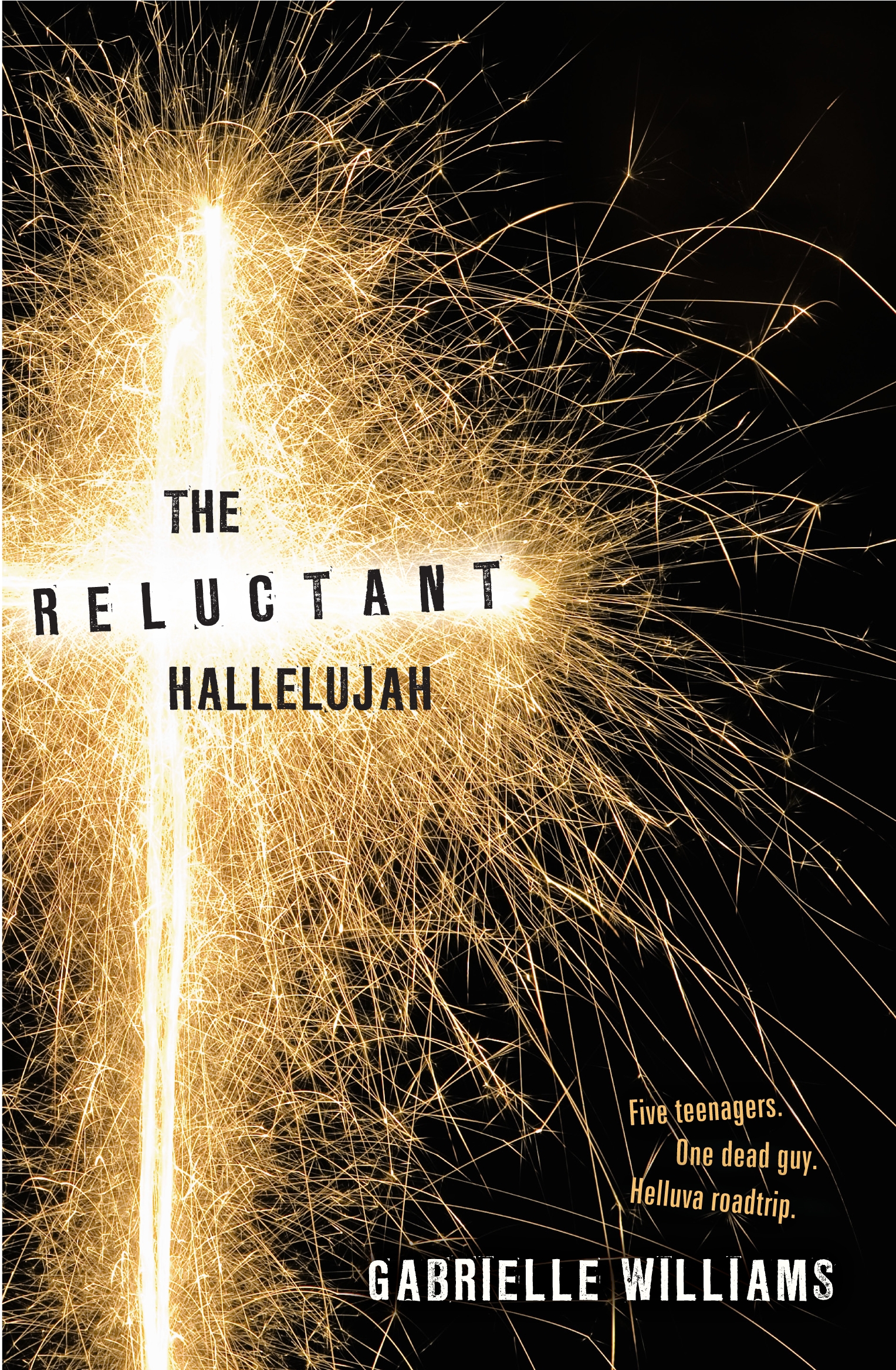
The Reluctant Hallelujah by Gabrielle Williams

When Dodie’s parents go missing just as final year exams are about to start, she convinces herself they’re fine. But when the least likely boy in class holds the key — quite literally — to the huge secret her parents have been hiding all these years, it’s up to Dodie, her sister, the guy from school, and two guys she’s never met before, to take on the challenge of a lifetime. So now Dodie’s driving — unlicensed — to Sydney, and being chased by bad guys, the police, and one very handsome good guy.

The Reluctant Hallelujah is quite simply one of the coolest, quirkiest YA books I’ve read!  The premise blew me away and Gabrielle took me on this wild road trip from Melbourne to Sydney.  Gabrielle had me laughing out loud one minute, crying the next and falling in love with her characters.  There were times I just had to stop and soak up what I’d just read and then continue on with the next step of the journey.  It’s one of those books that had a real impact on me and I won’t forget it any time soon.

You can read my review of Beatle Meets Destiny, Gabrielle’s debut YA novel.  It was also the first book I reviewed when I started blogging in 2009 – yes I loved it that much that I had to say something about it.

Friday Brown by Vikki Wakefield

Seventeen-year-old Friday Brown is on the run—running to escape memories of her mother and of the family curse. And of a grandfather who’d like her to stay. She’s lost, alone and afraid.

Silence, a street kid, finds Friday and she joins him in a gang led by beautiful, charismatic Arden. When Silence is involved in a crime, the gang escapes to a ghost town in the outback. In Murungal Creek, the town of never leaving, Friday must face the ghosts of her past. She will learn that sometimes you have to stay to finish what you started—and often, before you can find out who you are, you have to become someone you were never meant to be.

You can read my review of Friday Brown here.

Fire in the Sea by Myke Bartlett

Sadie is sixteen and bored with life in Perth. It’s summer, and lazing on the beach in the stifling heat with her cousins and Tom is a drag. Then something comes out of the sea.

Dark menacing forms attack an old man, leaving him for dead and Sadie wracking her brains to understand what she saw. Then there’s a mysterious inheritance, a strange young man called Jake and a horned beast trampling the back yard.

Sadie finds herself caught in the middle of an ancient conflict that is nearing its final battle, a showdown that threatens to engulf Perth and all those she loves in a furious tsunami.

You can read my review of Fire in the Sea here.

Ostrich Boys by Keith Gray

It’s not really kidnapping, is it? He’d have to be alive for it to be proper kidnapping.’

Kenny, Sim and Blake are about to embark on a remarkable journey of friendship. Stealing the urn containing the ashes of their best friend Ross, they set out from Cleethorpes on the east coast to travel the 261 miles to the tiny hamlet of Ross in Dumfries and Galloway. After a depressing and dispriting funeral they feel taking Ross to Ross will be a fitting memorial for a 15 year-old boy who changed all their lives through his friendship. Little do they realise just how much Ross can still affect life for them even though he’s now dead.

I read Ostrich Boys when I got home from Reading Matters.  I met Keith Gray and listened to him speak twice, and he was such a funny, witty guy that I just had to read one of his books.  Boy am I glad I did! Keith talked about how he writes books for guys and he wants to show that guys are emotional.  This certainly comes across in Ostrich Boys, as Keith introduces us to a group of guys who are going on a journey to do one last thing for their friend.  Blake, Kenny and Sim are all quite different and their personalities clash a few times on their journey, but they band together for their dead friend, Ross.  They face a few challenges, including lost train tickets, lack of money, and the police, and learn some difficult truths about each other.

I felt really connected to the characters, especially the narrator Blake, and Keith made me feel like I was right there beside them.  I loved the dialogue between the characters, which could be hilarious one minute and then serious the next.  There is a lot in this book about being a guy and our relationships with those around us. There were so many parts of the book that I really loved, but probably my favourite is when Blake is having a discussion with Kayleigh about friendship.  Blake tries to convince her that, even though they don’t buy each other presents and call each other every night, he knows his mates would be there for him if he needed them. 

You need to push Ostrich Boys into the hands of every teen you meet, especially guys.

And these are books that I’ve put on my TBR pile because they sound so good and the authors were really interesting…

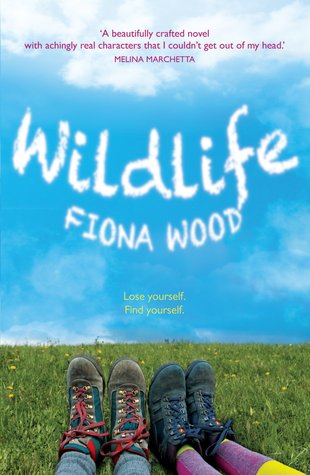
Wildlife by Fiona Wood

Boarding for a term in the wilderness, sixteen-year-old Sibylla expects the gruesome outdoor education program – but friendship complications, and love that goes wrong? They’re extra-curricula.

Enter Lou from Six Impossible Things – the reluctant new girl for this term in the great outdoors. Fragile behind an implacable mask, she is grieving a death that occurred almost a year ago. Despite herself, Lou becomes intrigued by the unfolding drama between her housemates Sibylla and Holly, and has to decide whether to end her self-imposed detachment and join the fray.

And as Sibylla confronts a tangle of betrayal, she needs to renegotiate everything she thought she knew about surviving in the wild.

A story about first love, friendship and NOT fitting in.

Girl Defective by Simmone Howell

“It was just Dad and me and Gully living in the flat above the shop in Blessington Street, St Kilda. We, the Martin family, were like inverse superheroes, marked by our defects. Dad was addicted to beer and bootlegs. Gully had ‘social difficulties’ that manifested in his wearing a pig-snout mask 24/7. I was surface clean but underneath a weird hormonal stew was simmering. My defects weren’t the kind you could see just from looking. Later I would decide they were symptoms of Nancy.”

This is the story of a wild girl and a ghost girl; a boy who knew nothing and a boy who thought he knew everything. And it’s about life and death and grief and romance.

All the good stuff.

Run by Tim Sinclair

Dee lives for parkour, and the alternate worlds he invents to escape his mundane life. He knows the city better than anyone-the hidden spaces at night, the views that no one else sees, from heights no one else can scale,. With parkour, he’s not running away. He’s free.

But just because you’re paranoid doesn’t mean they’re not out to get you. And soon Dee is running for his life, running for real.

Run is an unmissable, paranoid thriller – genre fiction meets literary verse novel.

Reading Matters 2013 – Highlights #9

IMG_0311

Unleashing YA – Gayle Forman, Morris Gleitzman and Keith Gray on adult encroachment in YA

This was the final session of Reading Matters 2013, but it ended with a bang.  I didn’t take many notes from this session as I was wrapped up in the discussion and being thoroughly entertained by these wonderful authors.  Morris started it off with a laugh by introducing himself and Keith as members of the ‘Bald, Bespectacled and Sexy Club’ and that he was there under false pretences, he isn’t and never will be a ‘Young Adult author.’  Adele asked the question ‘Who does YA belong to?’ and Maurice immediately replied with ‘nobody and everybody.’

Keith believes that males are under-represented in YA fiction.  Publishers, editors, agents and librarians are mainly females.  He mentioned that that a press release for the Carnegie Medal once highlighted having a male on the judging panel.  Keith writes for boys, ‘I hope I don’t alienate women but the 13 to 14 year-old boy is my ideal reader.’  Gayle pointed out that ‘there is acceptability for girl readers to enter a boy book’ but would Harry Potter have been the same with Hermione as the main character?

Both Maurice and Gayle commented on how great the blogging community is.  Gayle noted that the ‘incredible conversation going on amongst young people about the books they love,’ and Maurice talked about how a UK blogger helped an author’s book to sell overseas rights.

Each of the authors were asked ‘why do you love YA?’ Keith said it’s because he thinks teenagers are ‘fascinating creatures’ who read books to ‘challenge and argue.’

When asked ‘where else does the needle of discussion need to move to?’ Keith said that he wants to see YA authors mixing with adult authors on panels.  He also wants acceptance of children’s and YA authors, ‘we’re still talking about the human condition and we’re writing books to the best of our ability.’  Morris wants that needle and dial taken away completely and stop worrying about what kids are reading.