Win The Looky Book by Donovan Bixley

The Looky Book is a cool new puzzle book by New Zealand author/illustrator Donovan Bixley, with 11 different puzzles, all with colourful New Zealand landscapes, birds and animals.  There are heaps of things to find in each picture, like find the numbers with the crazy All Black lambs, spot the difference with the mischievous keas, find the animals hidden deep in the bush, and match the farmers to their animals. You can read my full review and my interview with Donovan here on the blog.

I have a copy to give away and all you need to do is enter your name and email address in the form below.  Competition closes Thursday 1 November (NZ only).

← Back

Thank you for your response. ✨

Interview with Donovan Bixley

Donovan Bixley is my favourite New Zealand illustrator.  He has illustrated Kiwi versions of The Wheels on the Bus and Old MacDonald, written and illustrated a book about Mozart, called Faithfully Mozart, and illustrated work by other authors, including Kyle Mewburn (the Dinosaur Rescue series) and Brian Falkner (Northwood and Maddy West and the Tongue Taker).  Donovan has just published his amazing Kiwi-themed puzzle book, The Looky Book (which I reviewed here on the blog).  I was lucky enough to be able to ask Donovan a few questions about his illustration, his new book, and working with other authors.

  • Your illustrations they seem to glow on the page.  What materials/tools do you use to create them?

Most of my work is hand drawn and digitally painted. I come from a painting background, and when I was a AUT the first computers came in. I began scanning my paintings and drawings and mucking about with them in Photoshop 1 – ha ha, you couldn’t do much. I’ve kinda just kept working on it for years and years and now that is the thing I am really highly skilled at. If I were more highly skilled at water colours or oils I would use that medium. I usually treat my digital work as a normal painting – however I’m not precious about it (I’m not here to preserve the sanctity of ‘the art’). I have a vision in my head and I’ll use any means necessary to achieve that. I once had a woman come up to me at a Storylines and ask about my illustrations. When I told her they were digital paintings she stormed off in disgust, as if the computer had done all the work – however some of my paintings, such as those from my book “Faithfully Mozart”, take 70-80 hours.

  • Who influences your illustration?

Well I’m still trying to live up to my heroes, like Norman Rockwell. I am huge fan of the turn of the century illustrators like Arthur Rackham, Maxfield Parish and Edmund Dulac and also their modern equivalents, like the brilliant Russian illustrator Gennardy Spirin. A lot of my work features that kind of old-fashioned ornamentation – swirly things just seems to naturally come out. They often get cut out of the final illustrations for various reasons. There are an incredible amount of illustrators who I follow avidly, like Dave McKean, Shawn Tan or John Howe, but usually this is simple admiration rather than influence. It would be pretty hard for someone of my generation not to be influenced by people like Bill Peet or Dr Suess – in fact I spend a lot of time now consciously trying to be influenced by my childhood memories, I especially like a bit of humour such as Mad Magazine or Mordillo. In that way I don’t often seek out other illustrators to inspire me. I find that I am drawing influences straight out of myself – which I suppose is where you get your own style from – all that stuff goes into you and gets all mixed up and eventually after many years you stop trying to emulate your heroes. You are just you.

  • You’ve created Kiwi versions of The Wheels on the Bus and Old MacDonald.  What do you enjoy most about putting your own Kiwi spin on these classic rhymes?

I was a bit apprehensive about doing those two books actually, but what thrilled me about them both was the challenge as an illustrator. One: they’re often stories that get done so badly and I was determined that they had the potential to be really cool. Two: was the open-ness of the text. I often use “Wheels on the Bus” as a perfect illustration example when I’m doing workshops with school kids – because the words don’t constrict your imagination. All it says is “the wheels on the bus go round and round …” and the rest is up to you. So in that respect both of those books were a real pleasure to add my spin and create a whole world outside of the basic text. I loved some of the things that came out of it like ‘The All Black Lambs’ and ‘Squidly’ the colossal squid. Having said that, you’d probably guess from the variety of my other work that I really hate to be pidgeon-holed as an illustrator. I didn’t want to become ‘the guy who does kiwiana versions of old songs’. So that’s how I ended up doing “The Looky Book” – I wanted to take all those characters and situations from “Wheels on the Bus” and “Old MacDonald’s Farm” and do something different with them. So I started thinking about the type of books I loved when I was a kid.


  • Your latest book, The Looky Book, is amazing! There is so much to find on each page.  How did you decide what puzzles and scenes you would create?

It was actually much more difficult that it appears. Since the book is aimed primarily at pre-schoolers, a lot of more complicated ideas had to be thrown out. Yet at the same time I always try and make my books have something to appeal to all ages. There are little things in there that the kids won’t get until they are older, maybe not until they are adults. As an illustrator, that’s an important thing for me, it keeps the illustrations alive, even after years of the reader looking at them, because they’re seeing things in a new light. It also makes the books entertaining for parents to read. Kids are little explorers and I strongly believe in giving them lots of opportunities to discover new things on each page. You’d be surprised how a kid will pick up on a tiny little aspect of a story or illustration and they’ll go off and find out all about it. If you don’t give them those opportunities then the book becomes flat and boring and will only be read a few times. As far as the puzzles that ended up in the book, I really wanted to cover a variety of entertaining visual tasks for pre-schoolers. So among the general ‘I spy’ elements are things like finding numbers, matching colours or patterns, and putting things into groups.

  • How long did it take you to create each spread?  Did you have to plan them in great detail before you started?

I’m not sure how long each spread took, the whole book was a few months work spread over half a year. As I mentioned above, a lot of initial work on sketches for spreads got thrown out for being too complicated. I guess the longest would have taken a week and generally involved quite a lot of planning – more in composition, just to fit everything in. With most of my books I brainstorm a lot with my wife and three daughters, at the dinner table or in the car, coming up with ideas. So I’d have this big list of things that needed to fit somewhere in a spread and then have to figure out where that ‘where’ would be. In terms of sketch planning, I’ve stopped doing highly detailed roughs. I find that I enjoy illustrating, and get much better results, if I leave a lot of room for creativity in the final illustration. For a recent Scholastic book, “The Three Bears Sort Of” by Yvonne Morrison, I didn’t actually do any roughs at all. Instead I sent the publisher a letter telling them what I was going to do and created each page as I went. Luckily they really had faith in my ability to pull it off, and the result was a real creative explosion rather than just the technical process of turning a sketch into a finished illustration.

  • Which spread was your favourite and which was the hardest to get perfect?

My favourite is the underwater scene. It’s a homage to one of my favourite books as a kid, “Patatrac” by Jean Jacques Loup. “Patatrac” is this funny French book from the 70s without words, just crazy pictures with lots going on and no actual story. Books like that and books like Richard Scarry’s were part of the inspiration for the “The Looky Book”. As a kid I could sit for hours just looking at the pictures (actually I still do as an adult). The most difficult illustration was the forest scene, where plants and bushes make up shapes and outlines of New Zealand animals. I often have a really good idea in my head, but then making it work in the real world is a challenge. That picture took a lot of planning and was the longest to create (actually the complete opposite of how I just answered the previous question ha ha). I still worry that it didn’t work quite as well as I’d imagined it.

  • You’ve created some wonderful illustrations for other authors’ work, including Brian Falkner (Northwood, Maddy West and the Tongue Taker) and Kyle Mewburn (the Dinosaur Rescue series).  What’s the best thing about working collaboratively?

I love being able to work with other authors, it means I get the best of both worlds. When there is something I really want to illustrate I create it for myself, but working with other authors allows me to create things that I never would have chosen to do on my own – it always helps if that thing fits into your areas of interest. Brian’s “Maddy West” was a real treat for me – the chance to do ninjas, break-dancing monkeys, witches, wolves and ravens and creepy old gothic houses – all these things fit right into the more serious and darker side of my work, but are far from the humourous subjects I am usually asked to illustrate. “Dinosaur Rescue” is a particular favourite. I mean, I’ve been drawing dinosaurs since I was able to pick up chalk, so it’s a dream come true to be doing it as a professional! It’s also a thrill because there’s so much room for humour and it’s a true collaboration. Kyle creates something, then I take it and add to it, then Kyle comes back and takes the something I did and adds onto that … and so on. Often the best developments are when one of us takes a little aspect, a word or a corner of an illustration, and develops a whole new branch of story from there. Best of all it’s tremendous fun which I hope is apparent to the readers.

  • What are you working on at the moment?

I’ve just this week begun work on a Margaret Mahy book which is a huge honour for any illustrator, and very exciting. Margaret’s work is unlike anything I’ve ever illustrated before. Often I’ll have a very obvious text that drives the illustrations, and within that I create my unique part of the story. Margaret Mahy’s works are perfect for an illustrator because (as mentioned with “Wheels on the Bus”) they don’t constrain you. I can’t quite put my finger on it, but there’s a lightness and freedom. She has an incredible way with words which is just so lovely – words for the joy of words and the sounds they make in you mouth. It’s also a lovely little story too with a nice plot and darling characters. It’s the type of work that could fall very flat or soar, depending on how you illustrate it – and I have to say I’m a little bit nervous, but I have a feeling it’s going to be very delightful.

I’m also working on my next book for Hachette, which is another of my own called “The Weather Machine”. It’s a bit like those books I was talking about above, Mordillo and “Patatrac” – a book without words – which I’ve wanted to do for years. It’s about a man who makes a machine to control the weather, with Frankenstein-ish results.


Thanks for joining me Donovan.  I loved your answers and it’s always great to get an insight into an illustrator’s work.  You can find Donovan at his website, www.donovanbixley.com and on Facebook.

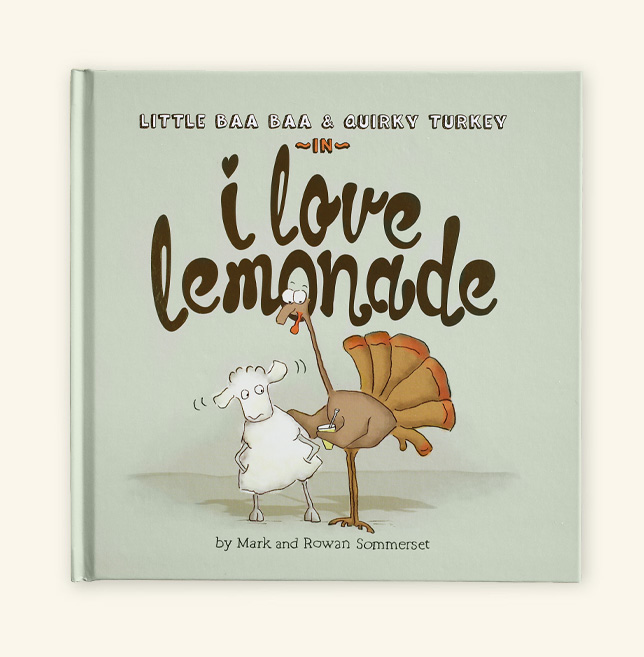
Picture Book Nook: I Love Lemonade by Mark and Rowan Sommerset

Most Kiwi kids will be familiar with Little Baa Baa and Quirky Turkey, the characters in Mark and Rowan Sommerset’s award-winning picture book Baa Baa Smart Sheep.  I had no idea they were planning a sequel, but when I saw I Love Lemonade in a bookshop last week I had to read it.  When you end up getting dirty looks from other customers because you’re laughing out loud in the middle of the store, you know it’s a great book.

I Love Lemonade features the same characters as Baa Baa Smart Sheep, Little Baa Baa and Quirky Turkey.  After being tricked into eating Little Baa Baa’s ‘smarty tablets,’ Quirky Turkey decides it’s payback time.  But has Quirky got what it takes to pull the wool over Baa Baa’s eyes?

I Love Lemonade is absolutely hilarious and is, I think, even better than Baa Baa Smart Sheep.  It’s told in the same way as the first book, with Baa Baa and Quirky having a conversation with each other, using the back and forth speech bubbles.  At first I thought it was just going to be a role reversal of the original story, but it is far better (and funnier) than that.  Eating ‘smarty tablets’ definitely hasn’t made Quirky any smarter, but he’s out for revenge.

I love a story with some good toilet humour and Mark and Rowan write these stories so well.  I certainly don’t think I’ll look at lemonade the same way again (especially when it’s freshly squeezed!).  If you’re cracking up laughing while you’re reading it (like I was) you know that kids are going to love it.

Mark and Rowan are the perfect team and it’s the combination of their text and illustrations that make the book so funny.  You could act out the story, just using Mark’s text and kids would be rolling around on the floor, but Rowan’s illustrations give the characters their personality.  Their facial expressions tell you so much, especially Quirky Turkey’s expressions.  At the beginning, you can tell by the look in his eyes that he thinks he has tricked Baa Baa, and you can see him getting more and more excited as the story progresses.

If you want a picture book that will have you and your kids in stitches grab a copy of I Love Lemonade from your bookshop or library now.


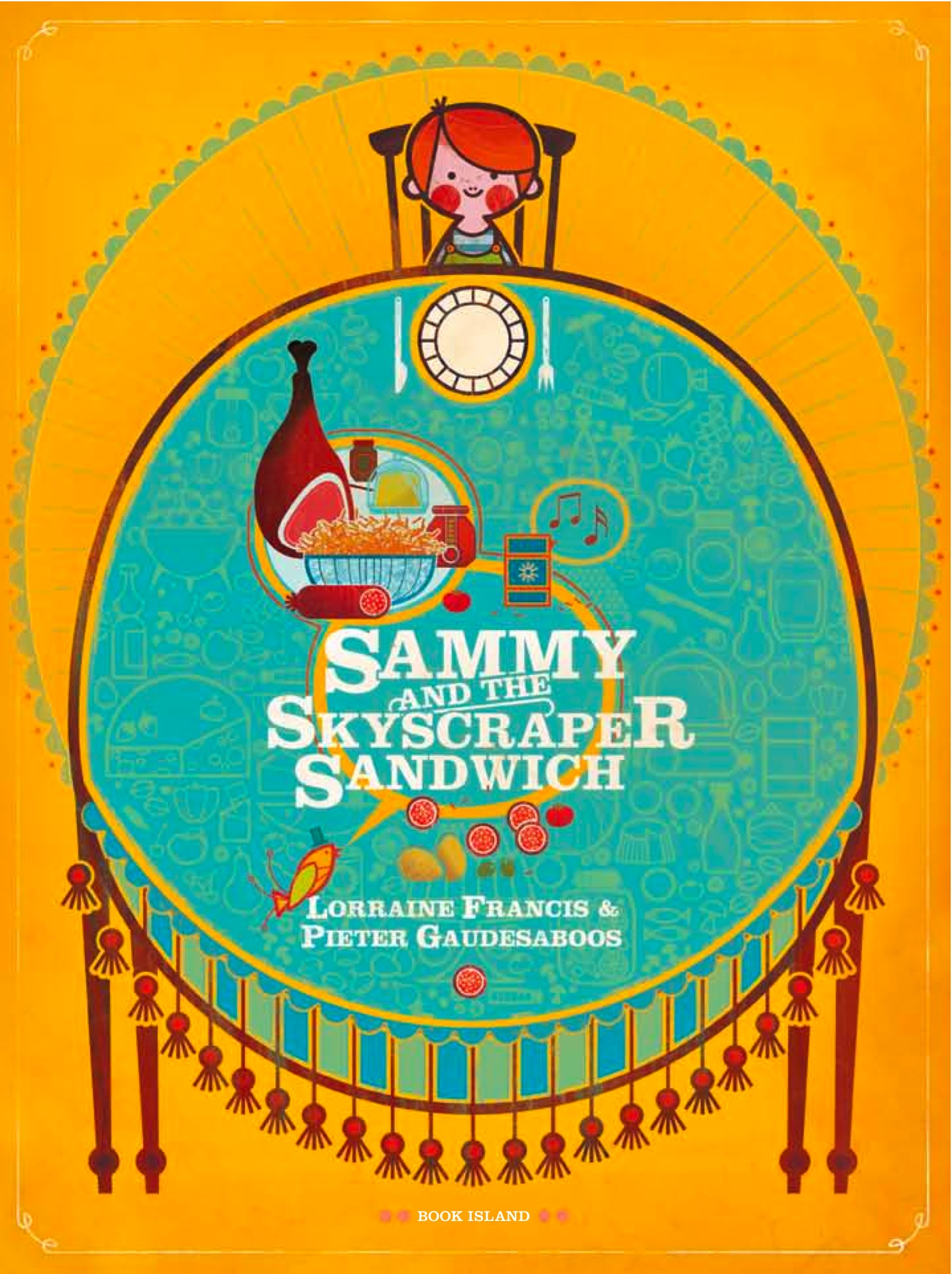
Introducing new local publisher – Book Island

When I was contacted recently by Greet Pauwelijn introducing me to her new local publishing company, Book Island, I was very excited.  Apart from the fact that her company has a FANTASTIC name, I was excited because she told me that they will be publishing the very best Dutch children’s books in English.  I absolutely love the first three books that they will be publishing and you will love sharing them with the children in your life.  You can read more about Book Island’s first books and Greet’s journey to realising her dream below.
Sammy and the Skyscraper Sandwich, Sir Mouse to the Rescue and Bernie and Flora are three stunning picture books soon to be released by Book Island, an up-and-coming children’s book publisher located in the Kapiti Coast.
Owner and publisher Greet Pauwelijn’s goal is not only to publish outstanding children’s books in English and Dutch, but also to add an extra dimension to the stories by organising activities inspired by them – enabling children’s enjoyment of each book to extend far beyond its pages.
In Book Island’s first title, Sammy and the Skyscraper Sandwich, a small boy builds the biggest sandwich in the world. Following in his footsteps, we invite you to come and help us build our own gigantic sandwich at the book’s launch on 11 November using recyclable materials – bring your own recyclables and see how high we can get!  There will also be exciting activities based on Sir Mouse to the Rescue, which chronicles the adventures of Mouse, a stubborn knight and her long-suffering friend Dragon, and Bernie and Flora, a heart-warming tale of friendship and flowers.
The publication of these three titles will fittingly mark the three-year anniversary of Greet and her family’s move to New Zealand – a country, she says, that has been incredibly supportive of her endeavour to become a children’s publisher.
The inspiration for this career move came as Greet was translating New Zealand author Barbara Else’s The Travelling Restaurant (Gecko Press, 2011) for a Belgian publishing house. “While translating this book – my first from English to Dutch – I suddenly realised that, instead of telling other publishers about possible bestsellers, I might as well translate and publish these books myself.”
Publishers, editors and translators were all fortuitously present in Greet’s social circle – “Even our accountant had been working in publishing for years!” she laughs. “I also met a publishing consultant while waiting at the traffic lights in Wellington, and my son’s friend’s parents turned out to be well-known book designers here…”
Greet says it felt “like lucky stars were falling from the sky”, and knew that she’d made the right move. She welcomes you and your family to join her on 11 November to celebrate both the release of these books and the beginning of a new chapter in the Book Island journey.

Who Could That Be at This Hour? by Lemony Snicket

When you are sent a mysterious package that is clearly the property of one L. Snicket, you clearly should not open it.  I, however, did the opposite.  Inside was a book and a letter from a Lemony Snicket, informing me that the enclosed information was best kept secret from the general public and that I should help him keep this book invisible.  I did no such thing and proceeded to read the book, with a sense of dread.  I feel that I can no longer keep the contents of this book to myself, as it contained an incredible story that I still cannot believe.  This book was Who Could That Be at This Hour? Read on at your own peril.

Before you consider reading “Who Could That Be at This Hour?” ask yourself these questions:

  1. Are you curious about what is happening in a seaside town that is no longer by the sea?
  2. Do you want to know about a stolen item that wasn’t stolen at all?
  3. Do you really think that’s any of your business? Why? What kind of a person are you? Really?
  4. Who is standing behind you?

Who Could That Be at This Hour? is uncanny, peculiar and outlandish, all words which here mean ‘quite strange.’  It’s the first book in Lemony Snicket’s new series, in which he gives an account of his apprenticeship in a secret organisation, ‘in a town overshadowed by a sinister conspiracy, culminating in some unnerving and troublesome truths that lay buried for a number of years, while people were busy doing somthing else.’  The story is addictive and once you start, it’s very hard to put down.  It’s set in a strange little town, containing ‘a sea without water and a forest without trees,’ and it’s full of bizarre events and curious characters.

Nobody in this story is quite who they first appear to be.  There is Lemony’s chaperone, S. Theodora Markson (don’t ask what the S stands for) who is not as competent or highly skilled as she portrays, the mysterious, coffee-drinking Ellington Feint, the shadowy Hangfire, and even Lemony Snicket himself.  I love the way that Lemony Snicket describes some of the weird people he meets, like Stew,

He looked like the child of a man and a log, with a big, thick neck and hair that looked like a bowl turned upside down.  He had a slingshot tucked into his pocket and a nasty look tucked into his eyes.

My favourite characters in the story are Pip and Squeak, the two brothers who drive the Bellerophon Taxi.  They are supposedly filling in for their father, but they’re so short that one steers while the other sits on the floor and pushes the pedals.

If you love mystery and adventure stories, but also want a bit of a laugh, Who Could Be at This Hour? is the perfect book for you.  Grab your copy now from your library or bookshop.

5 out of 5 stars

The Looky Book by Donovan Bixley

All kids love a good puzzle book.  When I was a kid I loved Where’s Wally, I-Spy and those pick-a-path maze books.  There have never been any great New Zealand themed puzzle books, until now.  New Zealand author and illustrator, Donovan Bixley, has just published his awesome puzzle book, The Looky Book.  Donovan is my favourite New Zealand illustrator and his illustrations for The Looky Book are wonderful.

The Looky Book is a puzzle book with 11 different puzzles, all with colourful New Zealand landscapes, birds and animals.  There are heaps of things to find in each picture, like find the numbers with the crazy All Black lambs, spot the difference with the mischievous keas, find the animals hidden deep in the bush, and match the farmers to their animals.  My favourite pictures are the ones where you have to spot what’s wrong in the scene.  In the beach scene on the first page, you can find a shark in a paddling pool and a man watching TV in the bath.  There are hours of fun for kids and adults, and when you’ve solved all the puzzles, you can go back and find the tui and the grumpy garden gnome on each page.

I love Donovan’s illustrations and The Looky Book just shows how versatile he is.  Not only does he give each human or animal it’s own personality, but he can make these a small part of a large scene.  He makes every little detail count, and these little details are hilarious (sheep holding up a ‘Lamb Carter’ banner or a penguin wearing a tie).  The reason I love Donovan’s illustrations is because they are always so colourful and they seem to glow.  He seems to use this effect that makes certain objects or characters shine.  Just look at the front cover and you’ll see what I mean (the eyes, the telescope and the kea’s beak).  I would love to know how long it took Donovan to create each spread.

There is an incredible amount to see on each page, and some things you won’t see the first time. Donovan his given the book a real Kiwi feel too, with lots of local wildlife and some Kiwi icons like Hokey Pokey ice cream.  If you have a very keen eye you might even spot a reference to one of Margaret Mahy’s stories on the first page.

Christmas is only weeks away and The Looky Book will make a perfect present for kids young and old.

5 out of 5 stars

All the Wrong Questions book trailer

Who Could That Be At This Hour?, the first book in Lemony Snicket’s new series, All the Wrong Questions is released on Tuesday 23 October (that’s next week!).  If you loved A Series of Unfortunate Events you’re sure to love this new series.


David Walliams introduces his new website…WORLD OF WALLIAMS

David Walliams, author of hilarious books like The Boy in the Dress, Billionaire Boy, and Gangsta Granny, has just launched his new website, World of Walliams.  I’ve had a play around on the website and it’s absolutely fantastic! There are lots of cool games and information about David’s books.  Head on over to http://www.worldofwalliams.com/ now.

The Peculiar book trailer

The Peculiar is a wonderful new fantasy story, by debut author Stefan Bachman.  I haven’t read a good fantasy in a while and this is making me fall in love with the genre all over again.  The faery have crossed over into Britain and it’s now populated by humans, the faery and halflings.  I’ll post my review of The Peculiar here on the blog next week and you’ll have a chance to win a copy.

The Peculiar by Stefan Bachman is out now from HarperCollins NZ.

My hilarious interview with Ivy and Bean

Saturday 13 October is International Ivy + Bean Day, when we celebrate two very cool characters created by Annie Barrows and Sophie Blackall.  Book shops and libraries all over the world (including here in New Zealand) are having special Ivy + Bean parties.  I’m hosting one in my library, with activities, games, giveaways and a reading of the latest Ivy + Bean story.  Here is Annie Barrows to tell you all about International Ivy + Bean Day:

I sat down with Ivy and Bean to ask them a few questions about their favourite things and what they like about each other.  Thanks for joining us Ivy and Bean!

  • How did the two of you meet?

Ivy: Bean was running away from home.

Bean: I had to run away from home. Because of Nancy. That’s my older sister.

Ivy: You had to run away from home because you wiggled your behind at Nancy.

Bean: But I wouldn’t have wiggled my behind at her if she hadn’t been trying to get me in trouble.

Ivy: But she wouldn’t have been trying to get you in trouble if you hadn’t taken her twenty dollars.

Bean: But I wouldn’t have taken her twenty dollars if she hadn’t been such a tightwad.

Ivy: So really, it was Nancy who helped us meet.

Bean: Sometimes Nancy’s okay.

  • What do you like best about your friend?

Bean: She can cross one eye without crossing the other.

Ivy: One time, Bean ate wood for a dollar.

  • Who is the most annoying person you know?

Ivy: There’s this girl named Nellie in the book I’m reading who’s really annoying. She says mean things about the main girl’s dog.

Bean: She’s not real. You can’t say she’s the most annoying person you know, because you don’t really know her.

Ivy: I know her. I’m reading about her.

Bean: But she’s not real. She’s in a book. You have to say someone real.

Ivy: You.

Bean: You.

  • What is your favourite food?

Bean: Syrup! Or doughnut holes! I love doughnut holes! I can stick four of them in my mouth at once and then I smash them flat between my tongue and the top of my mouth. It’s great!

Ivy: Chocolate mousse. I used to think it was made out of moose.

  • What do you want to do when you grow up?

Ivy: I’m going to be a witch.

Bean: I’m going to write the fortunes that go inside fortune cookies. Or be an arborist. I haven’t decided.

  • What is your most embarrassing moment?

Bean:  I don’t want to talk about it.  Sometimes, people are thinking about other stuff and aren’t paying attention every single little second and they don’t exactly see where they’re going and it’s not their fault.

Ivy: It could have happened to anyone. It probably does happen to almost everyone, but maybe not when twenty-six other kids are watching.

Bean: And their parents.

Ivy: Never mind.  They probably would have painted that part of the room over anyway.

  • What’s the craziest scheme you’ve ever come up with?

Ivy: Crazy?

Bean: Crazy?

Ivy: Do we do anything crazy?

Bean: Nah. He must be talking about someone else.