Win Fire in the Sea by Myke Bartlett

Fire in the Sea by Myke Bartlett was the winner of the 2011 Text Prize for Young Adult and Children’s Writing.  I loved it and gave 4 out of 5 stars (you can read my review here).  I also interviewed Myke here on the blog today too, which you can check out here.

Thanks to Text Publishing I have 2 copies of Fire in the Sea to give away.  All you have to do to get in the draw is enter your name and email address below.  Competition closes Monday 6 August (NZ only).

← Back

Thank you for your response. ✨

Fire in the Sea by Myke Bartlett

The wonderful people at Text Publishing (based in Melbourne) launched a fantastic new award for authors across Australia and New Zealand a few years ago, called The Text Prize for Young Adult and Children’s Writing.  This prize has introduced me to some of my favourite authors, including Richard Newsome and Leanne Hall.  Last year they chose another very deserving winner of the prize, Myke Bartlett with his book Fire in the Sea, which has just been released.

Sadie is sixteen and bored with life in Perth. It’s summer, and lazing on the beach in the stifling heat with her cousins and Tom is a drag. Then something comes out of the sea.

Dark menacing forms attack an old man, leaving him for dead and Sadie wracking her brains to understand what she saw. Then there’s a mysterious inheritance, a strange young man called Jake and a horned beast trampling the back yard.

Sadie finds herself caught in the middle of an ancient conflict that is nearing its final battle, a showdown that threatens to engulf Perth and all those she loves in a furious tsunami.

Fire in the Sea is a story of gods, monsters, curses, immortality, war and the normal teenagers who get caught in the middle.  Myke Bartlett grabs you within the first few pages and you get swept away in the story, not wanting to surface until you get to the very end.  It’s one of those stories you want to devour all in one go because the writing is just so good and the action never lets up.  There’s something for everyone in the story, from mythical creatures and body-swapping gods, to a genie-like demon who grants wishes and a lost civilization.  There is plenty of violence and blood and guts to keep the guys interested, especially when the Minotaur is involved.

I love how Myke has weaved mythology into the story.  I can see Fire in the Sea appealing those teens that have enjoyed the Percy Jackson series because of the way that Myke brings gods and monsters into the present day.  Even though you don’t see the gods, you get the impression that they’re watching everything happen and will intervene if or when the time comes.  The feel of the story also reminded me a little of Maurice Gee’s Under the Mountain.

Sadie is a strong, feisty heroine.  She doesn’t seem to care what other people think of her and is prepared to do what she thinks is right to save the people she loves.  She get caught in the middle of a war that they didn’t want to be involved in, but she handles the situation incredibly well.

The ending of Fire in the Sky left me wanting to read more about Sadie, Jake and the ancient ones, so here’s hoping Myke continues their story.  If you’re looking for a fast-paced story, filled with action, adventure, fantasy and mythology, Fire in the Sky is the perfect book.

4 out of 5 stars

Seraphina Book Trailer

Seraphina by Rachel Hartman is an exciting new fantasy that looks perfect for fans of Christopher Paolini’s Inheritance Cycle.  Fantasy books have been a bit light on the ground recently so I’m looking forward to losing myself in this book.  Seraphin

Interview with Christopher Paolini, author of Eragon

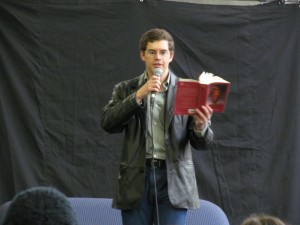
Christopher Paolini, the author of the Inheritance Cycle, came down to Christchurch at the weekend for the Armageddon Expo.  Along with hundreds of other fans, I went along to listen to Christopher talk about his books and get some copies of his books signed.  I caught up with Christopher to ask him a few questions about his books and writing.
  • What inspired you to write the Inheritance Cycle?

Boredom, mainly, and the desire to have adventures myself. Growing up, I never wanted to be a writer. No, I wanted to be flying dragons and fighting monsters! But since I couldn’t do that, and since I had a lot of time on my hands after I graduated from high school at fifteen (I was homeschooled my whole life), I decided to write my daydreams down. Fortunately for me, enough people around the world have enjoyed reading them that I get to tell stories for a living.

  • How do you keep track of all the different characters within the world of your books.

With lots and lots and lots of files. I didn’t used to do that when I started Eragon, but very quickly I found myself with so many characters, I couldn’t keep track of all of them in my head. So I started writing them down in a file, along with all of the words of my invented languages, timelines, and so on. It can be a bit tedious, but in the long run, it saves a lot of effort.

  • How did it feel to get your story published when you were so young?

Well, it was gratifying to know that people actually wanted to read something that I had written. And it was really neat to see my books shelved in the library and bookstores just like all of the books I had read growing up. But at the same time, it was a strange experience to go from a rather rural upbringing in Montana to traveling all around the world and talking to thousands of people at a time. Writing and publishing these books changed my life completely, and again, I’m grateful for the opportunities they have given me.

  • The Inheritance Cycle has been a huge phenomenon. Do you feel any pressure from your fans to write something just as amazing, or even better, next?

Not really. I like to think that whatever I write next will be better than what I’ve written before (I’ve learned a lot from each book, after all), but either way, I’m happy with what I accomplished with the Inheritance cycle, and it won’t bother me if my future books aren’t as popular. When I started Eragon, I was just trying to write the sort of story that I wanted to read myself. Moving forward, that’s all I can hope to do. I can’t write to please others, only myself.

That said, I do think you’ll enjoy my next book. 🙂

  •  How did you find the experience of your book being made into a film?

Strange and surreal! I’m glad that the movie was made—very few books are ever adapted into films, after all—and I gave as much input as I could into the process, but ultimately, the movie reflects the director’s and the studio’s vision of the story, even as the books reflect mine. Hopefully we’ll get some more movies in the future, though.

  • What books would you suggest for anyone that loves the Inheritance cycle?

Dune by Frank Herbert, Magician and sequels by Raymond E. Feist; A Wizard of Earthsea and the first two sequels by Ursula K. Le Guin; the Belgariad, the Mallorian, and the Elenium by David Eddings; Memory, Sorrow, and Thorn, by Tad Williams; the Gormenghast trilogy by Mervyn Peake; The Worm Ouroboros by E. R. Eddison; the Dragonriders of Pern series by Anne McCaffery; the Pit Dragon trilogy by Jane Yolen, the Redwall series by Brian Jacques; Fablehaven and sequels by Brandon Mull; and many, many more. 

  • Why did you want to be a writer?

Because I didn’t have anything else to do at the time, and because I’ve always enjoyed creating things with my hands, whether it was knives, swords, drawings, chain mail, or books. Also, because stories (both in books and in other media) touch me in a way that few things in this world do, and I wanted to share that feeling with other people.

  • What’s the best thing and the worst thing about being a writer?

Worst thing? Having to sit down every day and work on the same thing for years on end, even if I don’t feel like it at that particular moment. Best thing? Getting paid to describe my dreams for a living, and knowing that what I’ve written has changed people’s lives all around the world.

  •  If you weren’t a writer what would you be?

A blacksmith, or a professional artist, or a film director. Whatever I ended up doing, I know that I would make things. That’s what I love to do—make things.

  • If you could give one piece of advice to aspiring writers what would it be?

Hmm. There’s no way I can restrict it to one piece of advice, so here’s what I always tell aspiring writers, regardless of their age:

  1. Read, read, read, read. Good writers are good readers. Read what you love, but also read things outside of your comfort zone, because you’ll learn more than if you just stick with what you’re familiar with.
  2. Write every single day. Don’t wait for inspiration. I only get inspiration about once every three months. In the meantime, I write. I write on weekends, I write on holidays, and I write on my birthday. In short, I write. I do take Christmas off—and of course I can’t really write when I’m traveling—but that’s the extent of it.  Writing is like playing a musical instrument: if you want to get good at it, then you have to practice every single day, even when you don’t feel like it.  So unless you’re in the hospital—and maybe even then—you better write.  Of all the traits an author can possess, persistence is the most important. It doesn’t matter how talented you are. If you don’t practice, you’ll never master your craft. As Calvin Coolidge said: “Nothing in this world can take the place of persistence. Talent will not; nothing is more common than unsuccessful people with talent. Genius will not; unrewarded genius is almost a proverb. Education will not; the world is full of educated derelicts. Persistence and determination alone are omnipotent. The slogan “press on” has solved and always will solve the problems of the human race”
  3. Write about whatever it is you care about the most. Writing is often difficult, but if you truly care about the subject material, that’ll help you through the rough patches.  And it doesn’t matter what your interests are. Just don’t let someone else tell you what you should or shouldn’t write. If you want to compose a twelve-volume epic about singing toasters and flying unicorns … then go for it! There are over six billion people on this planet. Through sheer odds, I guarantee that there are lots of other people out there who like the same things you do, no matter how obscure they might be.
  4. Learn everything you can about the language you’re writing in. Grammar is boring, I know, but the better you understand your language, the better you’ll be able to get what’s in your head onto the page and into someone else’s head.
  5. Find someone in your life—friend, family member, teacher, librarian, etc.—someone who is a good reader, who likes the sort of thing you’re writing, and who can help edit your work. As painful as editing can be, I guarantee that you’ll learn more from editing than you ever will from just writing. The trick isn’t just to perform (and make no mistake, writing is a performance), the trick is to perform and to consciously evaluate what you’re doing so that you can improve.  For example, when singing, it’s sometimes hard to hear if you’ve hit a bad note. That’s why every professional singer goes to a voice coach. Sometimes more than one. Writing is no different. Your trusted readers, your editors, are your voice coaches. Listen to them, and you’ll improve at your craft far faster than you would otherwise.
  6. This doesn’t work for every author, but I would also recommend plotting out your stories beforehand. Again, a musical analogy may serve: it’s hard to compose a piece of music while performing it, so first you compose it, and then you can concentrate upon performing it as beautifully as possible. So too with writing. Also, read the book Story by Robert McKee. It’s highly useful when it comes to learning how to understand the underlying structure of stories.  If I try to write without knowing where the story is going, I get instant writer’s block.
  7. As a corollary to No. 2 – don’t give up. It’s incredibly easy to give up, and there are many, many people in the world who will tell you that you can’t do something. Well, I’m here to tell you that you can, assuming you’re reasonably intelligent and willing to put in the work. Sure, you’re going to get discouraged, and there are going to be days when it seems impossible to finish a book or get it published. That happens to all of us. Even once we’re published. The trick is to keep plugging away and trying to get better.
  8. And lastly, try to have fun. You don’t have to have fun every day, but try to have fun more days than you don’t. If you can’t, maybe it’s time to think of a profession in a different line of work. 

Thank you for reading my books, and I hope you enjoy my future ones even more.

And as Eragon himself would say, “Sé onr sverdar sitja hvass!”

May your swords stay sharp.

Between the Lines Book Trailer

Between the Lines is the latest book from best-selling author, Jodi Picoult, which she co-wrote with her daughter Samantha van Leer.  I’ve never read a Jodi Picoult book before but Between the Lines sounds really exciting.  The book itself is quite a work of art, with different coloured fonts and colour illustrations throughout.  I can’t wait to go Between the Lines.

Win Eragon signed by Christopher Paolini

This Saturday, Christopher Paolini (author of the Inheritance Cycle) is in Christchurch at the Armageddon Expo.  I have the pleasure of interviewing him for Christchurch City Libraries and you can read my interview here on the blog next week.  You may not have had the chance to meet him while he has been here in New Zealand so I’m giving you the chance to win a signed copy of Eragon.  All you have to do is enter your name and email address in the form below.  Competition closes Wednesday 4 July (NZ only).

← Back

Thank you for your response. ✨

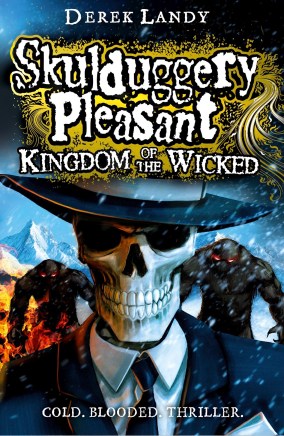
Derek Landy’s 2012 Down Under Tour

Does your world need more awesome?

Well, Derek Landy is about to bring it – and Skulduggery Pleasant: Kingdom of the Wicked – when he visits New Zealand and Australia for his 2012 Down Under Tour.

I’ll certainly be queuing up with hundreds of other Skulduggery fans to see the creator of one of the coolest series around.  Venues and times are soon to be released but in the mean time, here are the NZ and Australian cities that Derek will be visiting (more details to follow):

NZ

  • Auckland – 8 August 2012
  • Wellington – 9 August 2012
  • Christchurch – 10 August 2012
  • Auckland – 11 August 2012

Australia (roughly 12-21 August 2012)

  • Brisbane
  • Sydney
  • Melbourne
  • Adelaide
  • Perth

Carole Wilkinson’s Dragonkeeper Blog Tour – Day 6

Today I’m joined by Australian author Carole Wilkinson, author of the wonderful Dragonkeeper books.  Carole has just released the 4th book in the Dragonkeeper series, Blood Brothers, and the whole series now has a fantastic new cover design.  I really enjoyed the first 3 books in the series, which I read many years ago, so I’m looking forward to getting back to that world again.

Thanks for joining me Carole!

It’s great to be travelling across the Tasman for today’s blog, hosted by Zac at the My Best Friends are Books blog. I’m writing about creating some of the characters in the Dragonkeeper series.

A Reluctant Heroine

Creating convincing characters is perhaps one of the hardest things about writing fiction. I rarely base characters on people that I know, not consciously anyway. When I created the main (human) character for Dragonkeeper, I wanted her to start with nothing. Absolutely nothing. Not even a name. And so I created a slave girl who has no freedom, no possessions, no friends. What she does have is resourcefulness. She has learned to make the most of her miserable life — finding a friend in a friendless world (Hua her pet rat), collecting a few precious items to call her own (a rusty iron blade, a white eagle feather, a piece of weathered wood shaped like fish) and enjoying simple pleasures such as a warm fire and a bowl of lentils flavoured with some purloined ginger.

I didn’t want her to be someone who has always known she was special, or who always had a dream to achieve something grand. At the beginning of the story, Ping has no expectation of any aspect of her life changing. She isn’t craving freedom, she just makes the best of a bad situation.

When offered escape she doesn’t snatch it, she hangs back and has freedom more or less forced upon her. When told she has latent special skills and the opportunity to take up an important role, she doesn’t believe it. That can’t be her. She struggles with her role as dragonkeeper.

Back in 2001, when I started writing Dragonkeeper I didn’t realise how much of me there was in my main character. Just like Ping needed a push to begin my journey to becoming a writer. I had absolutely no confidence that I could achieve that goal.

Inspiration for the Timid

When I was young, there were always those girls who effortlessly excelled. They were natural athletes or had a talent for music or were clever enough for maths and Latin to be a breeze. They were the ones teachers loved. I wasn’t sporty or musical, and I got average marks. I might well have been good at writing stories, but no one asked me to do that. Classes had 40-plus students and teachers didn’t remember my name.

I wanted Ping to be a character to inspire girls who are average and insecure, whose talents are hidden or yet to be acquired by years of hard work.

Draconic Characters

One of the most enjoyable aspects of planning the Dragonkeeper series has been creating the characters of the dragons. First there is Danzi who is frustratingly uncommunicative and past his prime, but who has a quirky sense of humour. In Garden of the Purple Dragon there is Kai, a cheeky dragonling, easily bored. Then in Dragon Moon I got to create a whole cluster of dragons — eight of them, all with very different characters.

I drew on Chinese mythology for the basic characteristics of the dragons — their colours, ability to shape-shift, and the fact that they hibernate in deep pools — and then developed these features. Chinese dragons come in five different colours — red, yellow, black, white or green. I started by deciding that each colour would be like a subspecies with its own characteristics. Red dragons are the biggest, with horns up to a metre long and blue whiskers. They are mediators. They can’t shape-change, but they can camouflage themselves. White dragons are the smallest and the best fliers. They can only shape-change into white birds. The yellow dragons are timid and they sing. The black dragons are more solitary. Unlike all the other dragons, they don’t like water much. They are bad-tempered and prone to fighting, but fiercely protective of their cluster. And the green dragons are natural leaders with exceptional shape-changing skills. They are as at home in the water as they are in the air.

Not all my dragons remain true to type. In the latest book in the series, Blood Brothers, Kai has lost interest in being a leader, and gentle Sha has undergone a radical personality change. I’m looking forward to developing the characters of my other dragons in future books.

Carole Wilkinson


Blood Brothers, book 4 in the Dragonkeeper series. Out now!

Win a set of Carole Wilkinson’s Dragonkeeper books

Australian author, Carole Wilkinson, has written a great post for My Best Friends Are Books to celebrate the release of Book 4 in the Dragonkeeper series, Blood Brothers.

Thanks to Walker Books Australia I have a full set of the four books in the Dragonkeeper series to give away.  All you have to do to get in the draw for the books is leave your name and email address below.  Competition closes Monday 4 June (NZ only).

← Back

Thank you for your response. ✨

Welcome to The 13th Horseman NZ Launch Party!

Today I have the pleasure of hosting the New Zealand launch of Barry Hutchison’s The 13th Horseman.  I’ve been a huge fan of Barry’s for a while now and I wanted to do something special to launch his new book in NZ.  In Christchurch we’re having a launch party with giveaways, a feast fit for a Horseman of the Apocalypse, and some special launch videos from Barry in Scotland.

If you can’t be in Christchurch you can still celebrate the launch of Barry’s hilarious new book.  Barry has made 3 videos especially for his readers in NZ, in which he introduces The 13th Horseman, reads from the book, and answers some questions.  Also, if you scroll to the bottom of this post, you can enter to win a copy of The 13th Horseman with a signed bookplate.  Come on in and join the party!

Barry introduces The 13th Horseman

Barry reads an excerpt from The 13th Horseman

Barry answers some questions about The 13th Horseman

Thanks so much for the great videos Barry!  If you haven’t got a copy of The 13th Horseman, rush out to your bookshop now to grab a copy or enter my competition to win one.  Competition closes Friday 1 June (NZ only).

Thanks to everyone who entered the competition.  The winners are Cath and Amu.