Hero on a Bicycle is the first novel from children’s literature legend, Shirley Hughes. I grew up with Shirley Hughes’ wonderful picture books about Alfie and Annie Rose, so I can’t wait to see how she writes for an older audience. Hero on a Bicycle is out now from Walker Books.
history

Win Ransomwood by Sherryl Jordan
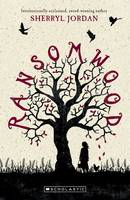 Ransomwood is the latest book from one of New Zealand’s best writers for children and young adults, Sherryl Jordan. I loved Ransomwood (you can read my review here) and it’s one of those books I want to shout about.
Thanks to Scholastic NZ I have 2 copies of Ransomwood to give away. All you have to do to get in the draw is enter your name and email address below. Competition closes Monday 16 July (NZ only).
Share this:

Ransomwood by Sherryl Jordan
Every now and again a book comes along that surprises you. I find myself reading a lot of Young Adult science fiction because I like the sound of the story and I love the different versions of society that authors can create. A completely different type of story caught my eye recently, one by a New Zealand author who I love. That book is called Ransomwood, by award-winning New Zealand author, Sherryl Jordan.
Spurned by her lover, and with her uncle threatening to marry her off to his odious widowed brother, Gwenifer is almost relieved to be sent away to escort the magistrate’s old, blind mother to Ransomwood, where the tears of the statue of the Holy Mother are said to have healing qualities.
Together with Harry, the village halfwit, who is escaping a sentence of hanging for being in charge of an ox that trampled a child almost to death, they embark on a perilous journey … each of them looking for a different kind of healing.
Ransomwood is a story of gossip, friendship, loyalty, suffering, acceptance and identity. It’s the story of three very different people thrown together to go off in search of a cure for their ailments and medicine for a dying girl. There is Halfwit Harry, the village idiot, whose fault it is that a little girl was trampled by oxen; Mother Dorit, an old crone who is thought to be a witch and is hoping to cure her blindness; and Gwenifer, who was caught with another boy who was betrothed. Each of the pilgrims is hoping to achieve something by journeying to Ransomwood to collect the tears of the Holy Mother.
As we follow the pilgrims on their journey, you learn that there is more to them than the other villagers have assumed. One quote from Mother Dorit that I love is about the gossip that flies around the village.
“If every word of gossip in Grimblebury was a bumblebee, the buzzing about the village would be enough to deafen the Good Lord Himself. And if every gossip word were true, I say there’d be a blessed silence, and not one drop of honey to be had. Nor anyone stung, for that matter.”
Mother Dorit is much more than the witch that others believe she is. She’s a wise, kind soul who cares for Gwenifer and Harry and reassures them that everything is going to be alright. Gwenifer is far from the girl of loose morals that others believe she is either. She wishes to escape the clutches of her uncle and his horrible brother, and make a life for herself, where she can decide where life takes her. Mother Dorit encourages her to follow her dreams by saying “If you have a dream, pick it up in both hands and shake it in the face of fate, and fight till you make every bit of your dream come true.” She grows incredibly throughout the story and even puts herself in danger to help her friends. My favourite character by far though has to be Harry. Although everyone (even Gwenifer at first) believes him to be a half-wit and should be treated like one, he is probably the wisest of the pilgrims. He truly regrets the awful thing that happened to Tilly and wants to make things right. He is incredibly loyal to both Gwenifer (who he affectionately calls ‘Gwennie’) and Mother Dorit and will do anything to protect them on their journey. One of my favourite parts of the book is when they are attacked by a group of men and Harry fights back with his pilgrim’s staff. He’s also incredibly gentle and loving, and adopts a bantam along the way that he nurtures. Harry actually reminded me of a bulkier version of Forrest Gump (think ‘I love you Gwennie’).
Sherryl Jordan’s writing is absolutely beautiful and she had me hanging on every word. She transports you to an England of long ago, where everyone lived off the land, you slept on the hard ground or scratchy straw, you cooked over a fire, and it took you days or weeks to get to where you wanted to go. Ransomwood will certainly be a finalist in next year’s New Zealand Post Children’s Book Awards, if not the winner of the Young Adult category.
5 out of 5 stars
Share this:

Win The Drover’s Quest by Susan Brocker
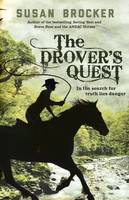 Susan Brocker is a New Zealand author whose books keep getting better and better. Her love of animals and history are obvious in her stories, especially her latest book, The Drover’s Quest. The story is set in 1860s New Zealand and tells the story of Charlotte who joins a drove from Christchurch to the West Coast to find out what has happened to her father. You can read my review here on the blog.
Thanks to Susan’s wonderful publishers, HarperCollins NZ I have 2 copies of The Drover’s Quest to give away. All you have to do to get in the draw is enter your details in the form below. Competition closes Monday 25 June (NZ only).


Share this:

My favourite Anzac novels
In my other Anzac posts I’ve highlighted some great new Anzac books from New Zealand authors. In my last Anzac post I want to tell you about a couple of my favourite Anzac books, The Ghosts of Iron Bottom Sound by Sandy Nelson and A Rose for the Anzac Boys by Jackie French.
The Ghosts of Iron Bottom Sound by Sandy Nelson
 What would you do if the ghosts of World War Two were stuck inside your head and wouldn’t leave you alone? Paddy is an ordinary New Zealand kid who becomes obsessed with a book that he gets from the library about the wrecks of warships sunk in World War Two at Guadalcanal. This book is special – the ghosts of men who were killed in these battles are trapped inside and they want everyone to remember why they died. The ghosts call out to Paddy but only he can hear their voices. Whose voices are they and why are they reaching out to him? The ghosts tell him he has to ask his grandfather about the battle at Guadalcanal, but his grandfather has never talked about the war so how will Paddy get him to tell him his story?
The Ghosts of Iron Bottom Sound is a fantastic and unique book about the horrors of war and how it affects people. The ghosts of the war talking to Paddy is a really interesting way to tell the story and Sandy Nelson makes you really care about what happens to the characters. This is now one of my favourite war stories. Sandy Nelson joined us on the Christchurch Kids Blog in 2011 to talk about her book and the research she did before writing her story. Her posts are really interesting and well worth checking out.
A Rose for the Anzac Boys by Jackie French
 The ′War to end all Wars′, as seen through the eyes of three young women
It is 1915. War is being fought on a horrific scale in the trenches of France, but it might as well be a world away from sixteen-year-old New Zealander Midge Macpherson, at school in England learning to be a young lady. But the war is coming closer: Midge′s brothers are in the army, and her twin, Tim, is listed as ′missing′ in the devastating defeat of the Anzac forces at Gallipoli .
Desperate to do their bit – and avoid the boredom of school and the restrictions of Society – Midge and her friends Ethel and Anne start a canteen in France, caring for the endless flow of wounded soldiers returning from the front. Midge, recruited by the over-stretched ambulance service, is thrust into carnage and scenes of courage she could never have imagined. And when the war is over, all three girls – and their Anzac boys as well – discover that even going ′home′ can be both strange and wonderful.
Exhaustively researched but written with the lightest of touches, this is Jackie French at her very best.
The reason I love A Rose for the Anzac Boys is because it tells history from a female perspective. In this case it tells the stories of a group of Australian girls who travel to France to do what they can for the war effort. Jackie French is an amazing writer and she always tells a good story. Jackie also provides detailed historical notes at the end of the book so you can see how historically accurate her story is.
- I’m currently reading David Hill’s My Brother’s War and Ken Catran’s Earth Dragon, Fire Hare, both of which are shortlisted in the 2013 New Zealand Post Children’s Book Awards. I’m sure I will be able to add these two to my list of favourite Anzac stories too.
Share this:

Guest Post: Glenda Kane on Anzac Day Parade
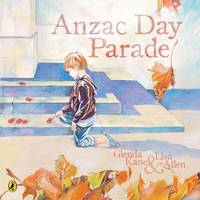
Today I’m joined by Glenda Kane, author of the picture book, Anzac Day Parade. Glanda tells us about her Anzac memories and why she wrote her story.
 My husband is Australian and I’m a Kiwi, so we’re Anzacs. Having travelled a lot, we realise we’re pretty lucky to live in this peaceful corner of the world.
We have three sons who love playing war games. To them, it’s fun. But I wanted them to understand that, in real life, war is not a game.
“There he stood on the sun-parched hill, a straggler from 18th Battalion.”
I’d attended an Anzac Day service at the Auckland Cenotaph with my family. Afterwards, I noticed an old man dressed in his best jacket – complete with medals – leaning on a walking stick, staring out towards Rangitoto. A small boy was looking at him with an expression of awe.
At that moment, I wondered what the old soldier was seeing as he gazed into the distance. What was he remembering? What had he been through? And what did the little boy think?
I’ll never know who they were. I just went away and made up the story.
“Did ya shoot them dead,” asked the bright-eyed boy. “Did it feel real cool to kill?” With a voice bereft of joy, he sighed: “No son, it was no thrill.”
When the illustrator, Lisa Allen, needed an old soldier to become her model, we contacted 92-year-old Crete veteran Noel Dromgool and his wife, Peggy. They allowed us to photograph Noel while he reminisced about training, battle, defeat, and his long internment in a prisoner of war camp.
We were privileged to hear his stories over the course of an afternoon. We left with immense respect for a man and his mates who sacrificed so much for their country and for future generations – us, and our children.
Quite a long time passed before the book was printed. Finally, I phoned Noel and Peggy to tell them it was published. There was no reply. Eventually I called another number listed under ‘Dromgool’ in the phone book. It turned out to be Noel’s son.
I explained who I was and said I wanted to show his father the new book. “Bad news, I’m afraid,” he said. “Dad died.” I wanted to cry. Instead, I asked if I could send the book to Peggy. “I’m afraid she died, too.”
The youngest soldiers from the Second World War are now at least 85 years old.
If anyone has a grandparent or great-uncle or neighbour who fought in the war, talk to them; ask them questions; write down their story. Do it now. There isn’t much time left.
I’m proud to say that when Noel’s son saw Anzac Day Parade he said he thought it was “pretty bloody good,” and that his dad would’ve thought so, too.
I hope young readers think it’s pretty good as well.
Share this:

Guest Post: Feana Tu‘akoi on Lest We Forget
Today I’m joined by Feana Tu’akoi, author of the picture book, Lest We Forget. Feana tells us about her Anzac memories and why she wrote her story.
 When I was a kid, war horrified me. The terror, hardship and ruined lives – it seemed like such a stupid way to sort out our countries’ differences. I didn’t want any part of it. And I definitely didn’t want to celebrate it.
But I was a brownie and then a girl guide in small town South Canterbury. So, every year I had to march in the ANZAC parade.
I hated it – all those speeches, raving on about the brave soldiers who fought for victory. How could it be a victory when so many people died? What about the fathers, brothers and sons, on both sides, who never came back? What about the people who did come back, but were permanently damaged? I thought we should have been able to find a better way.
When my family moved to the North Island, I stopped going to the parades. But then I studied history at university. I talked to people who were involved in World War II and I realised that things weren’t as black and white as I’d thought.
Lots of people actually wanted to go to war, for lots of different reasons. They thought that they were protecting their families and helping to make the world a better place.
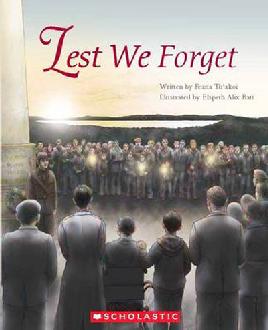 So my husband, Sione, and I went along to a Dawn Parade. I was shocked. Nobody talked about how glorious war was, or even that it was the right thing to do. They just talked about how important it was for us to remember, so that we could all continue to live in peace.
That was when I realised. We weren’t there to celebrate war. We were there, Lest We Forget. And that’s why I wrote this book. We need to remember the past, so we can make better decisions in the future.
I think that the next generation is smart enough to do just that. And that’s why I dedicated this book to my kids.
Feana Tu‘akoi, March 2012.
Share this:

New Zealand at war: New books from Ken Catran
Ken Catran is one of New Zealand’s most prolific authors for children and young adults. He’s an incredibly flexible writer because he writes for different age groups and in different genres. One of my favourite books by Ken Catran is the New Zealand Post Children’s Book Awards 2011 finalist, Smiling Jack. A lot of Ken’s books deal with war and the way that it affects those both at war and at home.
Ken has recently had two new books published which focus on New Zealand’s role in war. These two new books focus on two wars that most New Zealanders know very little about, the second Boer War (1899-1902) and the Malayan Emergency (1948-60).
When the Empire Calls – published by Scholastic New Zealand
It is 1899 and the Boer War has just begun in Africa. The Boer War is the first overseas conflict that New Zealand as a nation is involved in. Young men and women are eager to sign up to help the British Empire. Patriotism sweeps through New Zealand, even reaching small farming communities like Huia.
James McDonald is a teenage boy who lives on a farm in Huia with his parents and brothers and sisters. When his two older brothers sign up James is left to help his father run the farm. Left behind by his brothers and two sisters who are training to be nurses James has to assume extra responsibility and also grow up quickly. The reality of war is illustrated vividly by James’ brother Edward in his letters home and James begins to worry that he may never see his brothers alive again.
“Croaky Fred” who owns Fred’s Grocery Emporium is a person who believes that war is neither glorious nor justified. He challenges James to question his assumptions and ideas about the war. Fred’s outspoken views are considered unpatriotic by many townsfolk, who are unaware that Fred is himself a war hero who knows only too well the horrors of war. Unfortunately for James and his family, Fred’s concerns and dire predictions don’t turn out to be unfounded.

Earth Dragon, Fire Hare – published by HarperCollins New Zealand
New Zealand’s forgotten war, fought in the deep green jungles of Malaya. In 1948, Britain and her allies are pitted against Communist terrorists in a struggle for freedom. On opposing sides are Peter Hayes, a young Kiwi soldier, and Ng, a dedicated guerrilla. They are enemies but, as the bitter conflict deepens, both will ask questions. Who fights for freedom? Who is the oppressor?
And then a chance horoscope links them … to meet in battle. Destiny also decrees that Peter and Ng will become unlikely comrades. But in this treacherous and bloody war, nothing is as it seems – not even trust. The path to honour and the search for peace promise to be hard-fought and come at the highest cost. EARTH DRAGON, FIRE HARE is the ultimate tale of war.

Enter my Anzac books giveaway to win a copy of When Empire Calls and Earth Dragon, Fire Hare.
Share this:

Blood Runner by James Riordan
The best authors can put you in their characters shoes and experience everything that they do. You can empathise with the characters and feel all their emotions. James Riordan is one of those authors. I still remember how I felt when I read his book Sweet Clarinet (about a boy badly injured in World War II) many years ago. His latest book, Blood Runner, puts us in the shoes of a boy growing up in Apartheid South Africa, who fights for his people’s freedom in the only way he knows how.
Samuel is growing up in a South Africa divided into blacks and whites. Samuel and his people have to carry passbooks in order to move into the whites-only zone, but a group of men in Samuel’s town don’t think that it is right they should have to carry them. This group stage a peaceful protest by walking to the police station, and many of the other residents of the town, including Samuel and his family come to watch what will happen. In a display of their force, the police arm themselves with guns and tanks, and when someone fires accidentally, all hell breaks loose. As people try to flee, the police start gunning them down and Samuel’s parents and sister are killed. Samuel is separated from his brothers who both retaliate by joining the anti-Apartheid movement, with guns and terrorism as their weapons. But Sam decides to fight for freedom in his own way – as a runner. Against all odds, Samuel strives to become the best runner he can so that he can compete in marathons, and achieve his dream of winning gold in the Olympic Games.
Blood Runner is an inspirational story that portrays the hardships and prejudice that black people, like Samuel, faced in Apartheid South Africa. Through Samuel, James Riordan shows us that people can face extraordinary circumstances but still have the strength and determination to fight for what they believe is right. James Riordan also shows us, through other people Samuel meets, that not all white people shared the same views, that many of them wanted everyone in South Africa to have the same rights and freedom. James also provides a basic history of Apartheid at the end of the book which would be a great teaching tool. If you like authors like Elizabeth Laird, Deborah Ellis or Sally Grindley then this is the perfect book for you.
4 out of 5 stars

 My Best Friends Are Books