Seraphina by Rachel Hartman is an exciting new fantasy that looks perfect for fans of Christopher Paolini’s Inheritance Cycle. Fantasy books have been a bit light on the ground recently so I’m looking forward to losing myself in this book. Seraphin
fantasy

Interview with Christopher Paolini, author of Eragon
Christopher Paolini, the author of the Inheritance Cycle, came down to Christchurch at the weekend for the Armageddon Expo. Along with hundreds of other fans, I went along to listen to Christopher talk about his books and get some copies of his books signed. I caught up with Christopher to ask him a few questions about his books and writing.

- What inspired you to write the Inheritance Cycle?
Boredom, mainly, and the desire to have adventures myself. Growing up, I never wanted to be a writer. No, I wanted to be flying dragons and fighting monsters! But since I couldn’t do that, and since I had a lot of time on my hands after I graduated from high school at fifteen (I was homeschooled my whole life), I decided to write my daydreams down. Fortunately for me, enough people around the world have enjoyed reading them that I get to tell stories for a living.
- How do you keep track of all the different characters within the world of your books.
With lots and lots and lots of files. I didn’t used to do that when I started Eragon, but very quickly I found myself with so many characters, I couldn’t keep track of all of them in my head. So I started writing them down in a file, along with all of the words of my invented languages, timelines, and so on. It can be a bit tedious, but in the long run, it saves a lot of effort.
- How did it feel to get your story published when you were so young?
 Well, it was gratifying to know that people actually wanted to read something that I had written. And it was really neat to see my books shelved in the library and bookstores just like all of the books I had read growing up. But at the same time, it was a strange experience to go from a rather rural upbringing in Montana to traveling all around the world and talking to thousands of people at a time. Writing and publishing these books changed my life completely, and again, I’m grateful for the opportunities they have given me.
- The Inheritance Cycle has been a huge phenomenon. Do you feel any pressure from your fans to write something just as amazing, or even better, next?
Not really. I like to think that whatever I write next will be better than what I’ve written before (I’ve learned a lot from each book, after all), but either way, I’m happy with what I accomplished with the Inheritance cycle, and it won’t bother me if my future books aren’t as popular. When I started Eragon, I was just trying to write the sort of story that I wanted to read myself. Moving forward, that’s all I can hope to do. I can’t write to please others, only myself.
That said, I do think you’ll enjoy my next book. 🙂
- How did you find the experience of your book being made into a film?
Strange and surreal! I’m glad that the movie was made—very few books are ever adapted into films, after all—and I gave as much input as I could into the process, but ultimately, the movie reflects the director’s and the studio’s vision of the story, even as the books reflect mine. Hopefully we’ll get some more movies in the future, though.
- What books would you suggest for anyone that loves the Inheritance cycle?
Dune by Frank Herbert, Magician and sequels by Raymond E. Feist; A Wizard of Earthsea and the first two sequels by Ursula K. Le Guin; the Belgariad, the Mallorian, and the Elenium by David Eddings; Memory, Sorrow, and Thorn, by Tad Williams; the Gormenghast trilogy by Mervyn Peake; The Worm Ouroboros by E. R. Eddison; the Dragonriders of Pern series by Anne McCaffery; the Pit Dragon trilogy by Jane Yolen, the Redwall series by Brian Jacques; Fablehaven and sequels by Brandon Mull; and many, many more.
- Why did you want to be a writer?
Because I didn’t have anything else to do at the time, and because I’ve always enjoyed creating things with my hands, whether it was knives, swords, drawings, chain mail, or books. Also, because stories (both in books and in other media) touch me in a way that few things in this world do, and I wanted to share that feeling with other people.
- What’s the best thing and the worst thing about being a writer?
Worst thing? Having to sit down every day and work on the same thing for years on end, even if I don’t feel like it at that particular moment. Best thing? Getting paid to describe my dreams for a living, and knowing that what I’ve written has changed people’s lives all around the world.
- If you weren’t a writer what would you be?
A blacksmith, or a professional artist, or a film director. Whatever I ended up doing, I know that I would make things. That’s what I love to do—make things.
- If you could give one piece of advice to aspiring writers what would it be?
Hmm. There’s no way I can restrict it to one piece of advice, so here’s what I always tell aspiring writers, regardless of their age:
- Read, read, read, read. Good writers are good readers. Read what you love, but also read things outside of your comfort zone, because you’ll learn more than if you just stick with what you’re familiar with.
- Write every single day. Don’t wait for inspiration. I only get inspiration about once every three months. In the meantime, I write. I write on weekends, I write on holidays, and I write on my birthday. In short, I write. I do take Christmas off—and of course I can’t really write when I’m traveling—but that’s the extent of it. Writing is like playing a musical instrument: if you want to get good at it, then you have to practice every single day, even when you don’t feel like it. So unless you’re in the hospital—and maybe even then—you better write. Of all the traits an author can possess, persistence is the most important. It doesn’t matter how talented you are. If you don’t practice, you’ll never master your craft. As Calvin Coolidge said: “Nothing in this world can take the place of persistence. Talent will not; nothing is more common than unsuccessful people with talent. Genius will not; unrewarded genius is almost a proverb. Education will not; the world is full of educated derelicts. Persistence and determination alone are omnipotent. The slogan “press on” has solved and always will solve the problems of the human race”
- Write about whatever it is you care about the most. Writing is often difficult, but if you truly care about the subject material, that’ll help you through the rough patches. And it doesn’t matter what your interests are. Just don’t let someone else tell you what you should or shouldn’t write. If you want to compose a twelve-volume epic about singing toasters and flying unicorns … then go for it! There are over six billion people on this planet. Through sheer odds, I guarantee that there are lots of other people out there who like the same things you do, no matter how obscure they might be.
- Learn everything you can about the language you’re writing in. Grammar is boring, I know, but the better you understand your language, the better you’ll be able to get what’s in your head onto the page and into someone else’s head.
- Find someone in your life—friend, family member, teacher, librarian, etc.—someone who is a good reader, who likes the sort of thing you’re writing, and who can help edit your work. As painful as editing can be, I guarantee that you’ll learn more from editing than you ever will from just writing. The trick isn’t just to perform (and make no mistake, writing is a performance), the trick is to perform and to consciously evaluate what you’re doing so that you can improve. For example, when singing, it’s sometimes hard to hear if you’ve hit a bad note. That’s why every professional singer goes to a voice coach. Sometimes more than one. Writing is no different. Your trusted readers, your editors, are your voice coaches. Listen to them, and you’ll improve at your craft far faster than you would otherwise.
- This doesn’t work for every author, but I would also recommend plotting out your stories beforehand. Again, a musical analogy may serve: it’s hard to compose a piece of music while performing it, so first you compose it, and then you can concentrate upon performing it as beautifully as possible. So too with writing. Also, read the book Story by Robert McKee. It’s highly useful when it comes to learning how to understand the underlying structure of stories. If I try to write without knowing where the story is going, I get instant writer’s block.
- As a corollary to No. 2 – don’t give up. It’s incredibly easy to give up, and there are many, many people in the world who will tell you that you can’t do something. Well, I’m here to tell you that you can, assuming you’re reasonably intelligent and willing to put in the work. Sure, you’re going to get discouraged, and there are going to be days when it seems impossible to finish a book or get it published. That happens to all of us. Even once we’re published. The trick is to keep plugging away and trying to get better.
- And lastly, try to have fun. You don’t have to have fun every day, but try to have fun more days than you don’t. If you can’t, maybe it’s time to think of a profession in a different line of work.

Thank you for reading my books, and I hope you enjoy my future ones even more.
And as Eragon himself would say, “Sé onr sverdar sitja hvass!”
May your swords stay sharp.
Share this:

Red Rocks by Rachael King
A great book can transport you to a place that you’ve never been to. You can picture it so vividly in your mind and you can smell the smells, feel the warm sun on your skin or the biting wind in your bones. I especially love books set in New Zealand, because they can show me a part of the country that I’ve never seen and make me want to visit it desperately, just so I can imagine the characters walking around the place. Rachael King’s new book for younger readers, Red Rocks, transported me to Wellington’s wild south coast and immersed me in a magical story about the mystical selkies.
While holidaying at his father’s house, Jake explores Wellington’s wild south coast, with its high cliffs, biting winds, and its fierce seals. When he stumbles upon a perfectly preserved sealskin, hidden in a crevice at Red Rocks, he’s compelled to take it home and hide it under his bed, setting off a chain of events that threatens to destroy his family. Can he put things right before it’s too late?
Red Rocks is a magical adventure story, set in New Zealand, that children and adults alike will love. Rachael King has taken the Celtic myth of the selkies and transplanted it into a New Zealand setting that kiwi kids will relate to. Jake is an average kid who gets sent to live with his dad for a few weeks, and like any kid, soon gets bored and sets off to explore the coast. I really liked Rachael’s interesting cast of characters, from old Ted who lives in a run-down shack along the coast, to the mischievous Jessie and mysterious Cara. Jake’s dad is a positive father figure who cares a lot about his son (something that I like to see in children’s fiction and is often missing). There is a hint of darkness running throughout the story (you’ve probably already guessed this if you know the myth of the selkies) and you get a feeling of foreboding right from the start.
One thing that I particularly love about Red Rocks is Rachael King’s beautiful writing. She’s very descriptive so she paints a vivid picture of the wild, windy coast. It’s the sort of book that you want to read snuggled up in bed because you almost feel the biting wind and the freezing ocean.
Red Rocks is perfect for age 9+ and would be a great read-aloud for Year 5-8. Grab a copy from your library or bookshop now. You can also enter my Red Rocks competition to win a copy.
5 out of 5 stars
Share this:

Win Red Rocks by Rachael King
 Red Rocks is a fantastic, magical adventure story for younger readers from local author Rachael King. It’s a wonderful story that’s set in New Zealand that’s perfect for age 9+ and would be a great read-aloud for Years 5-8. To find out more about it and why I thought it was so good, you can read my review here.
Thanks to Random House New Zealand I have 2 copies to give away. All you have to do to get in the draw is leave a comment below telling me: What is your favourite children’s book set in New Zealand? Competition closes Monday 11 June (NZ only).
Thanks to everyone who entered. The winners are Cath and Lee-Ann.
Share this:

Carole Wilkinson’s Dragonkeeper Blog Tour – Day 6
Today I’m joined by Australian author Carole Wilkinson, author of the wonderful Dragonkeeper books. Carole has just released the 4th book in the Dragonkeeper series, Blood Brothers, and the whole series now has a fantastic new cover design. I really enjoyed the first 3 books in the series, which I read many years ago, so I’m looking forward to getting back to that world again.
Thanks for joining me Carole!

It’s great to be travelling across the Tasman for today’s blog, hosted by Zac at the My Best Friends are Books blog. I’m writing about creating some of the characters in the Dragonkeeper series.
A Reluctant Heroine
Creating convincing characters is perhaps one of the hardest things about writing fiction. I rarely base characters on people that I know, not consciously anyway. When I created the main (human) character for Dragonkeeper, I wanted her to start with nothing. Absolutely nothing. Not even a name. And so I created a slave girl who has no freedom, no possessions, no friends. What she does have is resourcefulness. She has learned to make the most of her miserable life — finding a friend in a friendless world (Hua her pet rat), collecting a few precious items to call her own (a rusty iron blade, a white eagle feather, a piece of weathered wood shaped like fish) and enjoying simple pleasures such as a warm fire and a bowl of lentils flavoured with some purloined ginger.
I didn’t want her to be someone who has always known she was special, or who always had a dream to achieve something grand. At the beginning of the story, Ping has no expectation of any aspect of her life changing. She isn’t craving freedom, she just makes the best of a bad situation.
When offered escape she doesn’t snatch it, she hangs back and has freedom more or less forced upon her. When told she has latent special skills and the opportunity to take up an important role, she doesn’t believe it. That can’t be her. She struggles with her role as dragonkeeper.
Back in 2001, when I started writing Dragonkeeper I didn’t realise how much of me there was in my main character. Just like Ping needed a push to begin my journey to becoming a writer. I had absolutely no confidence that I could achieve that goal.
Inspiration for the Timid
When I was young, there were always those girls who effortlessly excelled. They were natural athletes or had a talent for music or were clever enough for maths and Latin to be a breeze. They were the ones teachers loved. I wasn’t sporty or musical, and I got average marks. I might well have been good at writing stories, but no one asked me to do that. Classes had 40-plus students and teachers didn’t remember my name.
I wanted Ping to be a character to inspire girls who are average and insecure, whose talents are hidden or yet to be acquired by years of hard work.
Draconic Characters
One of the most enjoyable aspects of planning the Dragonkeeper series has been creating the characters of the dragons. First there is Danzi who is frustratingly uncommunicative and past his prime, but who has a quirky sense of humour. In Garden of the Purple Dragon there is Kai, a cheeky dragonling, easily bored. Then in Dragon Moon I got to create a whole cluster of dragons — eight of them, all with very different characters.
I drew on Chinese mythology for the basic characteristics of the dragons — their colours, ability to shape-shift, and the fact that they hibernate in deep pools — and then developed these features. Chinese dragons come in five different colours — red, yellow, black, white or green. I started by deciding that each colour would be like a subspecies with its own characteristics. Red dragons are the biggest, with horns up to a metre long and blue whiskers. They are mediators. They can’t shape-change, but they can camouflage themselves. White dragons are the smallest and the best fliers. They can only shape-change into white birds. The yellow dragons are timid and they sing. The black dragons are more solitary. Unlike all the other dragons, they don’t like water much. They are bad-tempered and prone to fighting, but fiercely protective of their cluster. And the green dragons are natural leaders with exceptional shape-changing skills. They are as at home in the water as they are in the air.
Not all my dragons remain true to type. In the latest book in the series, Blood Brothers, Kai has lost interest in being a leader, and gentle Sha has undergone a radical personality change. I’m looking forward to developing the characters of my other dragons in future books.
Carole Wilkinson
Blood Brothers, book 4 in the Dragonkeeper series. Out now!
Share this:

Win a set of Carole Wilkinson’s Dragonkeeper books
Australian author, Carole Wilkinson, has written a great post for My Best Friends Are Books to celebrate the release of Book 4 in the Dragonkeeper series, Blood Brothers.
Thanks to Walker Books Australia I have a full set of the four books in the Dragonkeeper series to give away. All you have to do to get in the draw for the books is leave your name and email address below. Competition closes Monday 4 June (NZ only).


Share this:

Welcome to The 13th Horseman NZ Launch Party!
 Today I have the pleasure of hosting the New Zealand launch of Barry Hutchison’s The 13th Horseman. I’ve been a huge fan of Barry’s for a while now and I wanted to do something special to launch his new book in NZ. In Christchurch we’re having a launch party with giveaways, a feast fit for a Horseman of the Apocalypse, and some special launch videos from Barry in Scotland.
If you can’t be in Christchurch you can still celebrate the launch of Barry’s hilarious new book. Barry has made 3 videos especially for his readers in NZ, in which he introduces The 13th Horseman, reads from the book, and answers some questions. Also, if you scroll to the bottom of this post, you can enter to win a copy of The 13th Horseman with a signed bookplate. Come on in and join the party!
Barry introduces The 13th Horseman
Barry reads an excerpt from The 13th Horseman
Barry answers some questions about The 13th Horseman
Thanks so much for the great videos Barry! If you haven’t got a copy of The 13th Horseman, rush out to your bookshop now to grab a copy or enter my competition to win one. Competition closes Friday 1 June (NZ only).
Thanks to everyone who entered the competition. The winners are Cath and Amu.
Share this:

Meet the Apocalypsies #4: Laurisa White Reyes
 Today I’m joined by debut author and member of The Apocalypsies, Laurisa White Reyes. Laurisa is the author of The Rock of Ivanore, book one in the new middle grade fantasy series The Celestine Chronicles, due out in May 2012. Laurisa lives in Southern California with her husband and five children. Publishing her first novel is a life-long dream come true. Here’s the blurb for The Rock of Ivanore:
The annual Great Quest is about to be announced in Quendel, a task that will determine the future of Marcus and the other boys from the village who are coming of age. The wizard Zyll commands them to find the Rock of Ivanore, but he doesn’t tell them what the Rock is exactly or where it can be found. Marcus must reach deep within himself to develop new powers of magic and find the strength to survive the wild lands and fierce enemies he encounters as he searches for the illusive Rock. If he succeeds, he will live a life of honor; if he fails, he will live a life of menial labor in shame. With more twists and turns than a labyrinth, and a story in which nothing is at it seems, this tale of deception and discovery keeps readers in suspense until the end.
Now, it’s over to Laurisa to tell you about magic, impossible feats, and how The Rock of Ivanore came to be. Thanks Laurisa for your wonderful post.
“Magic is believing in yourself. If you can do that, you can make anything happen.” – JohannWolfgang Von Goethe
I love magic. I am not ashamed to admit that I am a big fan of Harry Potter, Bartimaeus, and Eragon. As a kid, I devoured The Lord of the Rings by J.R.R. Tolkien and The Narnia Series by C.S. Lewis. I watched the Disney fairytales a hundred times over because for Cinderella, Sleeping Beauty, The Little Mermaid magic always saved the day.
Magic’s Long History
Magic has been around for as long as human kind has existed. Ancient civilizations such as the Greeks, Romans and Egyptians used rites and rituals to gain the favor of their Gods who in turn used their magical powers to intervene in human affairs.
During the late middle ages, people were often fascinated by magic, but they feared it, too. Joan of Arc (1412-1431) was accused of being a witch and burned at the stake. In 1692-1693 in Salem, Massachussetts, 200 people were accused of practicing magic, or what they called witchcraft. Twenty were executed.
Magic eventually became a form of entertainment. In the early twentieth century, Harry Houdini captured the world’s attention with his death-defying escapes and feats of magic. Today magic is as popular as ever with live stage shows, movies and television, and books attracting audiences all over the world.
Why We Love Magic
Why this ongoing fascination with magic? Could it be that deep down in the human psyche we long for the ability to change the world around us, to manipulate things to our liking? We want to defeat evil, to beat the odds, to overcome seemingly impossible challenges. Magic enables us to reach beyond the mundane and even negative aspects of our lives and to visualize what could be.
When Harry Potter, an otherwise average boy, destroys the ultimate evil villain Voldemort, we can imagine destroying whatever bad things are in our lives. When Eragon flies on his dragon across the mountains of Alagaesia, we are, in a sense, flying with him, achieving the impossible.
Magic is, of course, not real. As much as we love it, none of us will cast spells or tame dragons. But magic does allow us to dream and to discover ways to achieve the impossible that are within our means.
Reaching Beyond the Possible
On October 31, 2003 thirteen-year-old Bethany Hamilton was attacked by a 15 foot shark while surfing off the coast of Kauai in Hawaii. Bethany lost her left arm and, many believed, her future as a professional surfer. But Bethany did what seemed impossible: she taught herself to surf again with one arm and returned to the world of competitive surfing. Her story was made famous in a book and the recent film Soul Surfer.
Bethany’s courage and determination are not unusual. These are the very traits that have motivated individuals throughout history to achieve the impossible.
At the turn of the twentieth century, flying was nothing but a dream, something magical that had only been explored in fiction novels. Man could not fly. Everyone who had tried had failed. But Orville and Wilbur Wright dreamed big. They reached beyond human limitations and did the impossible. They flew.
How The Rock of Ivanore Came To Be
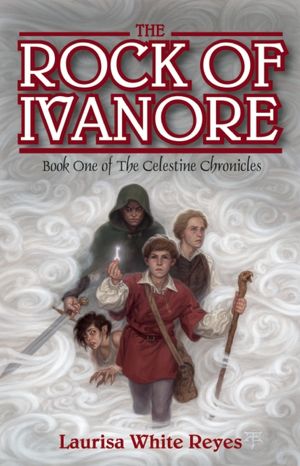 For me, writing and publishing my first novel was an act of achieving the impossible. Six years ago, my son and I often read stories together at bedtime. One night, he asked me to make up a story instead. I told him a story about Marcus, an enchanter’s apprentice who was a failure at magic. Every time he tried to cast a spell, it backfired. Each night, I’d ask my son what he wanted to hear about, be it dragons, or magic, or sword fighting, and I’d weave those elements into the story. Over the course of time, Marcus learned how to master his abilities to do what he never thought he could do before.
I have always wanted to be an author, but although I spent many years writing for newspapers and magazines, I thought I could never publish a book. Like Marcus, I was afraid that if I tried, I would fail. But telling those stories to my son gave me courage. I spent a year writing the first draft of The Rock of Ivanore. I received dozens of rejections and there were times I almost gave up. But instead, I kept telling myself, “If someone else has done it, I can do it, too.” Eventually, Tanglewood Press offered me a contract and my dream of being a published author became real.
Aim High. Dream Big.
So what can magic do for you? It might propel you to climb Mount Everest or discover the cure to cancer or invent something that’s never existed before. It might motivate you to master a musical instrument, to paint a masterpiece, or win the next big football game. Or it might help you become the next New York Times bestselling author. Remember, magic is really nothing more than reaching beyond the possible to achieve the impossible. And in that case, there is at least a little magic in all of us.
Links:
My website – http://www.laurisawhitereyes.com
My blog – http://1000wrongs.blogspot.com
Joan of Arc – http://archive.joan-of-arc.org/joanofarc_short_biography.html
Bethany Hamilton – http://soulsurfer.com/
Harry Houdini – http://www.apl.org/history/houdini/biography.html
Share this:

The Extraordinaires: The Extinction Gambit by Michael Pryor
 I’ve been a fan of Michael Pryor’s ever since I first picked up Blaze of Glory, the first book in his Laws of Magic series. I was captured by the old-style covers and as soon as I started reading I was transported to a world very similar to ours. The series was full of magic, politics, intrigue, espionage and brilliantly witty characters. When I found out that Michael had started a new series I was eager to delve into his new story and meet new characters. His new series is called The Extraordinaires and the first book, The Extinction Gambit, introduces us to a shadowy London where dark creatures lurk just below the surface.
Kingsley Ward knows nothing of his parents. His foster father, Dr Ward, refuses to tell him how he came to be looking after Kingsley. On the night that he is to make his professional debut on stage with his death-defying escapology, his performance ends in disaster. Kingsley has a wolfish nature that bursts free at the most inappropriate times, especially in the middle of his performance in front of hundreds of people. A strange albino girl called Evadne comes to his rescue and takes him back to his foster father’s house, only to find his father is missing, the house keeper has been murdered, and two abnormally large, very ugly men are ransacking Dr Ward’s library. Kingsley has no idea who these men or what they have done to Dr Ward. Evadne takes Kingsley to her secret hideaway and explains that she is part of the Demimonde, the ‘world of the dispossessed and the fugitive, of outlaws, thieves and cutthroats, of the lost and abandoned, of the strange and uncanny.’ Through alternate chapters Michael Pryor introduces us to other members of the Demimonde: Jabez Soames, the human inside the Demimonde who wheels and deals and knows just how to bargain with the various groups in the Demimonde; the True Humans or Neanderthals (depending on whether you’re one of them or not) who want to wipe out the Invaders (Homo sapiens) by travelling back in time and killing them; and the Immortals, a group of immortal sorcerers who need to inhabit the bodies of children to live the longest. As the story progresses the paths of these various groups cross and it’s up to Kingsley and Evadne to disrupt their plans before it’s too late.
Michael Pryor has once again created a story filled with action, suspense, mystery and fantastic characters. I loved the idea of this group of shady characters lurking underneath London and having a group of Neanderthals that didn’t die out is brilliant. The Immortals at first sounded a little like vampires, but I think they’re far creepier. There’s also a slight hint of the Frankenstein story creeping into this story, as the Immortals create their minions, the Spawn, from their own body parts that they cut off. Like Aubrey in The Laws of Magic, Kingsley is a fantastic character who is intelligent and witty. At first I thought Kingsley’s wolfish nature might be hinting at him being a werewolf, but the true is much more exciting, and is linked with Rudyard Kipling who is also a minor character. Evadne is a girl who can look after herself (and Kingsley at times) and is also incredibly intelligent. There is a sense that there are many layers of Evadne that Kingsley, and the reader, hasn’t been introduced to yet. The Extinction Gambit is the perfect book for anyone who likes their supernatural/fantasy stories without the gushy romance. I can’t wait to see what Michael Pryor has in store for Kingsley and Evadne next.
Share this:

The Exquisite Corpse Adventure
 What happens when some of the coolest children’s book authors and illustrators play a writing game that starts with one person’s ideas and ends with a novel of 27 episodes? You get The Exquisite Corpse Adventure. The title makes it sound like it should be a horror story, but it’s actually a weird, crazy, funny, out-of-control story put together by some of the coolest authors around. If you’ve read or participated in the FaBo story that Kyle Mewburn started, The Exquisite Corpse is the same idea.
The story starts with twins Nancy and Joe escaping from the circus, where they have lived since they were babies. With the help of different clues, Nancy and Joe search to piece together the Exquisite Corpse and find their parents. Each chapter is written by a different author, so just when you think you know what’s going to happen next, the story can go off in a completely different direction. The story is a little bit like Alice in Wonderland and The Phantom Tollbooth because they meet lots of weird and wonderful characters and get into some tricky situations. The first chapter hooks you in by imagining what could happen in the rest of the story:
“…there is a good chance that Nancy and Joe will have to deal with werewolves and mad scientists, real ninjas and fake vampires, one roller-skating baby, a talking pig, creatures from another planet…plenty of explosions, a monkey disguised as a pirate, two meatballs…and not just one bad guy but a whole army of villains.”
Pick up The Exquisite Corpse Adventure if you dare and be prepared to be taken on a wild ride.

 My Best Friends Are Books