Picture Book Nook: Mister Whistler by Margaret Mahy, illustrated by Gavin Bishop

Earlier this year we lost one of our national treasures, Margaret Mahy.  Margaret wrote many wonderful stories in her time, from picture books to novels, that are treasured by children all over the world.  October sees the publication of two of Margaret’s last stories, including the wonderful Mister Whistler, featuring gorgeous illustrations by Gavin Bishop.

Absentminded Mister Whistler always has a song in his head and a dance in his feet.  In a rush to catch the train, he is so distracted he loses his ticket.

Is it in the bottom pockets of his big coat or the top pockets of his jacket?  Perhaps he slipped it into his waistcoat…

Where is Mister Whistler’s ticket?

Mister Whistler is an absolute treasure.  It’s Margaret and Gavin’s first collaboration and I couldn’t imagine a more perfect pairing for this story.  Margaret’s story is delightfully old-fashioned and Gavin matches this with the styles and fashions of another era.  Mister Whistler is a rather distracted fellow, one of those people who would forget his head if it wasn’t screwed on.  He gets carried away by the music in his head, that makes his twitching feet long to dance.  While he is looking for his ticket he’s dancing out of his coat and tap dancing impatiently.  Children will love that they know something that Mister Whistler doesn’t – where his ticket is – and they’ll want to yell it out and tell him.

Gavin Bishop’s illustrations for Mister Whistler are my favourite of all of his work.  There’s so much joy and energy in the illustrations and you can see it bursting out of Mister Whistler, who is always smiling.  I love the way that Gavin has made the story flow from one page to the next, both my Mister Whistler’s dancing body and the musical notes which follow him.  Mister Whistler himself is quite gangly and I love the way that Gavin has him throwing his long limbs all over the place as he dances.  Gavin’s use of colour is spectacular, from Mister Whistler’s blue, checked trousers and very loud wall-paper, to the flaming sunrise in the background.  Gavin has added a real spark to Mister Whistler’s character too by giving him a crazy dress sense.

Once again, Gecko Press have produced an absolutely beautiful book that will be treasured by children and adults alike.  Mister Whistler is my favourite New Zealand picture book of the year and my pick for the winner of next year’s New Zealand Post Children’s Book Awards.

5 out of 5 stars

Interview with Barbara Else, author of The Queen and the Nobody Boy

Barbara Else is the creator of the Land of Fontania, the magical setting of her award-winning The Traveling Restaurant and her latest book, The Queen and the Nobody Boy.  Her books are full of magic, adventure, pirates, spies, and wonderful characters.  I had a few questions about Fontania and its inhabitants and Barbara very kindly answered them.

  • What’s your favourite place in Fontania?

I’m a city girl so it has to be the City of Spires. But I’d like to visit the High Murisons. There (so I have heard) live the only wild bears in Fontania. They have a growl deeper than any other living creature.

  • The Um’binnians have strange names and speak quite differently than the Fontanians. How did you come up with them?

The name for Um’Binnia just typed out under my fingers when I was wondering what to call the neighbouring country. It seemed to me that a good way to identity the Um’Binnian characters would be to use commas in their names too. They speak the same language as Fontanians but, just as all English speaking countries have different accents, I thought the Um’Binnians would sound different too.

  • The Queen and the Nobody Boy features some wonderful new characters, creatures and machines. What is your favourite creation from this story?

I love Hodie for his courage and determination.  And I love the squirrel for its single-mindedness.  But I think Princessa Lu’nedda is the character I cherish the most. She’s very troubled by her father, seems far too cutesy and fluffy at first, but is full of courageous surprises.

And I’m very pleased with the wind-train.

  • If you were the Queen of Fontania what would your first royal proclamation be?

‘Royal Proclamation, Part the First:  Every city, town and village in the Kingdom of Fontania shall have a library stocked to the brim with books to suit each child.

Royal Proclamation, Part the Second: At the end of each year of successful reading every child shall be rewarded with a cake shaped like the Travelling Restaurant.’

  • Can we look forward to more Tales of Fontania?

I’m certainly playing around with more ideas.


Barbara’s follow-up to The Traveling Restaurant, called The Queen and the Nobody Boy, is out now in NZ.  It’s another wonderful story, set in the world of Fontania.  You can read my review of The Queen and the Nobody Boy here on the blog.

Win a Gecko Press book pack

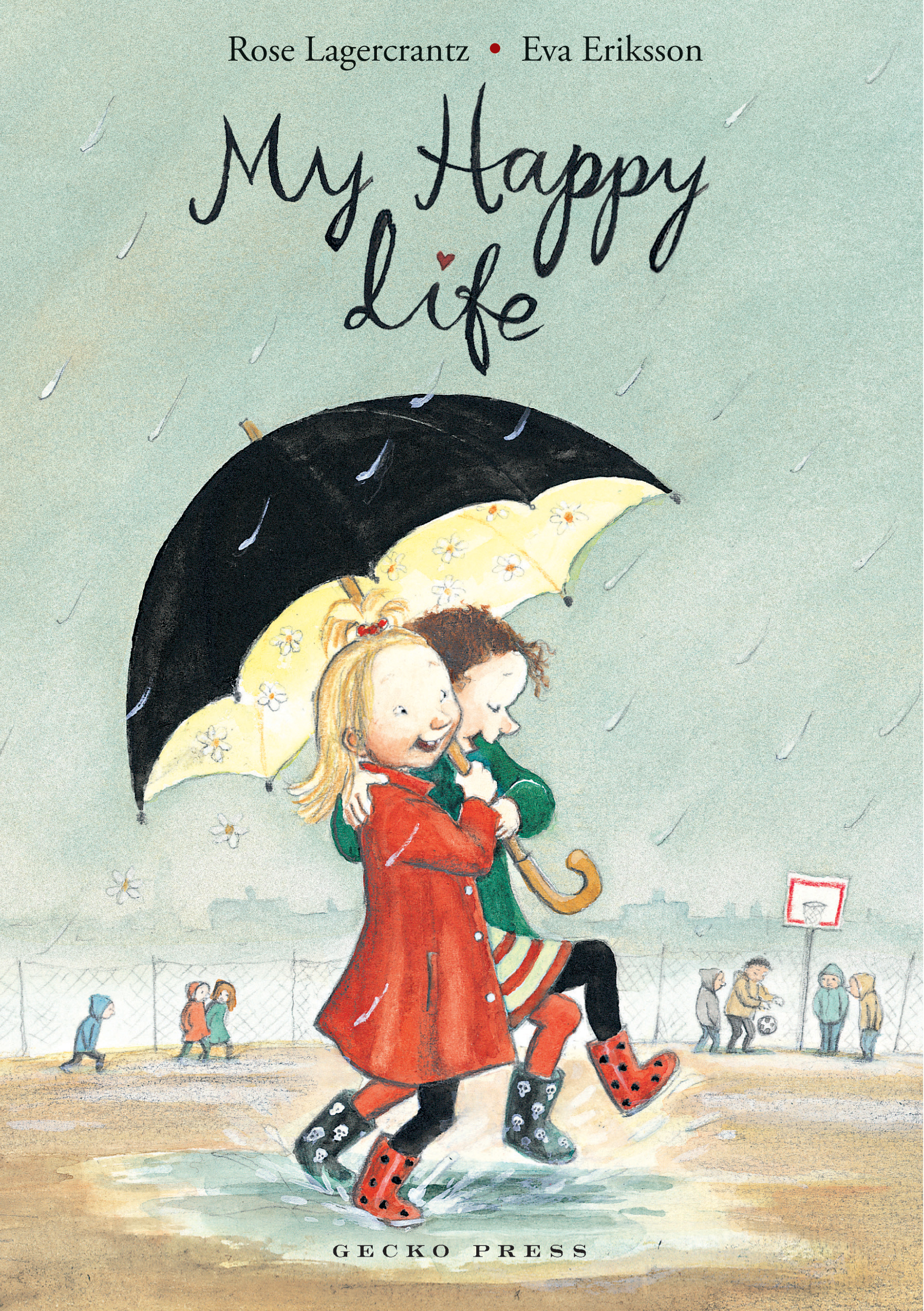
The Magical Life of Mr. Renny and My Happy Life are the latest releases from the wonderful Gecko Press.  I LOVE The Wonderful Life of Mr. Renny and reviewed it here on the blog in my Picture Book Nook feature. It’s no secret that I’m a huge fan of their ‘curiously good books from around the world.’

Thanks to Gecko Press I have a special pack of 4 of their latest releases to give away.  The pack contains:

  • The Magical Life of Mr Renny by Leo Timmers
  • My Happy Life by Rose Lagercrantz
  • The Best Singer in the World by Ulf Nilsson
  • The Birthday Cake Mystery by Thè Tjong Khing

This competition is now closed.  Thanks to everyone who entered. The winner is Jenny.

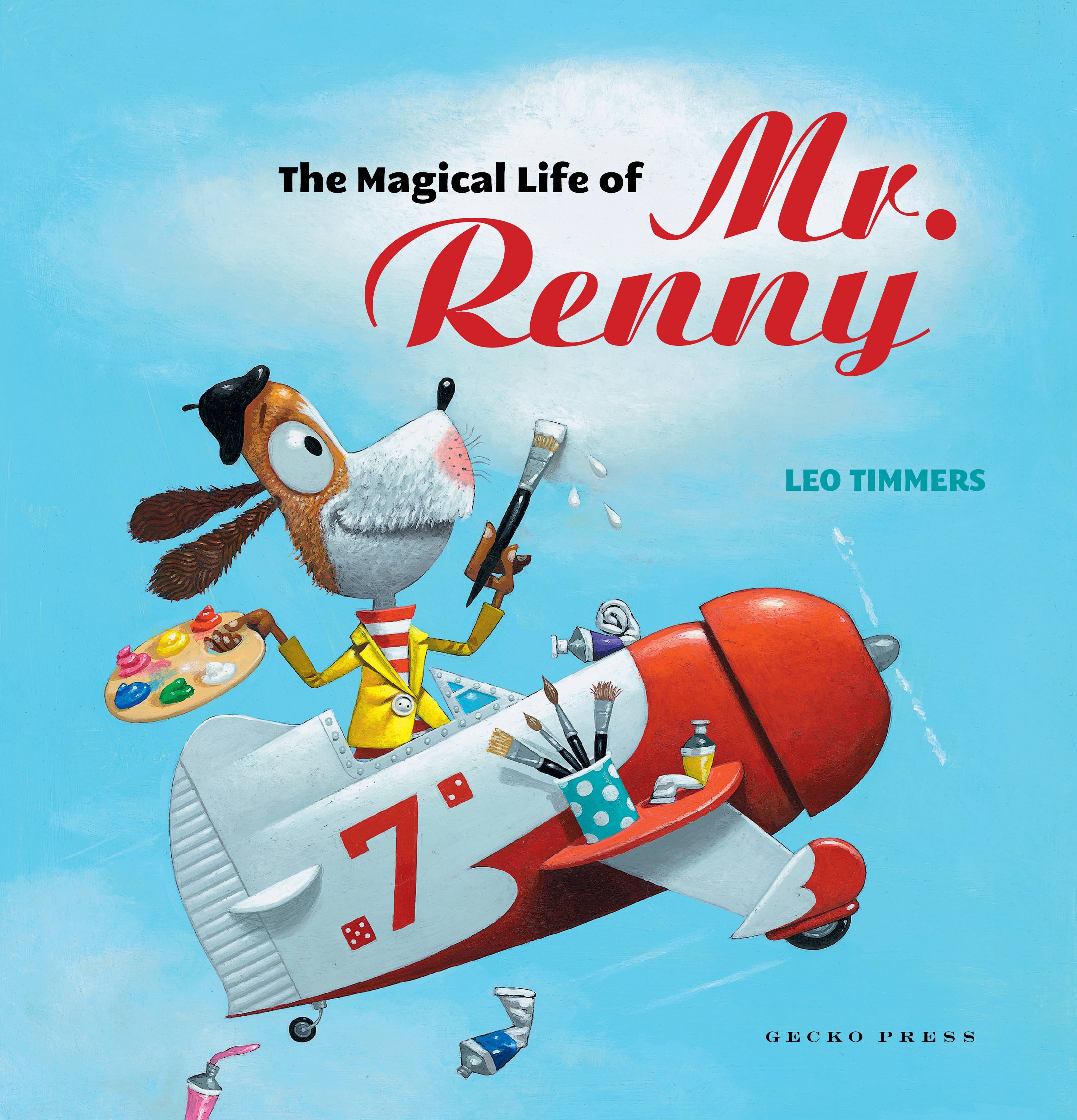
Picture Book Nook: The Magical Life of Mr. Renny by Leo Timmers

The wonderful Gecko Press introduced us to the remarkable Belgian picture book creator, Leo Timmers, when they started to publish his books in English.  He is incredibly talented, not only as a storyteller, but also as an artist.  His illustrations are vibrant and almost seem to jump off the page, so I can’t think of a better illustrator to create a picture book about an artist whose paintings become real.

Mr. Renny is a very good artist.  Whatever he paints looks just like the real thing, but no one wants to buy his paintings.  He has no money, and he’s hungry.  One day a mysterious stranger offers to make Mr. Renny’s dreams become real.  Now whatever he paints becomes real, including a hotdog, a car, and a ship.  But what happens when his friend wants to buy one of his paintings?

The Magical Life of Mr. Renny is a colourful masterpiece that children and adults alike will love.  Like Leo’s other books, including Who’s Driving? and I am the King, the illustrations are bright and vibrant, and he makes them look 3D so they jump off the page.  This is one of those picture books that you want to pick up again and again just to stare at the illustrations and find what you might have missed last time you looked.  Leo adds in lots of little details for you to find, like the goat who has dropped her eggs or finding all of Mr. Renny’s treasures in his mansion.  The story itself is funny and thoughtful and would make a great read aloud.  It promotes lots of discussion about art, greed and friendship, and you could have children talking for hours about what they would paint if their paintings became real. Local author, Bill Nagelkerke has done a fantastic job of translating the book into English and making it flow so well as a read aloud.  Gecko Press’ books are always beautifully designed and this is no exception, from the front cover and the inside flaps to the back cover with its frame design.

Get your hands on the work of art that is The Magical Life of Mr. Renny by Leo Timmers.

5 out of 5 stars

Picture Book Nook: A Mammoth in the Fridge by Michael Escoffier

If you find a mammoth in your fridge, there are two questions you should ask: How did it get there? and How do you get it out?  One day, Noah opens his fridge to find there is a mammoth in his fridge.  At first his father doesn’t believe him, but when he looks for himself he freaks out and they call the fire brigade to solve the problem.  When they try to catch the mammoth it escapes and runs through the streets and ends up stuck in a tree, but when it gets dark Noah goes out to help it.

A Mammoth in the Fridge by Michael Escoffier and illustrated by Matthieu Maudet is a deceptively simple story with a surprise ending.  At first I didn’t think there was anything special about the story, until I got to the last few pages.  The ending left me with a smile on my face and children will love it too.  Both the text and the illustrations are quite sparse and simple but they’re fun and there’s a sense of anticipation throughout the story to keep children guessing what might happen next (will the firemen catch the mammoth? Where will he run to?).  I especially like the illustration of the mammoth squashed into the fridge.  The father is telling the children to stay away because it might bite, but the mammoth just looks upset that his hiding place has been discovered.  Thanks Gecko Press for another unique, curiously good picture book!

4 out of 5 stars

Picture Book Nook: The House That Jack Built by Gavin Bishop

If I had to pick one picture book that is quintessentially New Zealand, I would choose Gavin Bishop’s The House That Jack Built.  Gavin’s multi-layered story, based on the traditional rhyme, contains our history within it’s pages, told from both a Maori and a Pakeha perspective.  It is a picture book in which you discover something new or get a slightly different meaning from each time you read it.  Now, thanks to the wonderful Gecko Press who have reprinted the book in a stunning new format, a new generation of New Zealanders can enjoy this important book.

On the surface, it’s the story of Jack Bull, who travels to New Zealand from London as a new settler in 1798.   This is one of those brilliant picture books where the words tell a completely different story from the illustrations.  The end papers show us the reality of Jack’s life in London in 1798 and we see him with his cart of possessions and the red door that comes to symbolise Pakeha society.  In the next few pages we follow Jack’s ocean voyage on a map and see the list of goods that he has brought to trade with the natives.  Throughout the rest of the story Gavin portrays the effect that Pakeha colonisation had on the local Maori, from trading land and food for clothes and weapons, to the loss of culture and the deaths in the New Zealand Wars.

The House That Jack Built is a book that should be in every home, school, and library around New Zealand.  It’s an important book to help us remember who we are and where we’ve come from.  For those readers not in New Zealand the story will also be relevant as it applies to any colonial history.  Gavin Bishop is our master of the picture book and this is the best example of how he gets his message across visually.  He weaves the Maori and Pakeha strands of the story together and shows us through the illustrations, how Maori were assimilated into the Pakeha world.  The publisher, Gecko Press, deserves a huge amount of praise for, not only bringing this book back into print, but also for producing a gorgeous edition in a larger format than the original and printed on high quality paper.  Buying a copy of The House That Jack Built and sharing it with your family is the perfect way to celebrate Waitangi Day on 6 February.

5 out of 5 stars

The House That Jack Built is being published to coincide with Waitangi Day (6 February) and will be launched at the Porirua Festival of the Elements on Waitangi Day 2012 with author/illustrator Gavin Bishop.

D.E.S.I.G.N. by Ewa Solarz, illustrated by Aleksandra and Daniel Mizielinski

Design of buildings and household objects are one of the last things that I would normally be interested in finding out about.  Thanks to H.O.U.S.E. and D.E.S.I.G.N. written by Ewa Solarz and illustrated by Aleksandra and Daniel Mizielinski I know more about these two subjects than I thought I ever would.  One of the best publishers around, Gecko Press, have translated them into English and published them in New Zealand so we get to pore over these fantastic books and learn about some of the bizarre and fascinating objects and buildings that people have designed and brought to life.

One of the things  I really love about D.E.S.I.G.N. is that the illustrations are appealing to children, but the author hasn’t dumbed down the information.  There are 69 of the most innovative household items from the past 150 years in D.E.S.I.G.N. and I had no idea that most of them even existed. The illustrations are quirky, every page is full of bold colours, and there are diagrams showing you how each object works or is supposed to be used.  There is a handy key at the beginning of the book showing you what each of the symbols mean throughout the book.  These symbols on each page tell you what the object is made of, what it can be used for and which country the designer/inventor is from.  There’s also an index in the back to help you find your favourite objects.

D.E.S.I.G.N. is a book that you can come back to again and again, and discover something new each time.  It’s the perfect book for those inquisitive children, especially boys, who want to know how things work, and adults will love it just as much as children.  One of my top nonfiction books for children of 2011.

Picture Book Nook: People by Blexbolex

Last year the wonderful people at Gecko Press brought us Seasons, a stunning book full of illustrations all relating to different seasons by the French illustrator, Blexbolex.  Now Gecko brings us People, another absolutely beautiful book full of all sorts of different people.

Even before you open the book you have to marvel at the production of the book which is like a piece of art itself.  When you remove the dust jacket you discover that it doubles as a poster that would look amazing and eye-catching on a wall.  When I first flicked through the book it seemed like a seemingly random selection of different people from a juggler to a hermit to an eccentric, but when I looked again the people on each double page spread are either connected in some way or are opposites of each other.  For example, one spread has an executioner and a lumberjack.  People would be a great book to share with children, whether one-on-one or with a group, as you could discuss the relationship between each person.  Teachers could use it with their class in creative writing time to help spark story ideas or you could leave it on the coffee table at home to spark discussion.  As I was reading through I couldn’t help but think up stories about these relationships between characters.

People is a book that will be loved by not just children, but parents, teachers and design students.  It’s the perfect Christmas present for the whole family to enjoy.

Picture Book Nook: Poo Bum by Stephanie Blake

Children of any age love toilet humour, so what better book to appeal to them than Poo Bum by Stephanie Blake. Once there was a little rabbit who could only say one thing – Poo Bum.  Whenever his parents or his sister ask him to do something, this is what he says.  But what happens when he meets a wolf who wants to eat him?

Children are in fits of giggles even before you open the book and you know they’re going to be rolling around on the floor by the end of it.  The story and illustrations are so simple but they make a winning combination.  The danger (and fun) of this book is that children start to join in with you.  However, they don’t see the surprise ending coming, which sends them into fits of giggles.  Poo Bum is sure to be a favourite of children everywhere and the book that parents will have to read again and again.  Another brilliant book from Gecko Press, publisher of curiously good books from around the world.

100 Things by Masayuki Sebe – a counting book with a difference

100 Things by Masayuki Sebe is a counting book crossed with a look-and-find book.  On each page there are 100 things (as the title suggests), including 100 moles, 100 sheep, 100 fish and 100 cars.  Not only can you count the things on each page, but you can find all the things that are the same colour (how many green fish?), find the odd one out (where is the child wearing the hat?) and find specific things on the page (find the elephant holding a pineapple or the mole who’s farting).

The vibrant colours, the simple, child-like pictures, and the amusing details on each page make 100 Things stand out.  It’s the perfect book to share with children, especially on a cold Winter’s day when you’re stuck inside.

100 Things and Dinosaurs Galore (also by Masayuki Sebe) are published by the wonderful Gecko Press, the home of curiously good books from around the world.