The Weirn Books 1: Be Wary of the Silent Woods by Svetlana Chmakova

Svetlana Chmakova’s Berrybrook Middle School graphic novel series (Awkward, Crush, and Brave) have been some of the most popular graphic novels in my school library. Her characters and the awkward situations they find themselves in at middle school are really relatable for kids. Svetlana’s latest book, Be Wary of the Silent Woods, is the first in her new series, The Weirn Books, and it’s scarily good.

Ailis and Na’ya live in a small, sleepy town called Laitham. It’s home to humans and human-passing night things – vampires, shapeshifters, mermaids and weirns. Ailis and Na’ya are weirns, witches born with a demon guardian spirit (called an astral) bound to them for life. The girls go to school at night and have classes on things like Astral Training and Alchemistry. Like any school there are bullies and detention, but also crystal caves and fireproof walls. While searching for a book in her grandma’s attic, Ailis uncovers a family secret. A shadow starts looming in the Silent Woods, a classmate starts acting weird and then Na’ya’s little brother D’esh disappears. Ailis and Na’ya realise they must face their fears and confront the secrets of the mansion in the Silent Woods.

Be Wary of the Silent Woods is an action-packed start to this awesome series that delivers frights and fun. It has the humour that I love from the Berrybrook series mixed with this cool supernatural world. Svetlana uses lots of onomatopoeia so there are some great panels that are taken over by sounds, like screaming or rain pouring down. She doesn’t let the panels limit the story either, with action and speech bubbles breaking out of their panels. Svetlana’s colour palette is muted but never dull.

One of my favourite aspects of Svetlana’s books is that her characters are so expressive and this book is no exception. Ailis and Na’ya’s go through lots of different emotions in the story but it’s always clear from their faces how they’re feeling.

Be Wary of the Silent Woods is out now and I’m already looking forward to book 2. Get this for fans of the Berrybrook Middle School trilogy or kids who like a spooky adventure story.

Stephen McCranie’s Space Boy series

If you’re looking for a great graphic novel series for Year 6 and up then look no further than Space Boy by Stephen McCranie.

Space Boy follows Amy, a teenage girl who has to get used to life on Earth after years in deep space. After her father loses his job on a mining colony in deep space, Amy and her family must be cryogenically frozen for 30 years and travel back to Earth to start a new life. When she reaches Earth her best friend is now 30 years older, gravity feels different, technology is weird and the other kids seem strange. To Amy, everyone has a flavour – her dad is hot chocolate, her mum is mint – but a quiet boy that she meets at her new school has no flavour and Amy finds herself drawn to him.

This mysterious boy and trying to figure out his story is what frames the series. In each book we learn a little more about him. Is he an alien? Is he a robot? Is he something completely different? I’ve just read Book 7 and I have my theories but I don’t know for sure quite yet. It feels like the answers are not far away though and Book 8 is due out in October. The story started out as a webcomic and I could read ahead at webtoons.com but I prefer to read the physical book.

The characters are teenagers and some of them are in relationships but the content is appropriate for Year 6 and up (ages 10+). The illustrations are simple and the text is sparse so they’re a quick read. Each book has a different character on the front cover as each one focuses a bit more on that character (like their relationships or their back story).

This is a particularly good series to add to your graphic novel collection if your readers don’t like waiting for the next one in the series. There are currently 7 volumes published with more to come.

Interview with Jonathan King

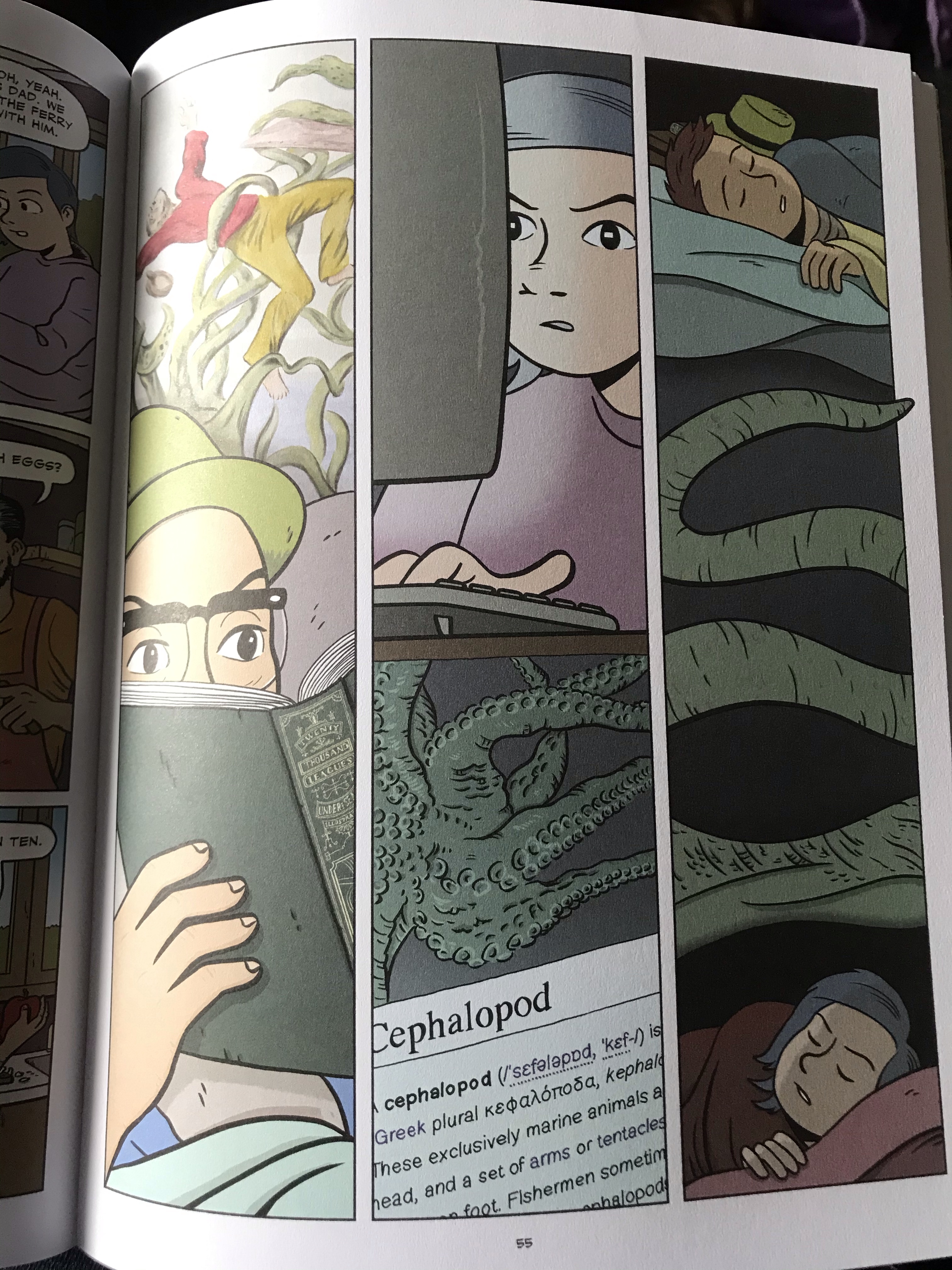
Jonathan King’s first graphic novel for children, The Inkberg Enigma, has just been released. It is a brilliant graphic novel filled with mystery, adventure and secrets. You can read my full review here on the blog.

I really love The Inkberg Enigma (it’s one of my favourite children’s graphic novels of 2020) so I wanted to ask Jonathan my burning questions about the story. Read on to find out about Jonathan’s inspirations for the story, the process of creating a graphic novel and some of the Easter Eggs you can find in the story.

Reading The Inkberg Enigma made me feel like I was 10 again, reading Tintin. Did you set out to create the kind of story that you would have loved as a kid?

Yes, I absolutely did. Tintin was huge for me as a kid: The Black Island was the first one I read, but I devoured them all over the years. I knew from the outset that I wanted it to be an adventure with fantastic elements. I think I decided fairly early that it wouldn’t be a globe-trotting kind of thing – that Tintin often did – but digging into the secrets and corners of one location. That’s what I love about stories – that can show us how our own world has hidden wonders.

The Inkberg Enigma is set in the fictional town of Aurora. Being a Christchurch local I immediately recognised Lyttelton in your illustrations. Did Lyttelton inspire the setting?

Lyttelton – and Diamond Harbour access the water – definitely the primary inspiration for the setting. I have family in Diamond Harbour and Lyttelton, and have spent quite a bit of time there. I love the self-contained nature of the two of them (in my story there’s no Christchurch just over the hill). And I’ve always had a connection to places by the sea – with their attached nautical influence, like Lyttelton has, of hotels, seamen’s union buildings, antique shops with diver’s helmets in the window (which I really did see in Lyttelton!). Other influences are Cannery Row in Monterey in California – where John Steinbeck set his book of that name — Astoria in Oregon (where The Goonies was filmed) and, for the castle, Larnach Castle in Dunedin.

I love that the main character in The Inkberg Enigma, Miro, sells off treasures from his attic to get money to buy books. Is this something you would have done as a kid?

I don’t know if I would go quite as far as Miro does! But I do remember what it felt like to be obsessed with things – like Star Wars figures or comics – and doing anything to complete collections. 

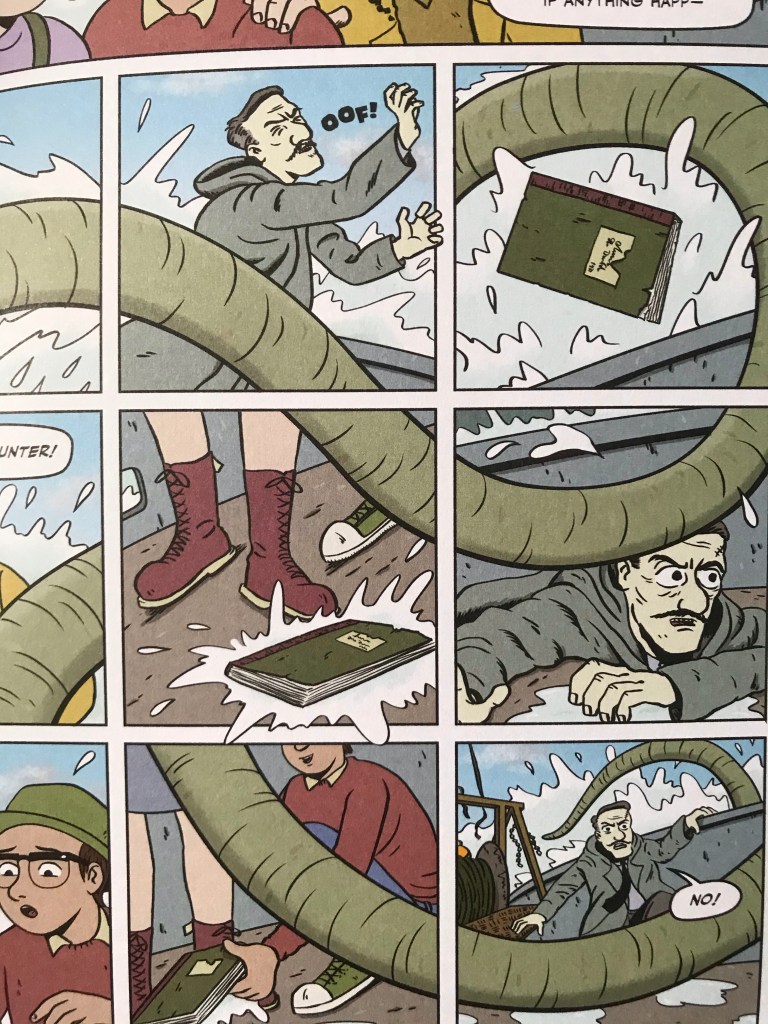
Mr Hunter is one of the creepiest characters in the story. I’ve been wondering where he got his huge scar from?

I think Mr Hunter has been involved in some very dangerous situations at sea over the years – but ignored or buried them, to continue the regime of (what they think is) control over the sea and the creatures below. I think there’s a climate change metaphor in there too …

The kids at my school often complain about how long it takes a creator to release a new graphic novel. To put it in to perspective for them can you explain the process of creating The Inkberg Enigma and how long it took you to pull the story together.

It takes a long time for new ones to come out because it takes a loooooong time to draw them! Unlike commercial monthly comics – which usually have a writer, a penciller, an inker, a colourist, a letterer – a graphic novel is usually the work of just one or two people. It took me about three years from start to finish. Part of that was finding the story. I had the world and the kids in the story pretty early … but the story they were in and the relationship between them took a while to find; I made a false start and pencilled / roughed about 40 pages … that I abandoned. But once I cracked the relationship between the kids, the stay was clear. Then I just had to draw it all. Certainly a detailed, clear line style slows things down. I’d love to try a looser (faster!!) style in the future.

Did you experiment much with the character designs before settling on their final look?

I think their look came quite quickly. Learning how to draw it consistently took a little while longer!

The name of the bookshop in the story is a nod to your film adaptation of Maurice Gee’s Under the Mountain that you wrote, directed and produced. Are there other Easter eggs for readers to look out for in The Inkberg Enigma?

I’m thrilled you spotted that. Yes, there are others: a number of Tintin props, I think. The books in the bookshop Miro looks at are favourites of mine. The museum building is based on the jailhouse in Goonies (a real building in Astoria!) I’m sure there’s other odds and ends!

How does your film background influence your comics?

I’m not sure. Probably it does n terms of story structure – something I’ve spent a long time thinking about. I probably think it terms of close ups and wide shots … and even the ‘lens’ that I frame images in: a wide angle lens sees something differently from a ‘long’ lens. Certainly telling the story with pictures is as important as words. 

Would you like to make a movie of The Inkberg Enigma?

All the way through making I didn’t think that I did: it was only ever meant to be a comic. Now that it’s finished, it’s its own thing … yeah, I kinda would actually! 🙂 

There are so few comics and graphic novels published in NZ for kids and teens, even though these books are some of the most popular with kids in our libraries. Do you have plans to write more for this age group?

I’m sure one of the reasons that there are so few is that for something takes so long, it’s really hard to get enough income to justify the time it takes (though I must acknowledge the support I ad from Creative NZ). Some cool local creators are Katie O’Neill’s Tea Dragon Society books, Ant Sang’s Helen and the Go-Go Ninjas, Roger Langridge’s Abigail & The Snowman and, of course, bob Kerr and Stephen Ballantyne’s Terry Teo books. 
I would love to write more for this age group. Having done a book that took years to draw, I’d love to write book that’s just words – a mystery perhaps! And, yes, before long I’ll do another graphic novel. 

Check out my review of Jonathan’s graphic novel, The Inkberg Enigma. Available now from Gecko Press.

The Inkberg Enigma by Jonathan King

The Inkberg Enigma is a brilliant graphic novel from New Zealand comic creator and film maker, Jonathan King. Reading this made me feel like I was 10 years old again, devouring Tintin and wanting to be him.

Miro is a book-obsessed boy living an adventurous life through the stories of Jules Verne and Edgar Rice Burroughs. Real-life adventure finds him though when Zia, a girl from his school, drags him in to a town mystery. Miro is reluctant to get involved but, as Mira says, ‘this is how you have adventures. You find cool things and you do them…you don’t just read books about them!’ Their town of Aurora has been built on the prosperous fishing in their harbour. When Miro and Zia see something that they are not supposed to, they set out to discover the truth behind the legacy of Aurora and the shady characters who run the town.

The Inkberg Enigma is filled with adventure, mystery, and secrets. It’s also just the right amount of spooky and sinister that keeps you turning the pages. I flew through the story the first time and have since read it again to fully appreciate the story and the artwork.

I love all the characters, from the book-loving Miro and the ever-curious Zia to the sinister mayor of Aurora, Mr Hunter. Miro reminds me a lot of myself because he sells artefacts that he finds in his attic just so he can buy more books. His habit gets so bad that he has a whole spare room full of books! He’d also rather read about adventures than have them in real life.

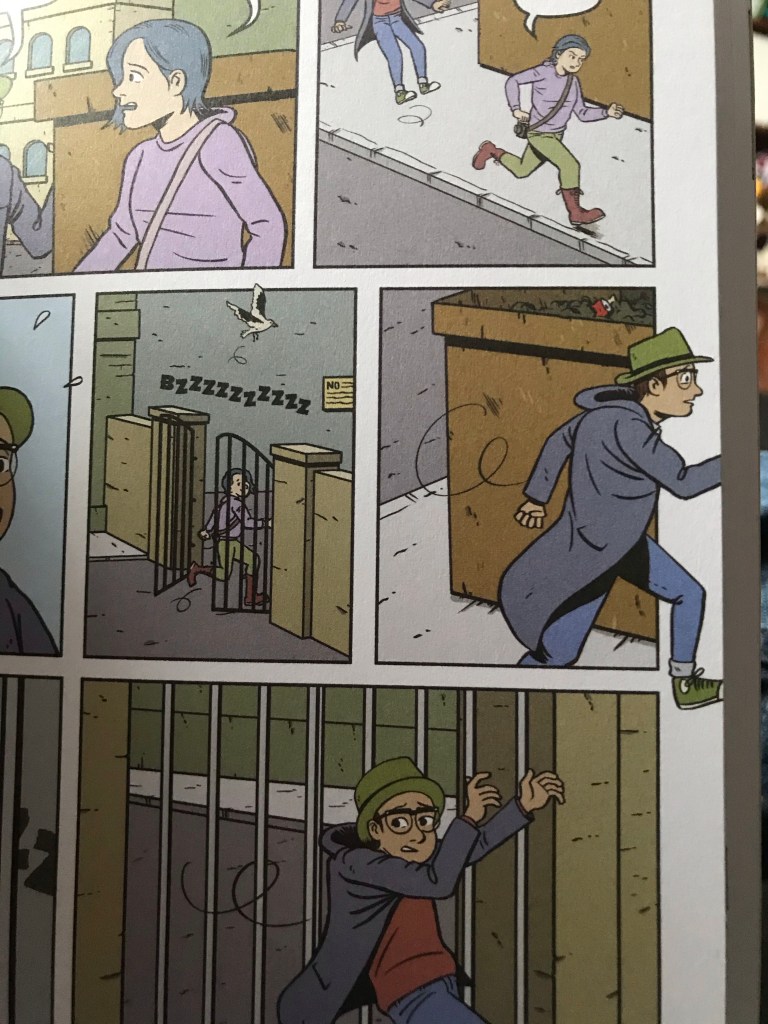
Jonathan’s illustrations are fantastic, from his characters to the images of the town of Aurora. As a Christchurch local I immediately recognised Lyttelton as Aurora, from the town streets to the museum and the harbour. I really like the flow of the illustrations, with the scene on the boat being my favourite. Jonathan doesn’t let the panels limit the story either, with some really clever sections where the illustrations move out of the panels.

The Inkberg Enigma is one of my favourite kids graphic novels of 2020 and I’ll be recommending it to everyone. I really hope there will be more stories with Miro and Zia.

The Inkberg Enigma is released in August from the wonderful Gecko Press. Stay tuned for my interview with Jonathan King.

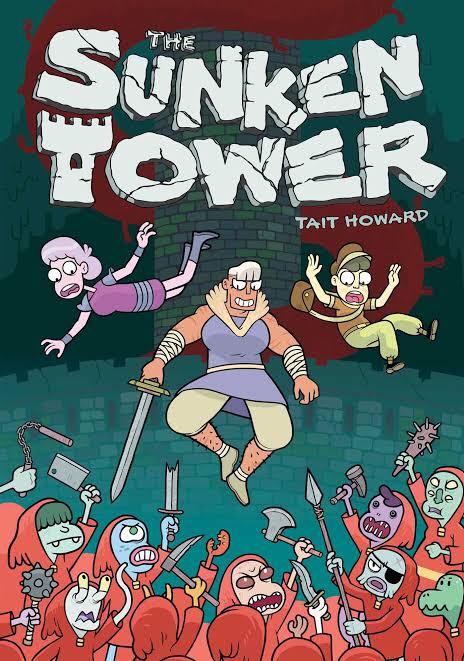
The Sunken Tower by Tait Howard

The Sunken Tower is a seriously funny fantasy adventure with plenty of punching and sword swinging thrown in. It seemed like a short story that is part of a bigger fantasy world so I’d like to see more of Dig, Iana and Crina on further adventures.

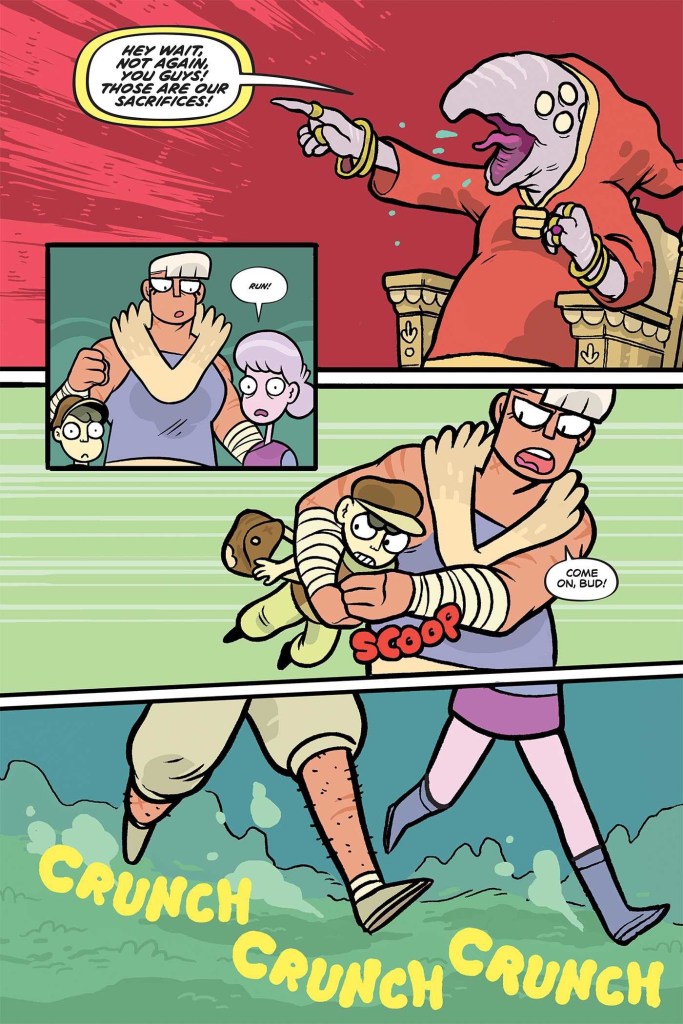
Dig’s day starts off pretty bad. His bag is broken, he’s super hungry and the local law enforcement is after him. Then his day gets a whole lot worse when he’s kidnapped and thrown in a dungeon far underground. It’s in this dungeon that he meets Iana and Crina, two other prisoners who are going to help Dig escape. They tell him of the great magical kingdom and the great tower that used to be above ground which sunk below ground thanks to a young wizard messing with blood magic. The wizard was warped into a monster which is now trapped in the sunken castle. The creatures who kidnapped Dig are The Brotherhood of Blood and they want to sacrifice Dig, Iana and Crina to the monster to get its blood magic. Not if the three of them can help it! They must find their way to the top of the sunken tower and smash through to their world up top.

Tait Howard’s world is one I want to know more about. The glimpses you see when Dig is walking through the market reminded me of Ben Hatke’s Zita the Spacegirl and Kazu Kibuishi’s Amulet (if you’ve read those you’ll love this one). There are lots of different creatures, even within the Brotherhood of Blood. The main characters are all really cool, from Dig with his magic powers to Iana with her bristly legs and big muscles. Iana and Crina are in love and they have some really great banter.

I think my favourite thing about The Sunken Tower though is the humour and sarcasm. Tait’s comedic timing is spot on and the dialogue had me chuckling away. This is a kid’s graphic novel that will appeal to teens and adults as well. I’d love to hand it to some of my most reluctant readers as I’m certain the humour alone will grab them.

I really hope that Tait Howard has more adventures with Dig, Iana and Crina up his sleeves.

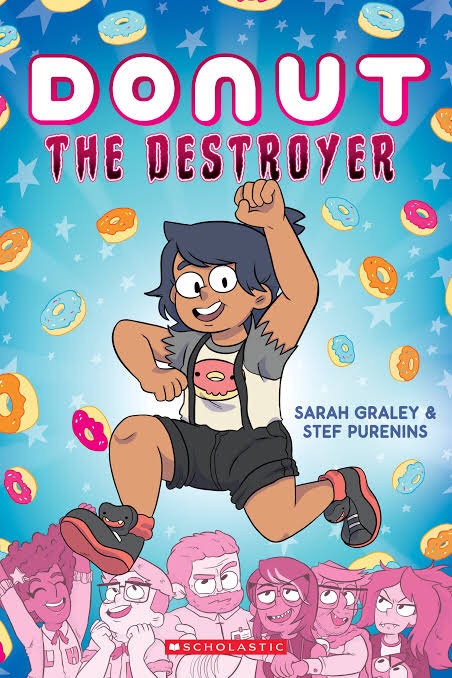
Donut the Destroyer by Sarah Graley and Stef Purenins

This graphic novel is so much fun! Who couldn’t like a story about a girl from a family of supervillains who just wants to be a hero.

Donut (middle name: The, last name: Destroyer) lives in a world where everyone is born with superpowers. You just have to decide how to use them – good or evil. Donut’s parents are two of the biggest supervillains ever but Donut has decided she doesn’t want to be a villain. Her best friend Ivy has been planning their supervillain careers for years so it comes as a shock that Donut wants to switch to the dark side. When Donut gets accepted to Lionheart Academy (the first step on her road to become a superhero) Ivy tries anything she can to get Donut kicked out. However, Donut’s new hero friends are by her side and will use their powers to fight evil.

I love Sarah Graley’s illustrations. One minute her characters look super cute, with their faces bursting with glee and the next they’re all angry, with scrunched up faces that are on the verge of exploding. Donut is a really cool character who stands up for herself and what she wants to do with her life, even in the face of her ex-best friend and her super-villain parents who want her to be super evil. My favourite characters are Donut’s parents. They made me laugh every time they popped up because they’re super supportive but committed to being supervillains.

Donut the Destroyer is going to fly off the shelves and be incredibly popular with kids.

Doodleville by Chad Sell

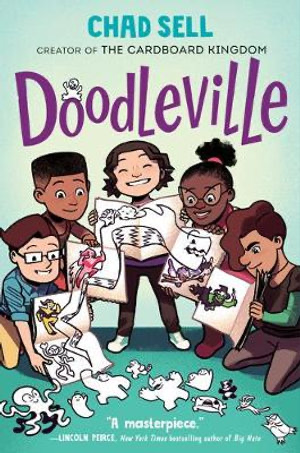
Imagine if all art was alive. Superheroes could move through the pages of a comic, a landscape painting could change depending on the time of day and Mona Lisa’s mood could change. This is a reality in Drew’s world in Chad Sell’s magical new graphic novel, Doodleville

Drew is a doodler and since she was little she has been doodling funny creatures that come alive. All art in Drew’s world is alive and when her Art Club visits the Art Institute she sees how amazing art can be. She sneaks in her own doodles though who create havoc in the paintings, including stealing a baby’s hat from one painting. Drew creates Levi, a dragon-like creature, for her art project but this cute, friendly creature turns dark and starts to hunt the other doodles. As Drew let’s her fear and uncertainty take over Levi wreaks havoc and it’s up to Drew and her friends to stop Levi.

The idea of art coming to life is so cool and Chad certainly makes it feel like his characters are alive and moving. The action of the story moves so smoothly through the illustrations and Chad doesn’t let panels limit how the story flows. I love the character designs as they’re cartoony but have really expressive faces.

My favourite thing about Chad’s stories is the diversity of his characters. In Doodleville, Ameer and Zenobia are black, and it’s possible that Beck and TJ are gender diverse. Zenobia’s doodles are the Magical Butterfly Boyfriends, two princes from warring kingdoms who are in love. It’s great for kids to not only see themselves in graphic novels but also to see other kids who are different from them.

Chad promises readers that this is just the start of Drew’s story so we’ll see more of her and the gang in the next book.

Stepping Stones by Lucy Knisley

Fans of Raina Telgemeier and Shannon Hale rejoice! Lucy Knisley, creator of graphic memoirs about her adult life, turns her pencil to her childhood. Stepping Stones is based on Lucy’s experiences as a kid, moving from the city to the country and having to get used to a new family and a new life.

Jen didn’t want to leave the city and move to a farm but, being a kid, she just has to go along for the ride. She has to get used to her mum’s new boyfriend and sort-of step-sisters. Walter doesn’t understand her and keeps calling her Jenny (which infuriates her) and the older sister is smarter than her so she feels inferior. Every weekend the sisters come to stay and her family goes to the market. Things aren’t going back to the way they used to be so Jen has to figure out how to get along with everyone.

I loved Stepping Stones and I know kids will too. The story is relatable and is perfect for anyone from age 7+. This is going to be super popular.

Dragon Hoops by Gene Luen Yang

Dragon Hoops was such a great read! I enjoyed it far more than I thought I would and I learnt so much. Not only is it the story of Gene Luen Yang following the season of the varsity basketball team at the high school where he works, it’s also a history of basketball (including the racism and sexism that led to changes in the sport). Gene gives back story to the coach and players in the Bishop O’Dowd Dragons, which gives some really interesting insight in to basketball in China and the Sikh religion.

The art is fantastic, especially the action of the games, where the characters are moving through the court or flowing towards the hoop. The difference between the past and present is very clear with the difference in colours and tones. It also has the coolest cover that looks and feels like a basketball.

It’s aimed at teens and adults but it would be a great addition to an intermediate school, especially if you’ve got basketball fans. I highly recommend it!

Go With the Flow by Lily Williams and Karen Schneemann

Go With the Flow is another really important graphic novel that encourages discussion. It encourages readers to talk about menstruation, a topic that has historically had a stigma attached to it. The story shows how important it is to talk about periods and to have proper support for those who menstruate, including making sanitary products readily available.

The story follows Sasha, the new girl at school, who unexpectedly has her first period at school. She is unprepared and gets mocked by other students, her call her Bloody Mary. Luckily for Sasha, not everyone is horrible and Abby, Brit and Christine come to her rescue. The friends bond over their period experiences and set out to make a change in their school. Abby writes a blog about menstruation called The Mean Magenta, and it’s through her posts that her fight for menstrual products in her school becomes a much wider issue.

This story works so well as a graphic novel because some of the impact comes from the visuals, especially Abby’s exhibition. The colour palette the creators have used is various shades of red, which matches the subject matter of the story. It’s not just the story that is fantastic though, the creators also give more information at the back of the book about periods and what is and isn’t normal, and how to be a period activist.

It’s aimed at teens but I’m going to purchase it for my Year 7/8s as I know some of them would enjoy it.