On the road with the Canterbury NZ Post Children’s Book Festival Roadshow

Last week I spent the week out on the road with two awesome librarians, Saskia Hill and Susan Dodd, as part of the Canterbury NZ Post Children’s Book Festival Roadshow.  We decided that this year, we wanted to talk about and read the finalist books to as many children as we possibly could over the course of the Festival week.  We battled heavy rain, flooding, horrible traffic and a flat tyre to deliver our Roadshow to the kids of Canterbury.  We visited 11 schools, 13 preschools, presented 2 Books Before Bedtime Pyjama Parties and read to over 6000 children over the course of the week.

Part of our programme was performing Margaret Mahy and Gavin Bishop’s wonderful picture book, Mister Whistler.  I danced around as Mister Whistler, while Saskia read the book and got the kids interacting with the story.  Here’s a couple of photos of my performance.

It was an awesome experience and something that we hope to repeat again next year.  These were my highlights of the week:

  • Dressing up as Mister Whistler and dancing around while taking my clothes on and off.
  • Giving away heaps of copies of Kyle Mewburn’s Melu and Rachael King’s Red Rocks to kids all around Canterbury and seeing their faces light up.
  • Seeing kids so eager to answer questions about the finalist books so they can win a bookmark.
  • Meeting lots of enthusiastic teachers and librarians who love books.
  • Reading and talking about books with kids of all ages and doing it all with one of the coolest people around, Saskia Hill.

Here is a small selection of our photos from the week:

Best of luck to all the authors and illustrators on the shortlist for the awards.  I’m really looking forward to going to the awards ceremony here in Christchurch tonight.  I’ll be live Tweeting from the event so if you want to know the winners first, follow me – @zackids.

Interview with Mandy Hager

Mandy Hager is the author of some of the best Young Adult books in New Zealand, including the action-packed The Nature of Ash (shortlisted for the 2013 New Zealand Post Children’s Book Awards).  Mandy’s latest YA novel is Dear Vincent, one of the most powerful and emotionally-charged books I’ve ever read (you can read my review here).  I had a few questions for Mandy after reading Dear Vincent and she very kindly answered them for me.  You can also enter to win a copy of Dear Vincent and read an extract from chapter one at the bottom of this post.  Thanks to Mandy and the wonderful people at Random House New Zealand.

  • What inspired you to write Dear Vincent?

It’s always hard to look back and focus on the starting idea, but I’ve been thinking about the issue of suicide for a while now, through my work with youth at risk, and wanted to send a book out into the world that showed the long term pain suicide brings to those left behind, and to explore the seduction of the idea, and how it is possible to resist, given the right support. The problem with the current ‘don’t talk’ policy around suicide is that kids only get to see the outer manifestations of grief when someone they know kills themselves – the memorial pages on facebook, the highly emotional services – it runs the risk of making suicide seem ‘sexy’ to young people – a kind of ‘you’ll all be sorry and celebrate me like this when I’m gone’ mentality. It also denies those who have contemplated or attempted suicide a voice to say how relieved they are that they didn’t go through with it – and to share the things that helped stay their hands. And I wanted to show that suicide leaves the surviving family with such terrible guilt and grief – for kids to understand the full impact of a suicide on those left behind. I wanted to de-glamourise it – so that it underlines the finality of such a decision – that ‘dead’ means ‘dead’ – no going back, no second thoughts.

I also love Vincent Van Gogh – so it was a perfect opportunity to explore his life and paintings more fully.

  • You tackle some tough issues in the book, including suicide and physical and emotional abuse.  Was it a story you felt you had to tell?

Yes, it’s been in the back of my mind for a long time now.

  • What research did you have to do for the book? What was the most interesting thing you discovered about Vincent Van Gogh?

Van Gogh’s letters are now available online – over 900 of them, so I worked my way through them and also some biographies and documentaries (plus, I had studied him for art history at school many hundreds of years ago!) The first thing that surprised me was just how elegant and literate he was – he’s often made out to be this crazy, rough, boorish man, when nothing could be further from the truth. His letters are beautiful, vivid and incredibly sad. The other really surprising thing was the discovery, through the most recent biography of him by Steven Naifeh and Gegory White Smith, that it is highly likely Van Gogh did not kill himself, but was shot by local boys – though, once shot, he then kept quiet about this act and died in his brother Theo’s arms (in other words, not instigating the act, but not fighting it either.) So it was suicide by omission to fight his injuries or reveal their source. The biography’s evidence for this case is very convincing. Plus, it illuminates more about what was going on in Vincent’s head – for a long time it was thought he was bi-polar, now it seems more likely it was a kind of temporal lobe epilepsy that would descend upon him.

  • One of the things I like the most about your books is that your characters are authentic and they feel real.  Have you ever been challenged by the ‘gatekeepers’ of young adult fiction because of your characters actions or language?

I haven’t been challenged on this in person, but I am sure there are some people who find the language and issues difficult. All I try to do is be faithful to the character and reflect how I believe they would truly talk, feel and respond.

  • There are some very raw emotions in the story and Tara goes to some quite dark places in her head.  Did you need to get into the right head space each time you sat down to write or was Tara always with you?

I always sit and centre myself before I write each day, calling the character into my mind. However, there always reaches a point where the character is there all the time until you finish writing – consequently this was a particularly exhausting and grueling book to write. Being inside Tara’s head was an intense experience.

  • I love the character of the Professor (Max). How did he come to you?

Max is, in many ways, my father. He, too, was born in Vienna. He, too, was forced to leave with his parents to escape the Nazis. He introduced us to art, music and literature (as did my mother), and was a charming, cultured and kind man.

  • Like Tara, does ‘art in all its forms’ have you in its grip?

It most certainly does!

  • Do you have a ‘teen test’ for your books during or after you’ve written them?

My first reader, chapter by chapter, is my daughter Rose. She is incredibly good at spotting anything that jars or doesn’t have an authentic ring. I also send the finished draft out to my niece as well (along with several other adult readers) – their feedback is always most welcome and useful.

  • Why do you write books for teenagers? What is it about YA that appeals to you?

I think what I like most about YA fiction is that it focuses on strong story and authentic characters. It also appeals to me in terms of who I am writing for – as I tend to write about the things that trouble me, and this primarily is around issues that will affect the up-and-coming generations, it gives me the opportunity to start a discussion with young people about the different ways to look at the world and the challenges they are/will be presented with. So much media these days is controlled by corporate interests I feel it’s important to get alternative thoughts and ideas out there. I strongly believe that only through honest discussion of issues can we ever hope to move forward in a positive way.

Read on for an extract from Dear Vincent.

1

Whenever I tell Father anything, it goes in one ear and out the other, and that certainly applies no less to Mother. Similarly I find Father and Mother’s sermons and ideas about God, people, morality and virtue a lot of stuff and nonsense.

— Letter from Vincent Van Gogh to Theo Van Gogh, Etten, c. 21 December 1881

My father slouches in his wheelchair, a dough ball of resentment. Only the fierce penetration of his eyes registers life behind his rigid face. If he moves at all it is involuntary. The twitch of a finger. The jerk of a leg. But for all his immobility, his presence still looms over us. The gargoyle in the corner. The silent judge.

There is a gritty meanness in his eyes sometimes. Or worse, bottomless sadness — the kind that rakes your soul. Though more often than not these days, anger flares: embers trapped within an iceberg. He is living the inflexibility he’s practised all my life.

Even as I finish hanging out the washing and tilt my face up to the morning sun, I know he will be waiting for me to feed him, wash his face, brush his teeth — all before I have the luxury of heading off to school. Luxury? It’s funny how perspective shifts.

Buttered light filters through my eyelids and I hold my breath, waiting, waiting, waiting, with a sense there’s something I should know. It teases at my memory. Tickles at my nose. I crack one eye open and there’s the clue: a butterfly, chalky white, its tiny dome eyes staring straight back into mine. Of course! How could I forget?

It’s Van’s birthday. The 11th of June. She would be twenty-two today. So old. It’s hard to picture how she’d look. Beautiful? Without a doubt. Respectable? Not for a second. Not my Van. The odds that she’d have turned into a merchant banker, IT nerd or anything, in fact, where she’d have to toe the line are about two billion to one.

Meanwhile, my own life’s reduced to a different numbers game. Nearly six years since Dad’s first stroke. Just under five since we were woken by that gutting midnight call. Three since Mum was forced to take on night shifts at the hospital to pay the mortgage on this shitty hole. One since I began to work half-time to help. And the amount of time I get to lead a normal life? No whole number’s small enough.

‘Tara?’ Mum’s shout repels the butterfly. It flutters off, a ghost adrift. ‘Don’t forget to take the shopping list. I’ll pick you up outside Countdown at ten to nine.’

Does she remember it’s Van’s birthday? Surely she must. But Mum’s declared everything about my sister a no-go zone — as if by refusing to speak of her the past can somehow be erased. If only it was so easy.

Inside, I shoo Mum off to bed before I start on Dad. Her shifts play havoc with her sleep patterns — and her moods. She’s turned into one of those wizened peasants Vincent loved to paint: a small grey shadow, sour and disconnected, all joy in life sucked out of her.

While I’m waiting for Dad’s porridge to cook I eat the last of the bread, sandwiching a scummy wedge of budget cheese. Our cupboards will stay bare until I’m paid later today and do the shop. When we were small, the only time Mum used to make a fuss was over birthday breakfasts: an Ulster fry with bacon, eggs and sausages, and golden crisp potato farl. Now the only fuss she makes is the kind I hate — the kind Van called Mad Cow Disease to wind her up.

I mince Dad’s morning medication into dust and smother it with yoghurt. Pop it in his drooping mouth, scraping the teaspoon across his lips to catch the overflow before I stuff the dregs back in. He shudders as he swallows, his eyes saying it’s my fault that it tastes like shit. I help him drink a sip of water, then cool his porridge with milk and coax it in, one spoonful at a time. I know I should be chatting to him, helping pass the time, but, really, what is there to say? Do you know what day it is? Does the thought of Van thump you in the guts like it does me? Even if he could answer, he’d only throw it back at me. Wind yer neck in, girl. You’ve got a face on like a Lurgan spade.

By the time I’ve finished everything with Dad I’ve less than half an hour to get to school. Who’d have thought I’d ever want to spend more time there, but with my rest home shift starting at two it pretty much wipes out the afternoon.

All I really want to do is paint — hide out in the art room and let the colours wash through me in a heady rush. Vincent says to attack a painting the way a lion devours meat, to call on the grain of madness that is the best of art. Imagine trying to explain all this to Mum and Dad. They view creative madness as a sin on par with striking a priest.

I park Dad in front of the TV and head off on my bike. Our street is full of tacky mansions, but ours is the doozy that drags the others’ values down. Good old leaky home syndrome. The day Mum finally admitted we had no money to fix it or to chase the builders through the courts I cried — I’d had a gutsful of our neighbours’ snide remarks.

‘You think your life is difficult?’ she’d said. ‘Try walking to school in Belfast when the Proddies are on the march.’ She talks about the Troubles the way the old boys in the rest home remember El Alamein.

Since then I’ve built a force field that shouts ‘fuck off’. You have to in a school like mine, where the fact I used to go to the best private Catholic school is all the ammunition the gangs need. In my first week they bullied me out of my iPod and mobile phone and stripped the Nike jacket off my wimpy back. Admittedly I’m safer now. Three years on and we’re dirt poor — I don’t even have an internet connection at home, let alone a replacement phone. There’s nothing left to nick.

Dear Vincent by Mandy Hager

I had quite a sheltered upbringing.  I had a loving family who cared for me and life was never tough.  When I really got into reading when I was a teenager I discovered teenagers who had a very different life than mine.  These teenagers had abusive or neglectful families or they had been touched by tragedy of one kind or another.  I have never known anyone who has suicided so I haven’t been affected by it in any way.  As a teenager I didn’t want to read books about it because I didn’t think it related to me.  When I first heard about Mandy Hager’s new YA book, Dear Vincent, I wanted to read it, but I wasn’t sure if I would like it.  It affected me so much that I was in tears for the last few pages.

17 year old Tara McClusky’s life is hard. She shares the care of her paralysed father with her domineering, difficult mother, forced to cut down on her hours at school to help support the family with a part-time rest home job. She’s very much alone, still grieving the loss of her older sister Van, who died five years before.

Her only source of consolation is her obsession with art — and painting in particular. Most especially she is enamoured with Vincent Van Gogh: she has read all his letters and finds many parallels between the tragic story of his life and her own.

Luckily she meets the intelligent, kindly Professor Max Stockhamer (a Jewish refugee and philosopher) and his grandson Johannes, and their support is crucial to her ability to survive this turbulent time.

Dear Vincent is one of the most powerful, emotionally-charged books I’ve ever read.  I don’t think I’ve had such an emotional response to any other book, both adults or YA.  The story is narrated by Tara, so you experience all the ups and downs of Tara’s life and you go into the dark spaces inside her head.  When you figure out the path that she is taking, you just want to yell at her to stop and think clearly.  You want to be the person that she can talk to and help her see sense.

Like Mandy’s other stories, the characters really resonate with me.  You understand why Tara has so much anger and hatred towards her parents, but through her discoveries you can also understand why they have become these people.  You can’t help but become completely wrapped up in Tara’s life, as you know all her thoughts and feelings.  While Tara takes you to some dark places, some of Mandy’s characters bring some light and hope into Tara’s world.  My favourite character is Max (or the Professor) who Tara meets in the rest home that she works in.  Max is a sort-of grandfather figure to Tara.  He loves art, music and philosophy and he reminds Tara of Captain von Trapp from The Sound of Music.  Right from when Tara first meets him he’s there to help her through and tries to make her see things from a different point of view.  He has some profound words of wisdom, like his metaphor on page 140. This is one of my favourite lines from Max,

‘All life is suffering.  One way or the other, damage attaches to us all.  In the end it’s how we deal with it – or don’t – that makes us who we are.’

Max’s grandson, Johannes, and Tara’s Auntie Shanaye and Uncle Royan, are others who try to help her through her tough time.  They are each incredibly loving and caring in their own ways, and they go out of their way to prove that they are there for Tara.  Even though Shanaye and Royan are struggling and they have their own issues to deal with, they are getting on with their life, and they show Tara more love than her parents ever had.  While Tara’s parents ran away from The Troubles in Ireland and were miserable, her auntie and uncle stayed and are doing the best that they can for their family.

Dear Vincent is an important story that all teenagers should read.  Thank you Mandy for telling Tara’s story. The fact that it can have such an emotional response on a reader is testament to your amazing writing.

I’ll leave you with this quote from Tara on page 249 that mirrors Max’s words from earlier in the story,

‘Hell, maybe it’s the suffering that makes us who we ultimately are.  Not just the hurdles, but how we deal with them.  Or don’t.’

Picture Book Nook: Queen Alice’s Palaces by Juliette MacIver and Lucia Masciullo

Do picture books about princesses and queens make you want to tear your hair out?  Your little girl may like to be endlessly read stories with sparkles on every page, but if you have to read it one more time will you go insane?  Well Juliette MacIver and Lucia Masciullo have just created a picture book about a queen that adults will enjoy just as much as children.  It’s called Queen Alice’s Palaces.

Queen Alice has a palace that’s ‘gilded and grand’ while poor, hard-done-by Sir Hugh has a castle that’s ‘crumbly and small.’  Dastardly Sir Hugh hatches a plan to get his own palace – he’ll get Queen Alice to build a palace of ‘stunning design,’ then he’ll steal it, ‘by means of a military coup.’  Queen Alice constructs a series of unique palaces, made from bamboo, ice, cheese and other strange building materials.  Can she outwit Sir Hugh or will he steal his own palace?

Queen Alice’s Palaces is a rollicking picture book filled with imagination, wonder and humour.  Juliette and Lucia have let their imaginations run wild and built all sorts of wonderful, if slightly impractical, palaces.  Juliette’s rhyming text bounces along, making it a joy to read aloud.  As with Juliette’s other books (Marmaduke Duck and the Marmalade Jam), you need to warm up your mouth because you find your mouth doing gymnastics and getting tongue-tied as you read.  Just the title alone gives your mouth a good work out.  I love Juliette’s use of language too, like ‘gilded and grand’ and ‘cunning, conniving and callous.’  I think it’s wonderful when you can read a picture book and learn new and interesting words.

Lucia Masciullo’s illustrations are the perfect match for Juliette’s text.  I really love the way that she has portrayed the characters, especially the ‘cunning, conniving and callous’ Sir Hugh.  He looks very villainous and his creepy little mustache makes me laugh every time (especially when he twirls it).  He will appeal to the boys, while the very glamourous Queen Alice will appeal to the girls.  Lucia clearly had a lot of fun creating the palaces, which all look spectacular.  There is certainly plenty to discover in the illustrations on each page.

Warm up your mouth, fire up your imagination and share Queen Alice’s Palaces with the children in your life.

2013 LIANZA Children’s Book Awards Finalists

The finalists in the 2013 LIANZA Children’s Book Awards were announced last week.  The LIANZA Children’s Book Awards are awarded annually by librarians for excellence in junior fiction, young adult fiction, illustration, non-fiction and te reo Maori.

There are some wonderful books on the list this year and it’s good to see some of those that missed out on a New Zealand Post Children’s Book Awards nomination.  There are a couple that I’m surprised to see on the list but a lot of my favourites are there.

Congratulations to all the finalists!

LIANZA Junior Fiction Award – Esther Glen Medal

  • The Queen and the Nobody Boy: A tale of Fontania by Barbara Else, (GECKO Press)
  • Drover’s Quest by Susan Brocker, (HarperCollins Publishers (NZ) Ltd)
  • When Empire Calls by Ken Catran, (Scholastic NZ Ltd)
  • Red Rocks by Rachael King, (Random House New Zealand)
  • The ACB with Honora Lee by Kate de Goldi, (Random House New Zealand)
  • Lightening Strikes: The Slice by Rose Quilter, (Walker Books Australia)

LIANZA Young Adult Fiction Award

  • My Brother’s War by David Hill, (Penguin NZ)
  • The Nature of Ash by Mandy Hager, (Random House New Zealand)
  • Marked by Denis Martin, (Walker Books Australia)
  • Earth Dragon, Fire Hare by Ken Catran, (HarperCollins Publishers (NZ) Ltd)
  • Snakes and Ladders by Mary-anne Scott, (Scholastic NZ Ltd)

LIANZA Illustration Award – Russell Clark Award

  • The Dragon Hunters by James Russell, illustrated by Link Choi, (Dragon Brothers Books Ltd)
  • Mister Whistler by Margaret Mahy, illustrated by Gavin Bishop, (Gecko Press)
  • Kiwi: The Real Story by Annemarie Florian, illustrated by Heather Hunt, (New Holland Publishers Ltd)
  • Blue Gnu by Kyle Mewburn, illustrated by Daron Parton, (Scholastic NZ Ltd)
  • Melu by Kyle Mewburn, illustrated by Ali Teo and John O’Reilly, (Scholastic NZ Ltd)
  • A Great Cake by Tina Matthews, (Walker Books Australia)

LIANZA Non Fiction Award – Elsie Locke Medal

  • At the Beach: Explore & Discover the New Zealand Seashore by Ned Barraud and Gillian Candler, (Craig Potton Publishing)
  • Eruption! Discovering New Zealand Volcanoes by Maria Gill, (New Holland Publishers (NZ) Ltd)
  • 100 Amazing Tales from Aotearoa by Simon Morton and Riria Hotere, (Te Papa Press)

Te Kura Pounamu (te reo Māori)

  • Hautipua Rererangi story by Julian Arahanga, illustrated by Andrew Burdan, (Huia)
  • Ngā Waituhi o Rēhua by Katerina Te Heikoko Mataira, (Huia)
  • Arohanui by Huia Publishers, illustrated Andrew Burdan, (Huia)
  • Ko Meru by Kyle Mewburn, translated by Ngaere Roberts, illustrated by Ali Teo and John O’Reilly, (Scholastic)
  • Taea ngā whetū by Dawn McMillan, translated by Ngaere Roberts, illustrated by Keinyo White, (Scholastic)

You can follow the LIANZA Children’s Book Awards:

Website: http://www.lianza.org.nz/awards/lianza-childrens-book-awards
Facebook – https://www.facebook.com/LianzaChildrensBookAwards
Twitter – #lianzacba

Q & A with Lorraine Orman about her new book Touchstone

  • You recently published your tenth book, Touchstone, as a YA e-book. What was the background to this venture into e-publishing?

I was a casualty when Longacre Press merged into Random House NZ. Longacre had published my two previous YA novels, but Random said no thanks to this one. My agent, Frances Plumpton, tried hard to find a home for Touchstone but fantasy and futuristic series were in vogue. After a couple of years I thought, “I can’t bear to stuff it into the metaphorical bottom drawer. Why not make it an e-book?”

  • How have you found the e-publishing process?

I could write a book about it! The general impression one gains from online articles is that it’s easy. It’s not. You have to come out of your cosy author’s corner and become editor, proofreader, formatter, cover designer, publisher, decision-maker, legal expert, distributor and promoter. I’m lucky enough to have a network of supportive colleagues – thank you to the Facebook crowd!

  • Tell us about the e-book.

TouchstoneCoverSmallVersionLike Cross Tides and Hideout, Touchstone is a blend of genres – family problems, adventure and suspense, environmental issues, and a good dollop of New Zealand history. It’s set in a
ghost town on the Buller Coal plateau. The 16-year-old heroine gets involved with a group of eco-warriors trying to prevent a new coalmine being established. Much of the environmental
theme is based on fact.

There’s a free PDF Teachers’ Resource Kit (prepared by a secondary teacher) available on my website at www.story-go-round.net.nz. Any royalties I make are being donated to the Animal Sanctuary at Matakana, near my home. In addition, the book links to Forest and Bird’s campaign to save the Denniston Plateau from more coalmines.

  • Where can people buy Touchstone?

It’s available for around $4.99 (US) from major online bookstores such as Amazon, Smashwords, Kobo Bookshop, Barnes and Noble, iTunes, etc. It’s also available on Wheelers E-Platform, which should be convenient for New Zealand schools and libraries. I’m working on getting it to more NZ suppliers.

  • Do you plan to publish another e-book?

Cross Tides is also available as an e-book, thanks to Random House NZ. But doing it all over again with another manuscript – who knows? I have to recover from this journey first!

Picture Book Nook: Breakfast by Joy Cowley, illustrated by Amy Lam

Joy Cowley has written many wonderful stories throughout the years and she has created characters that children have grown up with.  I don’t think you can go through primary school in New Zealand without reading one of her junior readers or being read one of her picture books.  Clean Slate Press have published many of Joy’s stories and they’ve just released a delightful new picture by Joy Cowley and illustrated by Amy Lam, called Breakfast.

BreakfastEach morning the breakfast dishes get themselves ready for breakfast.  The jug gets all the dishes and cutlery, table and chairs ready for the noisy, messy children that come racing downstairs for breakfast.  After yet another ‘breakfast war,’ the children leave ‘jam in a puddle and milk in a pool’ as well as bent spoons and broken cups and plates.  When the children are gone, the breakfast dishes clean everything up and fly into the dishwasher with smiles on their faces.

Breakfast is a story that children (and parents) will be wishing was true.  If only all your dishes would magically transport themselves to the dishwasher when we leave the room!  Joy has taken an everyday occurrence and turned it into a magical experience.  Children will have a good giggle at the antics of the breakfast dishes, while parents will relate to the chaos of breakfast time.  It’s a simple story with rhyming text that makes it great for sharing with younger children.

Amy Lam’s soft, but colourful illustrations are the perfect match for Joy’s text.  The dishes all look happy, and even when they’ve been battered and bent, they’re ready to jump back in the dishwasher and do it all again tomorrow.  I love the cover with the splash over the title and it’s sure to stand out on the shelf.  Clean Slate Press have once again produced a beautiful hardcover picture book, with very cute end papers.

Breakfast will make a great addition to any school or home library.

Activity Ideas for the 2013 New Zealand Post Children’s Book Awards Finalists

There are heaps of great activity ideas out there to help you celebrate the 2013 New Zealand Post Children’s Book Awards.  These ideas are aimed at teachers but you could try them out at home too.

There are some general Schools Resources on the Booksellers NZ New Zealand Post Children’s Book Awards pages – http://booksellers.co.nz/awards/new-zealand-post-childrens-book-awards/2013resources.

Check out these books and their activity ideas:

Picture Books

Junior Fiction

Young Adult Fiction

Non-fiction

2013 New Zealand Post Children’s Book Awards Finalist: The ACB with Honora Lee by Kate De Goldi

The ACB with Honora Lee is a finalist in the Junior Fiction category of the 2013 New Zealand Post Children’s Book Awards.  I reviewed it in October last year,  so if you want to hear all about it and find out what makes it such a worthy finalist, read on.

Kate De Goldi’s last book, The 10PM Question, was a wonderful story and won many awards.  It’s a story that’s loved by adults and children alike, and Kate’s latest book, The ACB with Honora Lee, is bound to have the same crossover appeal.  I first heard about it when Kate talked about it at the Schools Programme for the Christchurch Writer’s Festival and I’ve been dying to read it ever since.  I immediately fell in love with Perry and the residents of Santa Lucia.

Perry’s mother and father are busy people … they’re impatient, they’re tired, they get cross easily. And they think that only children, like Perry, should be kept busy. On Saturday mornings Perry and her father visit her gran, Honora Lee, at the Santa Lucia rest home, but Gran never remembers them. ‘Who is that man?’ Honora Lee asks when Perry’s father leaves the room. After movement class is abruptly cancelled, Perry is allowed to go to Santa Lucia on Thursday afternoons. She discovers her Gran has an unconventional interest in the alphabet, so Perry decides to make an alphabet book with the help of Honora and the others. Soon everyone is interested in Perry’s book project.

The ACB with Honora Lee is a quirky story about an unusual girl who finds friendship in an unlikely place.  The story is brimming with humour, joy, wisdom, and a cast of colourful characters.  It’s set in the Beckenham loop in Christchurch (where I live) and I only wish that I could go and meet Perry, Honora Lee, Dorris and the rest of Kate De Goldi’s characters.  Perry is a unusual girl, who acts and sounds older than her 9 years.  She seems quite lonely when we first meet her.  Her parents are wrapped up in their own problems and don’t seem to have time for her.  They don’t take much notice of her and enroll her in after school activities that she doesn’t really enjoy.  Even when she really enjoys going to visit her gran and the others at the rest home, her parents don’t understand.  Perry makes lots of new friends at Santa Lucia, including her gran’s friend, Doris, and Stephen and Audrey who work there.  The fact that her gran doesn’t remember her doesn’t seem to worry Perry, she just reminds her who she is each time she visits.  The thing that I like the most about Perry is her love of words.  If she hears a word she doesn’t understand she has to find out what it means.

Perry’s gran, Honora Lee, is a real character.  She may not remember who the people around her are, but she remembers songs and lines of Shakespeare.  As one of the characters describes her, she’s ‘crabby as an old apple,’ but she comes out with some hilarious lines.  I especially like it when her and Perry are playing I Spy, because she always gets it around the wrong way.  Here’s a great example, ‘I spy with my little eye,’ said Gran,’something beginning with fat.’

It’s Kate De Goldi’s whole cast of wonderful characters that make The ACB with Honora Lee such an enjoyable read.  Their interactions provide some funny, embarrassing and touching moments.  It’s a story that will be enjoyed by the young and the young at heart and it will leave you with a smile on your face.

4 out of 5 stars

My Most Anticipated May New Releases

Felix and the Red Rats by James Norcliffe

When David’s uncle comes to visit he sets off a bizarre series of events. Things become complicated when the pet rats turn bright red.David senses that somehow the red rats are connected to the story he is reading, and he becomes more convinced when the colour red becomes contagious.

The parallel story sees Felix and his friend Bella inadvertently shifted into a strange land where they must solve a riddle. But this puts them into great danger. How will they escape and find their way home?

The Watcher in the Shadows by Carlos Ruiz Zafon

A mysterious toymaker, Lazarus, lives as a recluse in a crumbling mansion by the sea, surrounded by the mechanical beings he has created. Strange lights seem to shine through the mists that envelop the small island where the old lighthouse stands, and somewhere in the woods nearby lurks a shadowy creature.

When her mother takes a job as a housekeeper for the toymaker, fourteen-year-old Irene meets Hannah and her alluring sailor cousin Ismael, and what seems like a dream summer begins. But Lazarus’s house contains dark secrets and before long Irene and Ismael find themselves entwined in the mystery of the September lights.

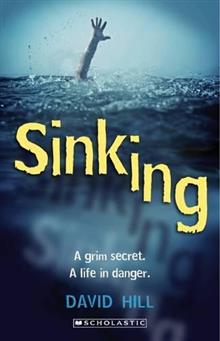
Sinking by David Hill

A grim secret. A life in danger.

When a crazy old man leaps out of the bushes at Conrad on his way to swimming training, he gets the fright of his life. And when he discovers the man’s granddaughter is that weird horse-riding girl from school, he decides to steer clear of them.

But fate has other ideas … and he is drawn into a grim secret. What’s the old man’s connection to a death from long ago? And whose life is in danger now?

The Subterranean Stratagem by Michael Pryor

Kingsley Ward and Evadne Stephens are the Extraordinaires and they should be the toast of the town – but their juggling and escapology act is failing, and Kingsley is to blame. His wolfish side is breaking free, ruining performances and endangering those around him. The secret to controlling this wildness lies in his mysterious past. Was he really raised by wolves? Who were his parents? What happened to them?

The discovery of Kingsley’s father’s journal promises answers, but when it is stolen the Extraordinaires uncover ancient magic, a malign conspiracy, and a macabre plot to enslave all humanity. What begins as a quest to restore Kingsley’s past becomes an adventure that pits the Extraordinaires against forces that could shatter the minds and souls of millions.

The Originals by Cat Patrick

To the outside world, Elizabeth Best is a model student. She’s a cheerleader, gets straight As and holds down an after-school job. But what the outside world doesn’t know is that Elizabeth Best is actually three girls. Lizzie, Betsey and Ella are no ordinary triplets. Born as part of an illegal cloning program, the girls were forced into hiding when the program was uncovered. To avoid being taken away, the girls have lived as one girl ever since. Living a third of a life can suck. Imagine having to consult your sisters before choosing your clothes, or hairstyle, or boyfriend. So when Lizzie is forbidden from seeing Sean, the amazing guy from her English class, she and her sisters decide they’ve had enough. But for a chance at a full life, they’ll have to risk everything they know.

Doll Bones by Holly Black

Twelve-year-old Zach is too old to play with toys. Or at least, that’s what his father thinks. But even though he stops hanging out with Poppy and Alice, stops playing with his action figures, it’s no good. There’s one toy that still wants to play with him. A doll that’s made from the bones of a dead girl. The only way to end the game is to lay the doll to rest forever. It’s time for a journey to Spring Grove cemetery. It’s time to grow up.

The Trouble with Mummies by Fleur Hitchcock

Sam comes home one day to find his family turning a little bit loopy – his mum is redecorating using hieroglyphics and his dad is building a pyramid in the back garden. He hopes it’s just a weird new fashion …but then the strangeness starts to spread. With the help of his friends Ursula, Henry and Lucy the Goat, Sam must save his town from rampaging Roman rugby players, hairdressers turned cavewomen, and a teacher who used to be a ‘basket of kittens’ but now wants to sacrifice the Year Ones to the Aztec sun god. As history invades Sam’s world, will he be able to keep the Greeks away from the Egyptians and discover the cause of the Mummy madness?

Death and Co. by D.J. McCune

Adam is a Luman, and it runs in the family. Escorting the dead from life into light, Adam must act as guide to those taken before their time. As his older brothers fall into their fate however, Adam clings to his life as a normal kid – one who likes girls, hates the Head and has a pile of homework to get through by Monday morning. When Adam gets a terrible premonition he realises that he must make a devastating choice, risking his life, his family and his destiny.

Transparent by Natalie Whipple

High school is hard when you’re invisible. Fiona McClean hates her family, has had to move to a new school and seems to be completely invisible to the boy she likes. So far so normal, right? But Fiona really is invisible. She doesn’t even know what colour her own hair is. Born into a world where Cold War anti-radiation pills have caused genetic mutations, Fiona is forced to work for her mind-controlling mobster father as the world’s most effective thief. When her father announces she must become a murdering assassin, Fiona and her telekinetic mother make a break for freedom. Running to a small Arizonian town, Fiona finds that playing at ‘normal life’ with a mother on the edge, a brother she can’t trust, and a boy who drives her crazy is as impossible as escaping her father.