- Cat and her grandfather Victor, plan to go to Far Rockaway at the end of the subway line. Is Far Rockaway based on an actual place?
 Absolutely, Far Rockaway is based on an actual place. If you’re in New York you can jump on the subway, and take the A-line train all the way eastwards, under the river, through Brooklyn and across Queens on to a long sand spit sticking out into the Atlantic and then you’re on The Rockaways (and if you – like me – have a guilty secret and used to love the Ramones, you’ll recognize the name of the sand you’re now running alongside as Rockaway Beach, the title of one of their fine 3 chord musical wonderments). Then you just stay on the train until it literally runs out of track and America too, and that’s Far Rockaway.The very few trainspotters who will read the book will notice that the A-line begins at the northern tip of Manhattan at a station called Inwood, and that Cat’s journey to the ‘other’ Far Rockaway in the parallel story-world of her coma begins when she wakes up in a wood in a chapter called, er, Inwood. Quite a coincidence, eh?
Of course the other Far Rockaway in the book is an imaginary place, but it’s based on two very real landscapes, Solas Beach on the island of North Uist, and the uninhabited island of Mingulay, both in the Outer Hebrides where we go every summer to recharge the batteries. They’re among my favorite places in the world, and I think even people used to the natural wonders of NZ might find them quite beautiful too.
- Cat meets some of the best characters from classic adventure stories in Far Rockaway. Was it difficult to make those characters sound authentic?
If I did get the voices of say, Long John Silver or Alan Breck right, it’s entirely because I’m a writer, and thus a thief, and I stole from the best, for example, Robert Louis Stevenson. He’s such a tremendously good story-teller and he created magnificent heroes and anti-heroes in such a well-crafted and distinctive way that their voices just can’t help but live on in your head. And if their voices live in your head, you can then imagine how they might say things the original author never made them say, which makes reviving them such a pleasure.Of course the other thing about writing fiction in general is that you have to be quite a good mimic anyway, remembering both what people say and how they talk: very sadly I can often be found striding up and down my office having imaginary conversations with myself in the guise of my characters, and doing the voices at the same time. It’s a lot less dangerous than the other times when I’m acting out sword fights or bits of action in order to be able to describe them accurately, but it’s MUCH more embarrassing if any of my family walk in and catch me at it. That said, I now do a very good Ray Winstone impression that I perfected while doing the gruff voice of The Gunner in my Stoneheart books , and in Far Rockaway Alan Breck shometimes shounded shtrangely like the younger Sean Connery, though I did try to shtop myshelf before it got sherioushly out of hand…
- The main character in Far Rockaway, Cat, is a strong, independent girl who doesn’t need anyone to save her. Is Cat based on someone in particular?
My daughter thinks I was inspired to write the book FOR her, which is generally true, because I write books for both my kids first. And it’s specifically true in this case because when she was about 12 she fell for a certain series of vampire related books but then suddenly un-fell for them a year later (admittedly on a second reading, itself a testament to their great power). When I asked her why, she said well, she’d kinda liked the girly romance thing and everything first time round, but on a re-read realized that the heroine was always hanging about moping and waiting for the glamorous guys to rescue her. She – at the ripe old age of 13 – thought that on reflection this was ‘a bit wimpy and old-fashioned’, and that she wanted books with stronger heroines…I could have stood up and cheered.
I didn’t.
I wrote Far Rockaway for her instead.
I did also remember to thank my wife for reading her a great and funny book called The Paper Bag Princess many years before, which put the right foundations in. In my humble opinion, every parent should read The PBP to their daughters (AND sons) if they can find a copy….
What she doesn’t know, and probably shouldn’t, is that Cat’s also inspired BY her, and all the other Real Girls I’m lucky enough to have known, especially that one who married me. I’m not going to drop a Spoiler Bomb on my own book here, but if you want to know how a Real Girl defines herself, there’s a big clue in the last four words on p.403.
- If you could meet one book character in real life who would you choose?
If it was a female character, it’d be Elizabeth Bennet from Pride and Prejudice. Or Scout Finch from To Kill a Mockingbird. Or any or all of Terry Pratchett’s witches – Granny Weatherwax, Magrat or Nanny Ogg. Or Eowyn from Lord of the Rings. Or Sara Paretsky’s great female detective, V.I. Warshawski.If it was a male character, then it’s Long John Silver from Treasure Island or Alan Breck Stuart from Kidnapped. Or Mahbub Ali from Kim. I was going to say Gandalf from Lord of the Rings, but then I thought that Merlin from The Sword in the Stone might be more fun, since he’s not only a wizard, but is also living backwards in time. It’d be interesting to see what he had to tell us about the future. And in the same way, but the opposite direction, I’d choose Puck from Puck of Pook’s Hill and Rewards and Fairies, because he took his friends into the past and showed them things that happened a long time ago.
Ok. Not what you asked but you have to admit that’s at least one interesting dinner-party full. If you cruelly limit me to just one, I’m going with Puck, but only because Elizabeth Bennet’s already in love with someone else and I’m no match for a Darcy…
- What were the books that got you hooked when you were a kid?
Everyone’s reading journey is different, but they all begin with similar primary colours. So here’s an unedited memory dump: Going from my earliest recollections, in order: being read to: Dr Seuss and Winnie the Pooh. And then reading for myself, pre-teen? Tintin. Paddington. Asterix. Any comic I could find, especially The Eagle, Victor, Hotspur or The Trigan Empire strip off the back end of a mag called Look and Learn. A book called Mary Plain, also about a bear. Biggles. Enid Blyton. The Borrowers. The Rescuers. Alan Garner. Geoffrey Treece. Rosemary Sutcliffe. Ian Fleming. Wildly age-inappropriate Sven Hassel books about an SS Panzer battalion (in mitigation, I was locked in a pretty unreconstructed boy’s boarding school at the time).
Then everything I could lay my hands on, usually passed on from my dad – westerns, especially Louis L’Amour and JT Edson, pulp American crime like Rex Stout and Ellery Queen, Agatha Christie, Ngaio Marsh, CS Forester’s Hornblower series, lot’s of WW2 and Prisoner of War memoirs (this was the 70’s and there were a lot of them about. I loved the Colditz Story especially since it seemed full of useful tips that might be helpful in escaping the prep school I was stuck in at the time) Neville Shute, Nicholas Montserrat, Alastair Maclean (I still love his first, HMS Ulysses) and then a teenage double-life reading the classics by day for school and then pleasure, and SF by night – Heinlein, Dick, Asimov, Bester, Niven etc etc. And then it just keeps on getting worse and I always need new bookshelves or a trip to the charity shop with a bag full o’ books. Thank god for the Kindle…
- If you could give one piece of advice to young writers, what would it be?
As you might think from the above answer; read everything and anything you can lay your hands on. If you want to write: do it. Don’t let anyone discourage you about writing – LEAST OF ALL YOURSELF. Keep at it. Pay attention to everything, because everything matters. So does everyone. Keep writing, even when it’s hard. Don’t be discouraged because what you write sounds like something else you’ve read. That’s not a bad thing. Every writer began like that, and the ones that didn’t are lying. The stuff you read, the stuff you love, the stuff that made you want to write in the first place, that stuff supports you as you set out on your own journey, just like training wheels on a bike when you learn how to ride. You’ll get your balance soon enough and the training wheels will just fall away, and you won’t even notice it until one day you’ll re-read something you just wrote and realize that the voice you’re hearing is your own, shaped by the ones you used to hear, but belonging to no-one but you. It’s a good moment, and if you keep writing, you’ll get there. Good luck and enjoy the ride…..
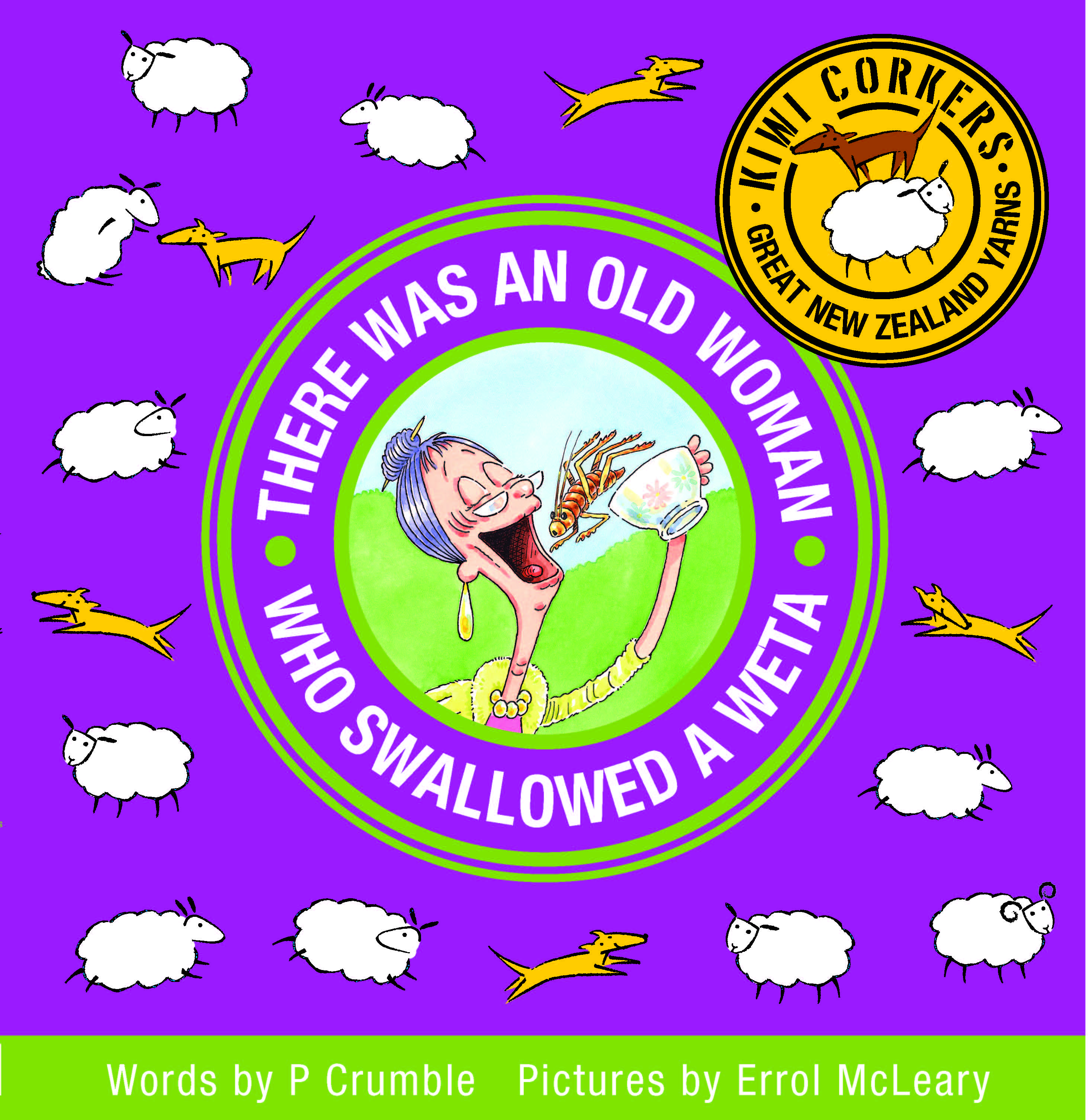 The Kiwi Corkers series hatched from the idea of taking well-known tales and retelling them with a New Zealand flavour. The concept of reworking fairy tales is not revolutionary; however the idea of bringing them into our familiar, uniquely Kiwi environment has made them popular stories that our children can relate to.
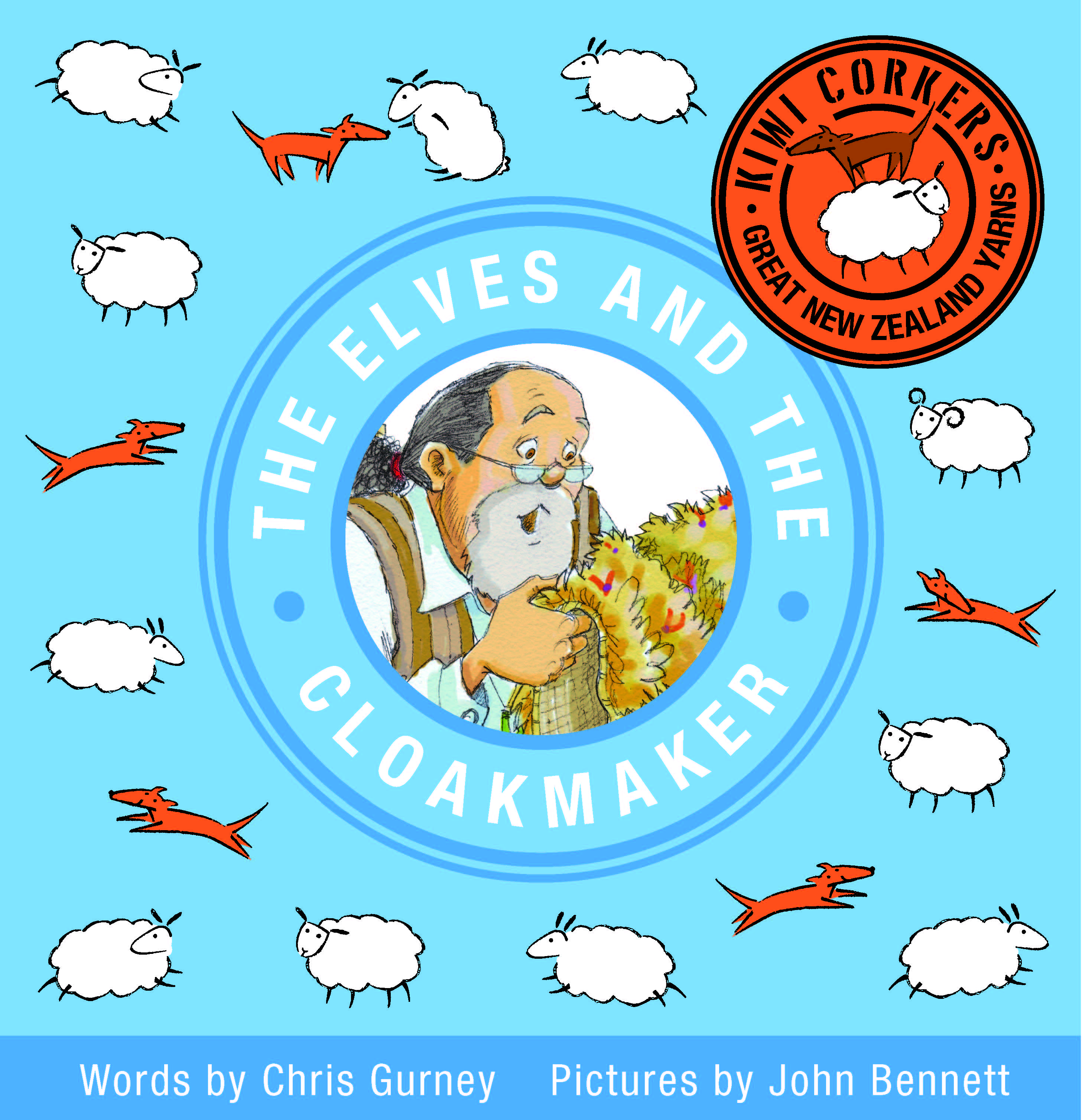 Take The Elves and the Cloakmaker, written by Chris Gurney and illustrated by John Bennett (October 2011). There were twists and turns in bringing this book to publication, as we had to consider things such as whether men can weave cloaks (yes, our research tells us, they can) and what patupaiarehe might look like (bright red hair, pale skin). At one stage, the title was going to be The Patupaiarehe and the Cloakmaker , but we were concerned that such a complicated looking word in the title might be off-putting to non-Maori speakers and changed it to The Elves and the Cloakmaker – which begged the question whether patupaiarehe are elves? After research and consultation, we decided yes, that would be fine.
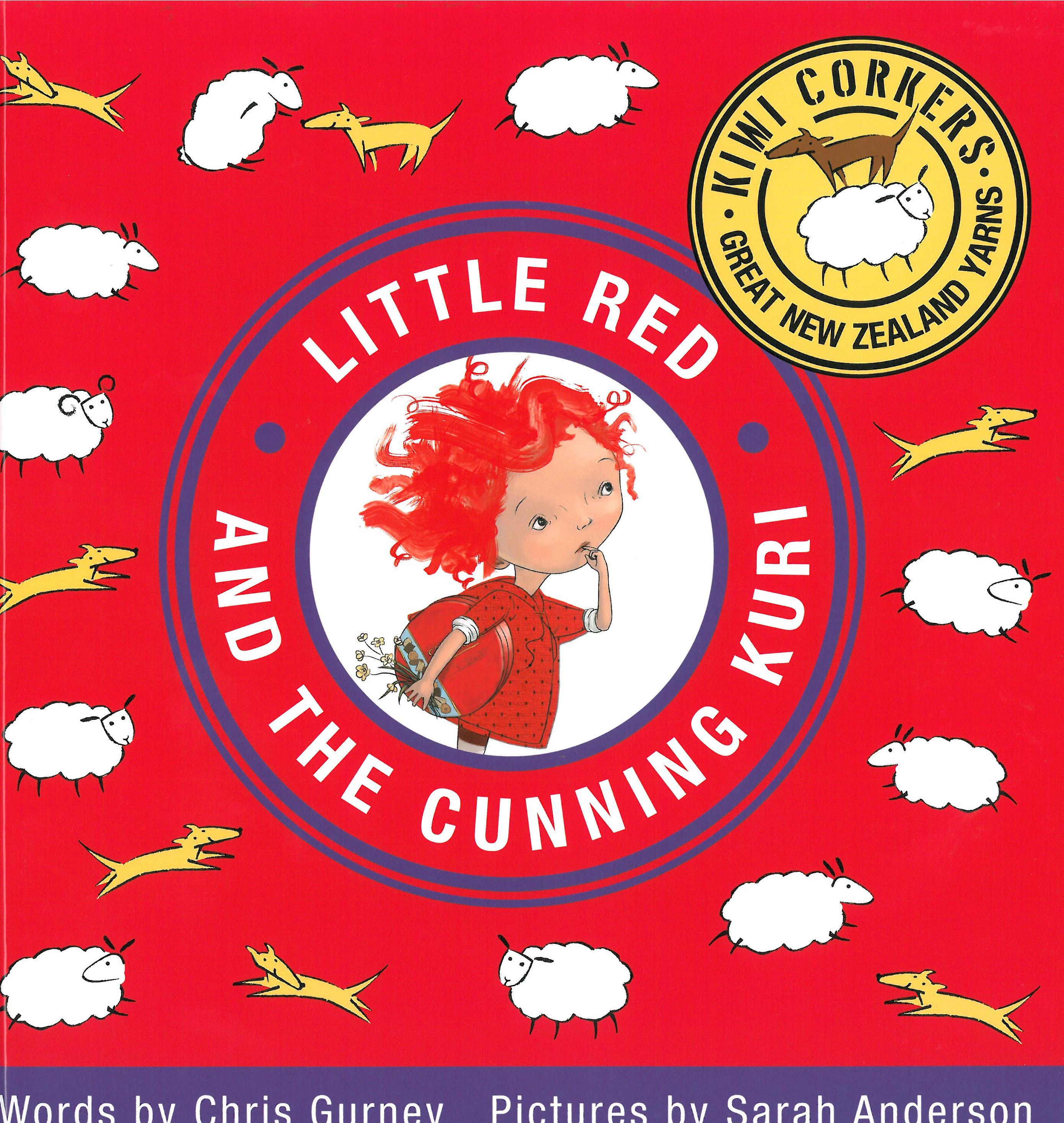 And it took a long time to come up with the Kiwi wolf for Little Red and the Cunning Kuri, also written by Chris Gurney, with illustrations by Sarah N Anderson (October 2010). What nasty New Zealand creatures do we have that could fit this character? We thought of a katipo – but it wouldn’t have been the right size in relation to Little Red, and not the right shape either. A kahu (harrier hawk)? No, still not right. It was a light-bulb moment when the author came up with the kuri, a Maori dog.
 Michael Rosen is a cool poet and author who has been writing poems for years. His poetry collections always have really funny titles like Lunch Boxes Don’t Fly and Mustard, Custard, Grumble Belly and Gravy. His latest collection, Bananas In My Ears, is full of weird and wonderful poems.
 There are all sorts of poetry books you can find in the library. There are nice, sweet poems about friends, poems about animals, or poems about monsters. Some of them rhyme and some of them twist and turn all over the page. Sticky Ends is a new collection of twenty-six very funny cautionary verses where the characters come to a sticky end. Some of them are stupendously silly, some are horribly gross, but they’re all funny.


 I love Oliver Jeffers’ books because they’re always so quirky and different. His illustration style is quite simple and sparse but he uses different textures and materials within them. His latest picture book, Stuck, is classic Oliver Jeffers and is weird and wacky, with a surprise ending.
 My Best Friends Are Books