Margaret Mahy’s stories come to life on the screen

Two absolutely wonderful DVDs are released today that celebrate legendary New Zealand author Margaret Mahy and her magical tales.  Margaret may no longer be with us but her stories live on and these new DVDs give an insight into her writing and present her stories and poems as they were intended.

Margaret Mahy’s Rumbustifications takes us inside Margaret’s home in Governor’s Bay as she reads 5 of her stories and 11 of her favourite poems to her grandchildren and pets.  It’s quite intimate and you feel like you are actually sitting right in front of her as she reads.  The stories and poems that Margaret reads are ones that children and adults alike will be familiar with and you might even discover a new favourite story.  Margaret performs her stories and poems as she imagined them and they sound spectacular rolling off her tongue.  I especially love her performances of Down the Back of the Chair and Bubble Trouble and The Boy Who Was Followed Home is now one of my favourite stories of hers (I hadn’t read this before and I can’t believe I missed this).  What I loved most about this wonderful production are the magical additions to her stories.  Many of them have had animation and sound effects added after the reading has been recorded, so each of the things ‘down the back of the chair’ actually pop out of Margaret’s chair and end up crowding the screen.  In ‘Summery Saturday Morning’ animated geese actually chase Margaret’s dog.  None of the animations get in the way of your enjoyment of the story, but make it even more special.  It is thanks to Margaret’s long-time friend, Yvonne Mackay, that we can now enjoy Margaret’s enchanting readings on DVD for the very first time.

Margaret Mahy’s Rumbustifications is the perfect gift for the whole family this Christmas.  I can imagine everyone crowding around the TV and being held captivated by Margaret’s reading.  It’s available in NZ wherever DVDs are sold at $19.99.

A Tall Long Faced Tale is an incredibly interesting and detailed documentary about Margaret Mahy that’s aimed at adults.  It was recorded for TVNZ’s Artsville programme several years ago and is now available on DVD for the first time.  In this 70 minute documentary Margaret is interviewed by her most iconic and exciting animated characters, the Lion in the Meadow, David from The Witch in the Cherry Tree, Mother Pirate, and author Elizabeth Knox.  I loved these appearances by her characters as it was a quirky interview technique and I wondered who would pop up next. A wide range of subjects are covered, including memory, identity, motherhood, magic and the universal appeal of her stories.  As well as the characters from her picture books, some of the characters from her young adult novels make an appearance and ask her about the stories they feature in.  Some of the illustrators that Margaret worked with throughout the years talk about Margaret and her magical stories, including American illustrator Steven Kellog (The Boy Who Was Followed Home),  English Jenny Williams (The Lion in the Meadow, The Witch in the Cherry Tree), and Quentin Blake (Nonstop Nonsense).  I loved the way that the interview ends with Margaret walking down the wharf with her characters by her side, and Elizabeth Knox’s final question is one of the most fantastic interview questions ever – ‘If you were given 3 wishes, either selfish or unselfish, what would they be?’ I’m sure you will be as surprised as I was with her answers.

A Tall Long Faced Tale is a must-watch DVD for all teachers, librarians, and anyone who loves children’s literature.  It’s available in NZ wherever DVDs are sold at $24.99.

Thanks to Chris from Production Shed.TV for sending me copies of these wonderful productions.

Check out these videos from Margaret Mahy’s Rumbustifications and A Tall Long Faced Tale and keep an eye out on the blog for a chance to win your own copy of the DVDs.

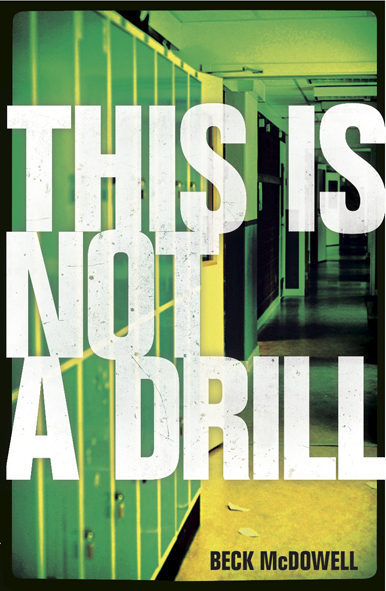
This is Not a Drill Blog Tour – Interview with Beck McDowell

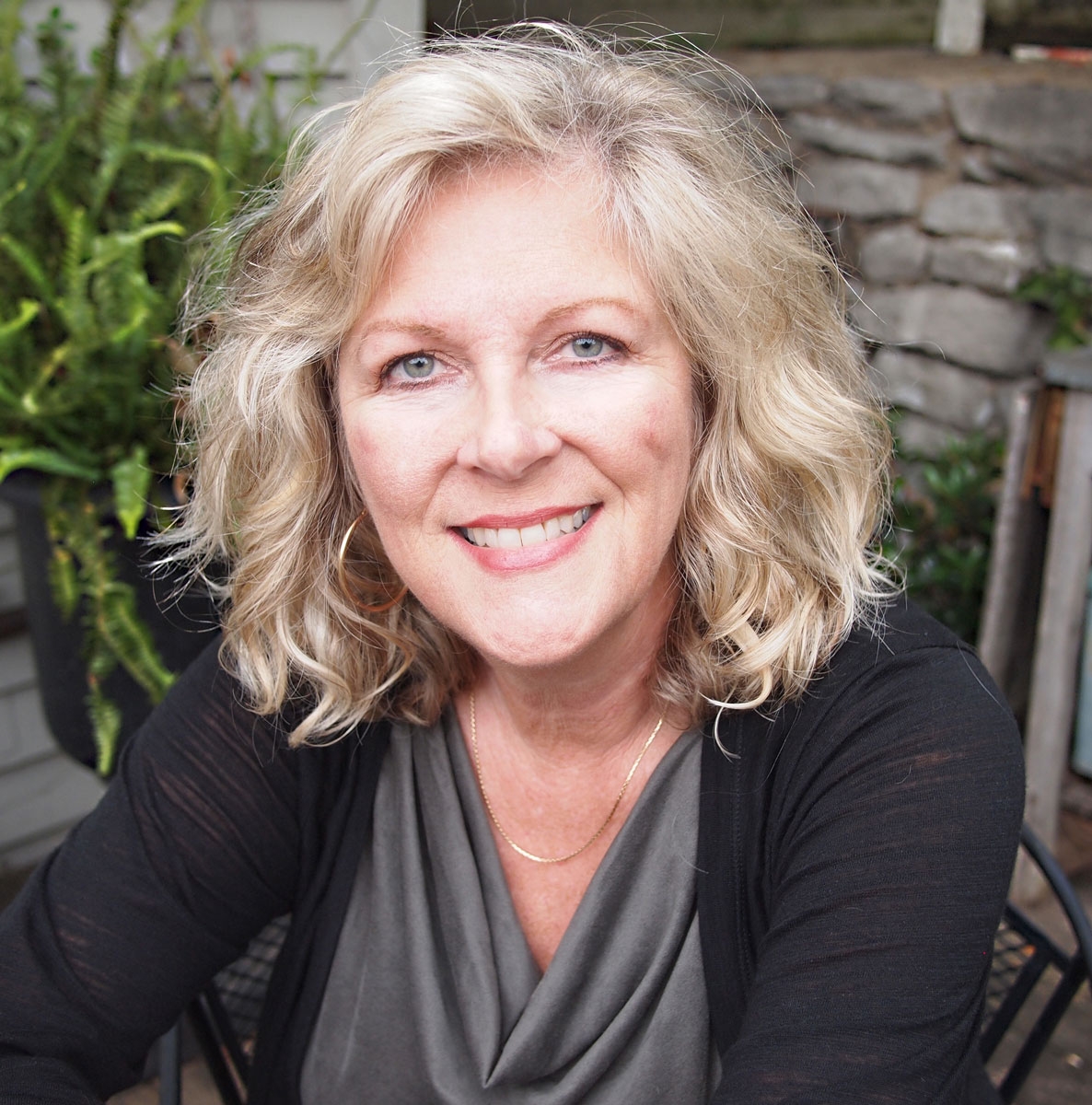
Today on My Best Friends Are Books I have Beck McDowell, author of the fantastic new book, This is Not a Drill, joining me on her blog tour to celebrate the release of her book.  The story revolves around a hostage situation in a school in America, with a father who has recently returned from the war in Afghanistan.  It’s a very powerful story and you can read my review here on the blog.  I got the chance to ask Beck a few questions about the story and her characters.

  • Why did you decide to tell the story from Jake and Emery’s point of view?

At first I wanted the alternating viewpoints because part of the conflict was the recent break-up of the two main characters, and I wanted readers to hear both sides of that story. Also, I knew that they’d each bring a different perspective to the problem and a different take on possible solutions.

  • Mrs Campbell stays very calm and does her best to keep things normal for her students.  Is the character of Mrs Campbell based on a teacher you know?

Mrs. Campbell is based on MANY teachers I’ve known. It’s rather amazing – given the lack of resources, the huge overload of work, and the gigantic (and growing) class sizes teachers face that they’re able to stay calm and tune in to students’ needs in every situation that arises. But I’ve seen hundreds of them in my career step up in difficult circumstance and put kids first day after day.

  • You were a middle and high school teacher for many years.  In all your years as a teacher, what was the most important lesson that your students taught you?

Wow! What a good question – and a hard one! I can’t narrow it down to one lesson, but I can give you a few: not to underestimate anyone, that there’s hardly ever one right answer, that secrets can cause big problems when they’re locked inside, that brave teens are quietly dealing with huge life issues most people don’t know about, that many students just need someone to talk things over with, that things will get better if you just hang on through the tough times, and that the best way of healing yourself is reaching out to others. A lot of these lessons are incorporated into THIS IS NOT A DRILL. Honestly, I get really emotional when I think about how much my students meant to me through the years. They enriched my life beyond my ability to describe.

  • Mr Stutts is a soldier recently back from Iraq.  Did you talk to soldiers about their experiences before you wrote the story?

Absolutely. Through the years I talked with many students who were home from military duty. And then several were kind enough to give me more detail about military life and to answer my questions while writing the book.

  • Emery tells Jake ‘I know he’s become a monster…but he’s also a wounded soldier, and I can’t forget that.’ Was it difficult to to get the right mix of monster and wounded soldier in the character of Mr Stutts?

SO difficult!  He’s in the middle of this truly horrific act – holding a first grade classroom hostage – and yet he’s suffering real psychological wounds from a war he fought for his country. And if you get right down to it, he’s as scared as the kids are – scared of losing his wife, his child, his career, his reputation – he’s losing everything. So I think it’s okay for the reader to condemn his actions but have sympathy for him as a person.

  • The events of the story are emotionally draining for both the characters and the reader.  Did you find it quite emotionally draining to write?

Yes, especially – of course – the ending. But sometimes a story is too important to walk away from because you know it will be hard to write. It’s one reason for the funny bits with the first graders – comic relief. I think readers will agree with me that life is a big old mixed up jumble of emotions. Even on the saddest days there can be funny moments, and happy events can be tinged with undercurrents of sadness – maybe for the people we’ve lost who aren’t with us to enjoy them.

  • After our earthquakes, parents and teachers of children in Christchurch are very aware of how trauma affects children.  How did you make sure the effects of trauma on the students in the story were authentic?

First, I’m so sorry for what you’ve been through there. The news stories and pictures were so sad, and the ones with kids always tug at my heart the most. I did a lot of research on stress and grief and on first graders in general, but most of that knowledge comes from personal experience with kids. Since we live in an area prone to tornadoes, I’ve taught students who’ve lost homes, parents, siblings, and everything they own. Many have come to school still in shock the next day after entire neighborhoods were wiped out – as was the case in 1989. The kids in my story were younger than the ones I’ve taught, but I think the fall-out from traumatic events affect us in similar ways, no matter how old we are.

  • Relationships are an important factor in the story, whether it’s between Emery and Jake, Mrs Campbell and her students, or most importantly, Mr Stutts and Patrick.  What advice can you give to aspiring writers about creating realistic relationships in stories?

You really walk a fine line as a writer between giving relationship backstory  and keeping the plot moving forward. There will be readers who feel the backstory of Jake and Emery interrupts the flow of the action, but – to me – the details about their past were necessary to give depth to them and their relationship – and also to give the reader a break from the tension of the story. As you said, it’s very emotional throughout, and I felt those passages gave the reader a chance to slow down and regroup just a little bit. I’ve always been fascinated by the dynamics of relationships of all kinds, so they’ll always be a big part of anything I write. In the end life is all about human connections. The relationships we have with others ultimately trump any worldly accomplishments or professional success we achieve. As I’m sure you’ll agree in the aftermath of the earthquakes there, family and friends are what life’s all about.

Beck McDowell’s new book, This is Not a Drill is out now in Australia and New Zealand from Hardie Grant Egmont.  You can enter to win a copy here on the blog. You can check out the other stops on Beck’s blog tour here:

Thursday, Oct. 25           CYNTHIA LEITICH SMITH    http://www.cynthialeitichsmith.com/

Friday, Oct. 26                A LIFE BOUND BY BOOKS http://alifeboundbybooks.blogspot.com/

Monday, Oct. 29            THE STORY SIREN  http://www.thestorysiren.com/

Tuesday, Oct. 30            YA BLISS  http://www.yabliss.com/

Wednesday, Oct. 31       BUZZ WORDS BOOKS    http://www.buzzwordsmagazine.blogspot.com.au/

Thursday, Nov. 1            YA LOVE BLOG http://yaloveblog.com/

Friday, Nov. 2                 ICEY BOOKS    http://www.iceybooks.com/

Monday, Nov. 5              NERDY BOOK CLUB     http://nerdybookclub.wordpress.com/

Tuesday, Nov. 6             THE NAUGHTY BOOK KITTIES http://naughtybookkitties.blogspot.com/

Wednesday, Nov. 7       THE COMPULSIVE READER http://www.thecompulsivereader.com/

Thursday, Nov. 8          TEACH MENTOR TEXTS   http://www.teachmentortexts.com/

Friday, Nov. 9               CONFESSIONS OF A BOOKAHOLIC http://www.totalbookaholic.com/

Monday, Nov. 12          KATIE’S BOOK BLOG http://www.katiesbookblog.com/

Tuesday, Nov. 13          ALLURING READS http://www.alluringreads.com/

Wednesday, Nov. 14    PAGE TURNERS BLOG http://www.pageturnersblog.com/

Interview with Gareth P. Jones + giveaway of Constable & Toop

Garth P. Jones is the author of the creepy, gruesome and funny new book, Constable & Toop (you can read my review here).  After finishing Constable & Toop I wanted to find out what else he had written and I discovered that we had his Dragon Detective Agency series and The Thornthwaite Inheritance sitting on our library shelves.  I love his writing style and I now want to go and read all of his other books.  Gareth very kindly answered my questions about his writing and his fantastic new book.

  • What inspired you to write Constable and Toop?
I was sitting in a coffee shop in Honor Oak (which is not far from my flat). The coffee shop is opposite an undertakers called Constable & Toop. At the time I was trying to come up with a new idea. I wrote down the name of the undertakers, which I found especially evocative. By the time I had finished my coffee the bare bones of the idea were down on paper.
  • Are any of the ghosts in Constable and Toop based on real ghosts?
As a non-believer, I am amused by the idea of real ghosts, but yes – some are. The Man in Grey is the best example. A tour guide by the name of David Kendell-Kerby (also an actor and writer himself) told me about several ghosts who haunt Drury Lane (apparently the most haunted theatre in the world). I liked the story of the Man in Grey best. The stuff about him being bricked up in the wall and possibly killed for discovering accounting irregularities is all ‘true’ although his name was unknown so I borrowed David’s. The part about him whispering to lines to actors is ‘true’ as well – a kind of spiritual teleprompter.
  • In your story there are different types of ghosts, including Enforcers, Prowlers and Rogues. What sort of ghost would you be?
Well, I have certainly worked for large organisations like the Bureau where you can hide the fact you’re not doing much behind all the processes and procedures so maybe I would be a clerk – although a far less conscientious one than Lapsewood .

  • The story is set in Victorian England and you really feel immersed in the period as you read. While researching and writing your story what was the most interesting thing that you learnt about this period?
I think mostly I was struck by how similar it was. I was interested in the South-East London suburbs where I live and where most of the action is based and, although there has been a lot of development, it’s not that different in terms of how connected to London you feel. One of the formative moments in writing was standing at the top of the hill between Honor Oak and Peckham Rye and looking down at London and I realised that the view probably wouldn’t have been dramatically different – give or take a few buildings here and there. There were lots of moments while wandering around London when I felt very connected with the city’s history.

  • One of the things I like the most about Constable and Toop is the mix of the creepy and gruesome with the lighter moments and witty banter between your characters. Was this how you originally planned the story or did you set out to write a more traditional ghost story?
I had a very tight deadline with this book and how no real time to stop and consider what I was doing. Happily the story flowed very quickly from my pen. Gruesome and creepy were necessities of the story and I always intended it to be funny. My editor had told me that she didn’t think my previous book (The Considine Curse) was very funny so I was determined to make sure this one was.
  • What exciting stories can we look forward to from you?

Hm, I’m not sure I’m ready to tell anyone yet. It looks like it will have a Victorian setting again though – at least in part. And It will probably have elements of supernatural and humour – but not ghosts again. I’ll save ghosts for when I do a sequel to Constable & Toop… if I ever do that is.

Win a copy of Constable & Toop!

I have 2 copies of Constable & Toop to give away.  To get in the draw just enter your name and email address in the form below.  Competition closes Wednesday 21 November (NZ only).

Thanks to everyone who entered.  This competition is now closed.

Interview with Annabel Pitcher

Annabel Pitcher is one of my favourite authors.  Her first two books, My Sister Lives on the Mantelpiece and Ketchup Clouds are absolutely brilliant and I can’t wait to read what she writes next.  Annabel very kindly answered some of my burning questions about Ketchup Clouds and her writing style.

  • What was your inspiration for Ketchup Clouds?

The plot took a long time to figure out. The only thing I knew from the very beginning was that I wanted to write about a girl, Zoe, who kills someone and completely gets away with it. I imagined a dramatic scene occurring at sunset, which is where I got the title, Ketchup Clouds (i.e. red clouds). Apart from that, I had no idea what the story would involve. Slowly, over a few months of planning, thinking and generally just daydreaming and calling it work, I decided to make it a love story.  However, I desperately didn’t want it to be one of those cheesy high school tales, so I tried to think of an unusual way to tell Zoe’s story, a quirky way to explore the well-worn theme of first love. I experimented with all sorts but eventually came to realise that the best way to tell Zoe’s tale was through a series of anonymous letters. Zoe has this terrible secret that she can’t reveal to anyone she knows, so it makes sense for her to try and confess to a stranger. That’s when the whole book really took off and became something exciting! I could just imagine this distraught, teenage girl, wracked with guilt, tiptoeing out in the middle of the night after a bad dream to hide away in the garden shed and write a secret letter. The question was, to whom? I thought of celebrities, The Pope, even Santa Claus (!) but nothing felt quite right. Then one night when I was driving home from my parents’ house, I suddenly remembered that I’d written to an inmate on Death Row in America when I was a teenager. I’d got involved in a ‘pen pal’ scheme through Amnesty International, and the strange thing about writing to someone you’ve never met, someone who has done something wrong, is that you become far more open about your own life and flaws than you would to a friend. Because you’ll never meet them, you can tell them anything. That’s when I knew that Zoe had to write to a criminal on Death Row. So, in answer to your question, there was no real direct inspiration for the novel. I worked hard to come up with an unusual story, but once I had the pieces in place, it was relatively easy to write.

  • I love the way that you portray the parents in your stories.  They aren’t always the best parents but deep down they love their children.  Why do parents play such an important role in your stories?
I think it’s because I like to write coming-of-age stories. Though Zoe in ‘Ketchup Clouds’ is a lot older than Jamie in ‘My Sister Lives on the Mantelpiece’, they are both coming-of-age tales: both characters grow up in the novels, they both learn something, and they both mature. Inevitably, when talking about a child or teenager growing up, you have to explore their relationship with their parents and how this changes. One of the things most people come to understand as they get older is that their parents aren’t perfect. Depending on the situation, this is either a positive or negative moment of awakening, but it happens to most of us at some point in our childhood or teens, so it seems a natural thing to focus on that in a YA book.
  • Ketchup Clouds is a story driven by relationships.  How do you create realistic relationships between your characters?
The honest answer is, I do a huge amount of talking out loud! The neighbours probably think I’m crazy! Getting dialogue right is so important if you are to construct a realistic relationship, so I write a bit then act it out to see if it sounds authentic. If anything jars, I delete it straight away. I listen very closely to the way that people talk. Conversations are full of false starts, pauses, repetition, hesitation and so forth, so I try hard to capture that in my dialogue. I think it also helps that I am fascinated by people. I study humans – the way we interact, our psychology, why we do the things we do and how we screw up – and I use all of my research in my books to try and construct three dimensional characters who are neither good nor bad, but somewhere in between. Then it’s just a matter of putting a few characters together and trying to guess what they would say to each other!
  • Both Ketchup Clouds and My Sister Lives on the Mantelpiece are told in first person.  Is this a style that you prefer or did it just seem right for the stories you were writing?
I do prefer it, both as a reader and a writer. I love the intimacy – the ability to get inside a character’s head so completely. As a reader, I was drawn to novels with a strong narrative voice (How I Live Now, Broken Soup, The Catcher in the Rye, Perks of Being A Wallflower) so, when I set out to write my own book, I wanted to try it in the first person. It is so much fun trying to capture a character’s unique voice. You have to really listen to them inside your head, hear their dialect, and then try to work out how to represent that on paper so it seems as if they’re really talking. Should they pause here?  Stop completely there?  Elaborate that point further? I love making those decisions! Saying that, I do think I need a break from writing in the first person. In ‘Ketchup Clouds’, I was keen to make Zoe sound totally different from Jamie in ‘My Sister Lives on the Mantelpiece’, but I don’t know if I come up with a third completely contrasting narrative voice just yet. I need a break – so I’ve started writing my third novel in the third person. It’s going okay so far and it’s a nice change.
Ketchup Clouds is released in NZ today so grab a copy from your library or bookshop.  You can also enter my competition to win a copy of Ketchup Clouds.

Interview with Donovan Bixley

Donovan Bixley is my favourite New Zealand illustrator.  He has illustrated Kiwi versions of The Wheels on the Bus and Old MacDonald, written and illustrated a book about Mozart, called Faithfully Mozart, and illustrated work by other authors, including Kyle Mewburn (the Dinosaur Rescue series) and Brian Falkner (Northwood and Maddy West and the Tongue Taker).  Donovan has just published his amazing Kiwi-themed puzzle book, The Looky Book (which I reviewed here on the blog).  I was lucky enough to be able to ask Donovan a few questions about his illustration, his new book, and working with other authors.

  • Your illustrations they seem to glow on the page.  What materials/tools do you use to create them?

Most of my work is hand drawn and digitally painted. I come from a painting background, and when I was a AUT the first computers came in. I began scanning my paintings and drawings and mucking about with them in Photoshop 1 – ha ha, you couldn’t do much. I’ve kinda just kept working on it for years and years and now that is the thing I am really highly skilled at. If I were more highly skilled at water colours or oils I would use that medium. I usually treat my digital work as a normal painting – however I’m not precious about it (I’m not here to preserve the sanctity of ‘the art’). I have a vision in my head and I’ll use any means necessary to achieve that. I once had a woman come up to me at a Storylines and ask about my illustrations. When I told her they were digital paintings she stormed off in disgust, as if the computer had done all the work – however some of my paintings, such as those from my book “Faithfully Mozart”, take 70-80 hours.

  • Who influences your illustration?

Well I’m still trying to live up to my heroes, like Norman Rockwell. I am huge fan of the turn of the century illustrators like Arthur Rackham, Maxfield Parish and Edmund Dulac and also their modern equivalents, like the brilliant Russian illustrator Gennardy Spirin. A lot of my work features that kind of old-fashioned ornamentation – swirly things just seems to naturally come out. They often get cut out of the final illustrations for various reasons. There are an incredible amount of illustrators who I follow avidly, like Dave McKean, Shawn Tan or John Howe, but usually this is simple admiration rather than influence. It would be pretty hard for someone of my generation not to be influenced by people like Bill Peet or Dr Suess – in fact I spend a lot of time now consciously trying to be influenced by my childhood memories, I especially like a bit of humour such as Mad Magazine or Mordillo. In that way I don’t often seek out other illustrators to inspire me. I find that I am drawing influences straight out of myself – which I suppose is where you get your own style from – all that stuff goes into you and gets all mixed up and eventually after many years you stop trying to emulate your heroes. You are just you.

  • You’ve created Kiwi versions of The Wheels on the Bus and Old MacDonald.  What do you enjoy most about putting your own Kiwi spin on these classic rhymes?

I was a bit apprehensive about doing those two books actually, but what thrilled me about them both was the challenge as an illustrator. One: they’re often stories that get done so badly and I was determined that they had the potential to be really cool. Two: was the open-ness of the text. I often use “Wheels on the Bus” as a perfect illustration example when I’m doing workshops with school kids – because the words don’t constrict your imagination. All it says is “the wheels on the bus go round and round …” and the rest is up to you. So in that respect both of those books were a real pleasure to add my spin and create a whole world outside of the basic text. I loved some of the things that came out of it like ‘The All Black Lambs’ and ‘Squidly’ the colossal squid. Having said that, you’d probably guess from the variety of my other work that I really hate to be pidgeon-holed as an illustrator. I didn’t want to become ‘the guy who does kiwiana versions of old songs’. So that’s how I ended up doing “The Looky Book” – I wanted to take all those characters and situations from “Wheels on the Bus” and “Old MacDonald’s Farm” and do something different with them. So I started thinking about the type of books I loved when I was a kid.


  • Your latest book, The Looky Book, is amazing! There is so much to find on each page.  How did you decide what puzzles and scenes you would create?

It was actually much more difficult that it appears. Since the book is aimed primarily at pre-schoolers, a lot of more complicated ideas had to be thrown out. Yet at the same time I always try and make my books have something to appeal to all ages. There are little things in there that the kids won’t get until they are older, maybe not until they are adults. As an illustrator, that’s an important thing for me, it keeps the illustrations alive, even after years of the reader looking at them, because they’re seeing things in a new light. It also makes the books entertaining for parents to read. Kids are little explorers and I strongly believe in giving them lots of opportunities to discover new things on each page. You’d be surprised how a kid will pick up on a tiny little aspect of a story or illustration and they’ll go off and find out all about it. If you don’t give them those opportunities then the book becomes flat and boring and will only be read a few times. As far as the puzzles that ended up in the book, I really wanted to cover a variety of entertaining visual tasks for pre-schoolers. So among the general ‘I spy’ elements are things like finding numbers, matching colours or patterns, and putting things into groups.

  • How long did it take you to create each spread?  Did you have to plan them in great detail before you started?

I’m not sure how long each spread took, the whole book was a few months work spread over half a year. As I mentioned above, a lot of initial work on sketches for spreads got thrown out for being too complicated. I guess the longest would have taken a week and generally involved quite a lot of planning – more in composition, just to fit everything in. With most of my books I brainstorm a lot with my wife and three daughters, at the dinner table or in the car, coming up with ideas. So I’d have this big list of things that needed to fit somewhere in a spread and then have to figure out where that ‘where’ would be. In terms of sketch planning, I’ve stopped doing highly detailed roughs. I find that I enjoy illustrating, and get much better results, if I leave a lot of room for creativity in the final illustration. For a recent Scholastic book, “The Three Bears Sort Of” by Yvonne Morrison, I didn’t actually do any roughs at all. Instead I sent the publisher a letter telling them what I was going to do and created each page as I went. Luckily they really had faith in my ability to pull it off, and the result was a real creative explosion rather than just the technical process of turning a sketch into a finished illustration.

  • Which spread was your favourite and which was the hardest to get perfect?

My favourite is the underwater scene. It’s a homage to one of my favourite books as a kid, “Patatrac” by Jean Jacques Loup. “Patatrac” is this funny French book from the 70s without words, just crazy pictures with lots going on and no actual story. Books like that and books like Richard Scarry’s were part of the inspiration for the “The Looky Book”. As a kid I could sit for hours just looking at the pictures (actually I still do as an adult). The most difficult illustration was the forest scene, where plants and bushes make up shapes and outlines of New Zealand animals. I often have a really good idea in my head, but then making it work in the real world is a challenge. That picture took a lot of planning and was the longest to create (actually the complete opposite of how I just answered the previous question ha ha). I still worry that it didn’t work quite as well as I’d imagined it.

  • You’ve created some wonderful illustrations for other authors’ work, including Brian Falkner (Northwood, Maddy West and the Tongue Taker) and Kyle Mewburn (the Dinosaur Rescue series).  What’s the best thing about working collaboratively?

I love being able to work with other authors, it means I get the best of both worlds. When there is something I really want to illustrate I create it for myself, but working with other authors allows me to create things that I never would have chosen to do on my own – it always helps if that thing fits into your areas of interest. Brian’s “Maddy West” was a real treat for me – the chance to do ninjas, break-dancing monkeys, witches, wolves and ravens and creepy old gothic houses – all these things fit right into the more serious and darker side of my work, but are far from the humourous subjects I am usually asked to illustrate. “Dinosaur Rescue” is a particular favourite. I mean, I’ve been drawing dinosaurs since I was able to pick up chalk, so it’s a dream come true to be doing it as a professional! It’s also a thrill because there’s so much room for humour and it’s a true collaboration. Kyle creates something, then I take it and add to it, then Kyle comes back and takes the something I did and adds onto that … and so on. Often the best developments are when one of us takes a little aspect, a word or a corner of an illustration, and develops a whole new branch of story from there. Best of all it’s tremendous fun which I hope is apparent to the readers.

  • What are you working on at the moment?

I’ve just this week begun work on a Margaret Mahy book which is a huge honour for any illustrator, and very exciting. Margaret’s work is unlike anything I’ve ever illustrated before. Often I’ll have a very obvious text that drives the illustrations, and within that I create my unique part of the story. Margaret Mahy’s works are perfect for an illustrator because (as mentioned with “Wheels on the Bus”) they don’t constrain you. I can’t quite put my finger on it, but there’s a lightness and freedom. She has an incredible way with words which is just so lovely – words for the joy of words and the sounds they make in you mouth. It’s also a lovely little story too with a nice plot and darling characters. It’s the type of work that could fall very flat or soar, depending on how you illustrate it – and I have to say I’m a little bit nervous, but I have a feeling it’s going to be very delightful.

I’m also working on my next book for Hachette, which is another of my own called “The Weather Machine”. It’s a bit like those books I was talking about above, Mordillo and “Patatrac” – a book without words – which I’ve wanted to do for years. It’s about a man who makes a machine to control the weather, with Frankenstein-ish results.


Thanks for joining me Donovan.  I loved your answers and it’s always great to get an insight into an illustrator’s work.  You can find Donovan at his website, www.donovanbixley.com and on Facebook.

My hilarious interview with Ivy and Bean

Saturday 13 October is International Ivy + Bean Day, when we celebrate two very cool characters created by Annie Barrows and Sophie Blackall.  Book shops and libraries all over the world (including here in New Zealand) are having special Ivy + Bean parties.  I’m hosting one in my library, with activities, games, giveaways and a reading of the latest Ivy + Bean story.  Here is Annie Barrows to tell you all about International Ivy + Bean Day:

I sat down with Ivy and Bean to ask them a few questions about their favourite things and what they like about each other.  Thanks for joining us Ivy and Bean!

  • How did the two of you meet?

Ivy: Bean was running away from home.

Bean: I had to run away from home. Because of Nancy. That’s my older sister.

Ivy: You had to run away from home because you wiggled your behind at Nancy.

Bean: But I wouldn’t have wiggled my behind at her if she hadn’t been trying to get me in trouble.

Ivy: But she wouldn’t have been trying to get you in trouble if you hadn’t taken her twenty dollars.

Bean: But I wouldn’t have taken her twenty dollars if she hadn’t been such a tightwad.

Ivy: So really, it was Nancy who helped us meet.

Bean: Sometimes Nancy’s okay.

  • What do you like best about your friend?

Bean: She can cross one eye without crossing the other.

Ivy: One time, Bean ate wood for a dollar.

  • Who is the most annoying person you know?

Ivy: There’s this girl named Nellie in the book I’m reading who’s really annoying. She says mean things about the main girl’s dog.

Bean: She’s not real. You can’t say she’s the most annoying person you know, because you don’t really know her.

Ivy: I know her. I’m reading about her.

Bean: But she’s not real. She’s in a book. You have to say someone real.

Ivy: You.

Bean: You.

  • What is your favourite food?

Bean: Syrup! Or doughnut holes! I love doughnut holes! I can stick four of them in my mouth at once and then I smash them flat between my tongue and the top of my mouth. It’s great!

Ivy: Chocolate mousse. I used to think it was made out of moose.

  • What do you want to do when you grow up?

Ivy: I’m going to be a witch.

Bean: I’m going to write the fortunes that go inside fortune cookies. Or be an arborist. I haven’t decided.

  • What is your most embarrassing moment?

Bean:  I don’t want to talk about it.  Sometimes, people are thinking about other stuff and aren’t paying attention every single little second and they don’t exactly see where they’re going and it’s not their fault.

Ivy: It could have happened to anyone. It probably does happen to almost everyone, but maybe not when twenty-six other kids are watching.

Bean: And their parents.

Ivy: Never mind.  They probably would have painted that part of the room over anyway.

  • What’s the craziest scheme you’ve ever come up with?

Ivy: Crazy?

Bean: Crazy?

Ivy: Do we do anything crazy?

Bean: Nah. He must be talking about someone else.

Guest Author: Glenn Wood talks about The Brain Sucker

When I first came up with the idea for ‘The Brain Sucker’ it was quite different.  For a start it wasn’t called “The Brain Sucker’, it was called ‘The Manners Thief’.  This was an idea I’d been mulling over ever since I’d seen a really badly behaved kid running riot at my local supermarket (‘The frozen pea thrower’ was another working title).   It was as if the child had no manners at all and I wondered if someone had stolen them.  Then I started to notice more badly behaved children and decided there was definitely a manners thief on the loose.

From there I had to work out just how the manners were stolen and I came up with the idea of a villain who sucked the manners straight out of children’s heads for his own nefarious purposes.  Clearly he needed a machine that would do this and the brain sucking machine was born.

Now I had an idea and a villain with an evil plan.  Next I needed someone to stop him and I knew that would need to be someone who was really polite and not scared of a challenge.  Callum formed quickly as did his disability because it automatically made him a kid used to adversity with plenty of guts and determination.  Once I knew Callum would be in a wheelchair it opened up lots of possibilities for his friend Sophie to exercise her crazy inventive mind to ‘trick it out’.

Jinx was a character I’d been thinking about for some time.  I love the idea of the world’s unluckiest boy and he is based on me as a kid (and many would argue, as an adult).  I’ve always been accident prone and susceptible to bad luck.  He was easy to write!

Once the story was written my very smart publisher and editor asked if we could have the machine sucking more than just manners out of the kids – it would be much more evil if Lester sucked the goodness out of them.  I agreed and ‘the Brain Sucker’ started to take shape.

Writing Lester and his dumb but dangerous henchmen Darryl and Parson was lots of fun.  Lester is clearly insane but he’s also a twisted genius, my favourite kind of villain!  His plans are grandiose and a bit far farfetched, but I love evil doers who think on a grand scale, which is why I have always loved the villains in James Bond films!

My top five kid’s villains in no particular order would be:

  • Voldemort (of course)
  • Scar (The Lion King)
  • Megamind (best comic villain)
  • Principal Agatha Trunchbull (Roald Dahl’s Matilda)
  • Count Olaf

You can win a signed copy of Glenn’s fantastic book, The Brain Sucker, right here on the blog.  Check out the competition post and tell me about your world domination plan to get in the draw.

Phoenix Files Q & A with Chris Morphew

This is a recent video that Chris Morphew posted on YouTube about his fantastic Phoenix Files series.  I’m a huge fan of The Phoenix Files and highly recommend it (especially for fans of Michael Grant’s Gone series).

Interview with Myke Bartlett, author of Fire in the Sea

Today I have the pleasure of interviewing Myke Bartlett, winner of the 2011 Text Prize for Young Adult and Children’s Writing, and author of the fantastic Fire in the Sea (you can read my review here).  I asked Myke a few questions about Fire in the Sea, his characters and his writing experience.  Thanks Myke!

1.  What inspired you to write Fire in the Sea?

Being a teacher, really. There’s nothing better than seeing kids excited about books and I started feeling a bit envious about the attention other authors were getting. I was determined to write something exciting and challenging that students would enjoy. I think I also really liked the idea of YA fiction being gateway fiction. These were the stories that would, hopefully, get kids hooked on good quality books. If they were reading something good when they were young, then they might demand better when they were older.

2.  Had the story been bubbling in your head long before you submitted it for the Text Prize?

I think I had the basic idea about Jake in 2009. But I didn’t start writing it until 2010, as I was working on something else. The actual writing was incredibly quick and painless, probably about six months in total on the first draft. It was a near run thing to get it in on time to Text. I think I posted it off on the last possible day.

3.  How did it feel to win the Text Prize?

Unreal. In every sense of the word. I’d written the story specifically to win the Text Prize, so I suppose I felt as if I had achieved exactly what I’d set out to do. That was a great week. And then the editing process began… Which was also great, to be honest.

4.  Mythology plays an important part in Fire in the Sea.  Do you have a special interest in mythology and ancient cultures?

I’m probably much more interested in the real world, actually. But I was obsessed with that stuff as a kid. When I got older, I was more interested in ghosts and folk legends and things like that. Things that seemed like they might almost be real. That’s my favourite area of fiction — you know, through a glass darkly stuff. The sense that there might be a monster under the bed, or vampire bats in the fig tree. I think I drew on my memories of mythologies because they’re really where storytelling started. They were the first big blockbusters. Who wouldn’t want to borrow a bit of that genius?

5.  Who was your inspiration for the character of Sadie?

I don’t know if I should say. There’s a lot of me in there, really. All that standing at the edge of the world, gazing at the horizon stuff. That’s me. That was me growing up in Perth and dreaming of the world outside. There’s quite a lot of my youngest sister in there too. All the difficult, dogmatic bits! No, my sister is pretty awesome (not that I’d tell her), so I probably borrowed of Sadie’s better qualities.

6.  Why did you decide to set the story in Perth?

Because it felt like the sort of place where you’d never expect a story like that to be set! I wanted to tell a big, Hollywood-style story in a small place at the end of the world. Growing up in Perth, I would have loved to think that life could be exciting where I was, instead of thinking adventures only happened elsewhere.

7.  Which of the ancient ones are you most like? 

Ooh, tricky! Well, I’m quite fond of Agatha. When we make the TV/film version, I’d love my aunt Nicola Bartlett, who’s an extraordinary actress, to play her. I think I gave Jake some of the seriousness and the old-mannishness that I had at that age. I was in such a hurry to be old. I dressed like an old man. It’s only now that I am (relatively) old that I’ve started dressing like a teenager.

8.  Do you plan to return to Sadie, Jake and the ancient ones in the future?

I do. They will return! As of today, I’ve written about six chapters of the sequel. Writing is either sheer pleasure or sheer pain (it changes on a day-by-day basis) but it feels pretty exciting to me. There are new (old) monsters, old (new) friends and possibly a car chase. If you can do a car chase in print. Can you? I’m about to find out.