Flying Furballs: Dogfight by Donovan Bixley

Donovan Bixley is one of our most talented illustrators in New Zealand and I’d have to say he’s my favourite illustrator.  Not only has Donovan illustrated stories for other wonderful authors like Kyle Mewburn, Yvonne Morrison and Margaret Mahy, he has also written and illustrated his own books.  His style is unique but it varies slightly depending on the topic, with a particular talent for poo, vomit and snot.  Donovan has recently released a new series, called Flying Furballs, that he has both written and illustrated.  The first book in the series, Dogfight, really proves why Donovan is one of our most talented creators of great books for kids.

FurballsDogfight-722x1024

Strap on your flying goggles, prepare your bi-plane and get set to join Claude D’Bonair and the CATs Air Corps for adventure, crazy missions, dangerous rescues and plenty of laughs.  Donovan Bixley shows us the Great War like we’ve never seen it before.  It’s the CATs (Cat Allied Troops) versus the DOGZ (Dog Obedience Governed Zone) as the CATs try to stop the DOGZ from taking over Europe.  It’s up to Claude and the team at CATs HQ to fight for all of katdom.  In this first book Claude decides to take matters into his own hands when the CATs most famous dogfighter, Major Tom, is captured and held in the DOGZ castle headquarters.  It’s up to Claude to rescue Major Tom and bring him home.

Dogfight is a witty and very funny start to the Flying Furballs series.  Donovan really knows his audience and tells a story that kids will love.  Donovan’s trademark humour shines through in both the illustration and the text.  There are cat and dog puns galore dotted throughout the story.  At one point in the story when Claude meets Major Tom he says that he was afraid that the DOGZ were torturing him and Major Tom’s reply is:

‘Oh yes, got plenty of that.  They pulled my tail. Rubbed my fur the wrong way.  Dunked me in a bathtub.  And the mongrels dangled a piece of wool in front of me, just out of reach  – for a week!’

Even the characters names are hilarious, from Syd Fishus, the cat who flew with Claude’s father, to Commander Katerina Snookums, and C-for, the CATs resident inventor.

Like the Dinosaur Rescue series and Dragon Knight series Donovan has included some cool diagrams in Dogfight.  These explain how gadgets and planes work and show the different important parts.

Dogfight will have you laughing out loud and desperately wanting to get hold of the next book in the series.

Guest Post: Peter Millett on Johnny Danger

Peter Millett is the author of the funny, action-packed secret agent series, Johnny Danger.  So far there are two books in the series, D.I.Y. Spy and Lie Another Day.  With the third book, Spy Borg, being released in September Peter wants to give readers a special preview of the cover.  Peter joins me today to talk about why he created the Johnny Danger series and gives us a sneak peak of the Spy Borg cover.


Johnny Danger is turning into one of the most fun projects I have ever worked on in my career as a children’s author.

I’ve created the series with two audiences in mind: students and teachers. Firstly, students aged 8 – 12 years will enjoy the slapstick comedy, outrageous pranks, spectacular action sequences and unpredictable story twists that Johnny Danger and Penelope Pounds experience as teen spies working for MI6. Secondly, teachers and parents will appreciate the fun I am poking at the James Bond spy series and enjoy the subtle sense of hidden humour that is at play in the background. I am an eternal prankster and I have purposely littered the book with all sorts of comedy traps to catch readers of all ages off-guard.

My wife has taught Year 6 students for over 20 years and I am more than aware that teachers re-read certain stories in their classrooms each year and that they want these stories to maintain a fresh and energetic feel over multiple readings. The Johnny Danger series has been created for such purposes.

The comedy is broad and will appeal equally to both boys and girls. I’ve gone to great lengths to construct well-planned plots that end satisfactorily and unexpectedly. I’ve also made sure that the scatological humour used in the books doesn’t overtake the storytelling.

Additionally, books one and two contain DIY spy codes that can be emulated in the classroom by students. The first book uses humorous anagrams as the basis of an intricate software hacking system, and the second book uses upside down calculator spelling words to hide vital codes. Both these DIY codes can be created by student readers with everyday school or household resources.

We live in an increasingly multimedia-orientated world and I have decided to embrace a number of new technologies to help connect readers with the Johnny Danger series.

The digital trailer for book one “DIY Spy” uses state-of-the-art 2D animation to project the spirit of the main character:

The trailer for book two ‘Lie Another Day” uses a mixture of live-action footage and green screen technologies to display the off-the-wall comedic moments of the book as well as hinting at the plot:


Finally I made an appearance on national television so that readers could hear first-hand what they were in for if they read Johnny Danger.

I hope the Johnny Danger series is remembered as one of the funniest sets of children’s books ever to be released down under. I also hope that reluctant readers find them a gateway to discovering a love of comedy fiction.

As a ‘special feature’ to this blog I’m including the world premiere of the cover of book three “Spy Borg”.

Book 3

(Please note that this blog will self-destruct in five minutes time!)

Pete


You can find me on:

Website www.petermillett.com

Facebook: https://www.facebook.com/PeterMillettBooks/

Twitter: @petermillett

The Little Kiwi’s Matariki by Nikki Slade Robinson

Matariki books for children are always in high demand.  There are only a couple that are suitable for introducing Matariki to preschoolers, while also being a fun story.  Nikki Slade Robinson has just released a wonderful new Matariki book, The Little Kiwi’s Matariki, that is perfect for sharing with our young tamariki.

little-kiwis-matariki-01

In The Little Kiwi’s Matariki, Kiwi wakes up to the moon shining deep into her burrow.  She knows that something is different from other nights and sets off to tell everyone that ‘its coming.’  All of the other creatures tell Kiwi ‘Kao. No, no little Kiwi,’ it’s their tummy rumbling or their singing in their dreams.  They all follow Kiwi though, and when they get to the sea shore they see the light is coming from Matariki.  The book ends with a simple explanation of Matariki that is perfectly aimed at young tamariki.

The Little Kiwi’s Matariki is my new favourite Matariki book.  It’s perfect for introducing our young tamariki to Matariki in a fun way.  It is an ideal book for parents, teachers and librarians who want to share a bilingual book with their tamariki.  Nikki has included some basic te reo, alongside the English equivalent, which is great for those who aren’t confident speakers of te reo. Nikki has also used repeated refrains, like ‘Kao. No, no little Kiwi,’ that tamariki can join in with.

The illustrations are also very appealing to tamariki.  As well as Kiwi, there are lots of other native birds and a spider that tamariki will be familiar with, including Tūī , Ruru and Katipo.  Nikki has given each of them a distinct personality.  I especially love the Ruru’s huge eyes.  One of the other things I love about Nikki’s illustrations is the way that the moon and the stars of Matariki glow on the page.

My favourite aspect of Nikki’s book is the way that the different characters are used to highlight the different aspects of Matariki celebrations.  Tūī, for example, says ‘Matariki? Time for music and dance!’ This fits with Tūī’s personality, so you know that a lot of thought has gone into choosing the right creatures for the story.

If you only buy one Matariki book for your home, school or centre this year make it The Little Kiwi’s Matariki.


Sylvie the Second Blog Tour

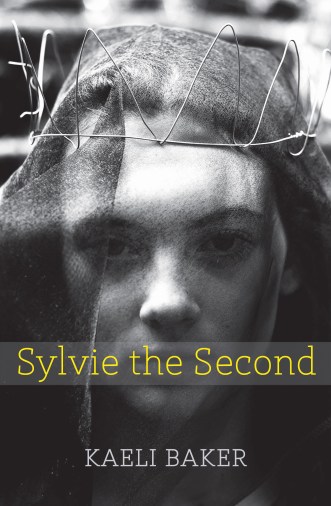
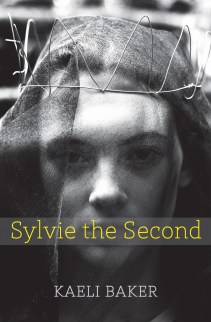
Kaeli Baker is the author of Sylvie the Second, a story of identity, family, friendships both good and bad, and choices that can affect the rest of your life. It is a stand-out debut YA novel from a wonderful new local author.  You can read my review here on the blog.

sylvie-cover-copy

Today I’m joined by Kaeli as part of her blog tour for Sylive the Second.  Sisters play an important part in Sylvie the Second so I asked Kaeli if she could write a post about her Top 5 sisters in fiction.  Read on to find out who they are.

My Top 5 Sisters in Fiction

The relationship between sisters, or even siblings in general, has always been a source of huge fascination for me. I’m an only child and the idea of growing up with someone close to my age, who shares DNA and bits and pieces of my parents – the same unruly hair, or the same crooked teeth – who sleeps in the room next door and argues over whose job it is to do the dishes, is so foreign to me.

It shouldn’t come as any surprise then, that I’ve always loved reading about sisters in fiction. Here are five of my favourites…

Kristy Thomas & Karen Brewer

1_kristys_great_idea2

The Babysitters Club Little Sister series, by Ann M. Martin

Kristy and Karen are stepsisters with a close and reliable bond. I had always wanted a big sister, and it interested me that two people could become sisters without blood ties. Karen admires Kristy and wants to be just like her. Kristy is the pinnacle of big sisterhood, providing help and advice to Karen when she needs it.

Pat & Isabel O’Sullivan

515wj4bu4ul-_sx324_bo1204203200_

The St Clare’s Series, by Enid Blyton

Identical twins at a boarding school in England! My kid brain went wild over Pat and Isabel and the antics at St Clare’s. Their adventures kept me endlessly entertained – everything from midnight feasts to sneaking out, to pretending to be each other and tricking the teachers, which is obviously the biggest benefit of having an identical twin.

Kate & Anna Fitzgerald

my-sisters-keeper-cover

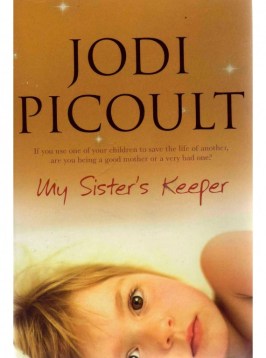
My Sister’s Keeper, by Jodi Picoult

The complexity in this relationship is what I love most. The dilemma of being Anna – the girl born to save her sister, and Anna – a teenage girl with rights. The confusing tangle of love, duty and freedom. As you get further into the story it becomes clear that both girls are capable of selflessness, and care for each other deeply even when it’s messy.

Bellatrix LeStrange & Narcissa Malfoy

harry_potter_and_the_deathly_hallows

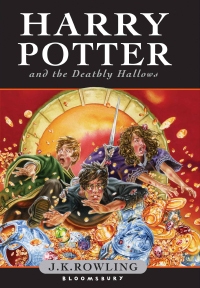
The Harry Potter Series, by J.K. Rowling

Two sisters heavily involved in the world of dark arts. One evil to the core, one…maybe not so much. The relationship between Bellatrix and Narcissa is strong – they even call each other Bella and Cissy. United in the web of a complicated family with fierce loyalties, eventually they find that their devotions take them in different directions.

Judy Woolcot and her whole entire family

9780670076871

The Seven Little Australians series, by Ethel Turner

Judy Woolcot is my favourite sister of all time. I was obsessed with these books. I wanted Judy to be my sister.

‘She had a small, eager, freckled face, with very bright dark eyes, a small, determined mouth, and a mane of untidy, curly dark hair that was the trial of her life.

Without doubt she was the worst of the seven, probably because she was the cleverest.’

Mischievous Judy is close to all of her siblings. In the end it becomes clear just how much she is willing to give up for them.


That sums up my top five! Thanks so much to Zac for letting me share his space on the interweb, and I hope you enjoy Sylvie the Second.

Kaeli

Make sure you visit msblairrecommends.blogspot.co.nz tomorrow for the last stop on the Sylvie the Second Blog Tour.


sylvie-cover-copyWin a copy of Sylvie the Second!

Thanks to Makaro Press I have a copy of Sylvie the Second to give away.

To get in the draw for a copy of Sylvie the Second by Kaeli Baker simply email bestfriendsrbooks@gmail.com with the subject line ‘Sylvie the Second,’ along with your name and address.

Competition closes Wednesday 23 March (NZ only).

Anzac Heroes by Maria Gill and Marco Ivancic

Maria Gill has introduced us to famous Kiwis from all walks of life, from climbers to politicians, sportspeople to movie stars.  Her two previous books, New Zealand Hall of Fame: 50 Remarkable Kiwis and New Zealand Sports Hall of Fame: 25 Kiwi Champions, are fantastic books and were finalists in the New Zealand Book Awards for Children and Young Adults.  In Maria’s latest book, Anzac Heroes, she tells the stories of the triumphs and tragedies of 30 heroic Australasians during World Wars One and Two.

Anzac 2

Anzac Heroes is an absolutely stunning book that highlights the courageous Anzacs who served in World War One and Two.  There are 30 Anzac heroes featured in the book, both Australian and New Zealand, men and women, soldiers in the army, navy and airforce as well as medics and spies.  There are people in the book who I’ve heard of before, like Charles Upham and Nancy Wake, but many more whose bravery I wasn’t aware of.

I love everything about Anzac Heroes, especially the design, layout and production. It’s hardcover, so you know it’s going to last for ages, especially as it is going to get read over and over again.  The cover, featuring Marco’s stunning, realistic illustrations really stands out.  The heroes standing on the cover dare you to open the book and discover their story.  Once inside, the contents page clearly shows you how to navigate the book and who you’ll discover.  The book is split up into World War One and World War Two, with background on each war which includes a detailed map (that boys especially will love) and a timeline of events.  Each of the heroes has a double-page profile that details their war-time exploits, along with a handy timeline with key dates and events.

My favourite aspect of this book is the key at the top of each page.  It tells you which country the person is from, which service they were in (i.e. army, navy, medic), and has photos of each of the medals they were awarded.  Each hero also has a detailed explanation about why they received a particular medal.  Lt. Col. Sir Peter Buck, for example, received a DSO (Companion of the Distinguished Service Order) for his role in commanding his troops.  In the back of the book you’ll also find the Medal Room, which has photos of the medals tells you their names.

ANZAC 1

Maria knows her audience extremely well and makes history come alive.  This is the sort of book that kids will pick off the shelf and read from cover to cover because it is so appealing.  Boys in particular will sit with this book for hours, pouring over the maps and the medals.  Marco’s illustrations are superb and are the perfect match for this book.  I certainly felt that some of these heroes were looking right at me. You can even see the sweat beads and the stubble on their faces.  When you look at the photos of some of them, you see how spot-on Marco’s illustrations are.

Anzac Heroes is a perfect nonfiction book for children.  It shows you how exciting nonfiction can be.  Nothing online could beat this book!  Rush out and get a copy for your home and your school now.


Sylvie the Second by Kaeli Baker

With some of the larger publishers moving offshore there have been some wonderful independent publishers set up, one of these being Mākaro Press.  They have a commitment to publishing books for children and young adults and are helping to ensure local authors can still get their stories published.  Their most recent publication for young adults is Sylvie the Second by debut author Kaeli Baker.

sylvie-cover-copyIt’s another hospital trip in the witching hours for Sylvie, as part of the support crew for her crazy sister, Calamity Cate. An overdose, this time. As usual, it seems like the family is so caught up in all of Cate’s drama that Sylvie goes unnoticed.

Invisible. Always coming in second.

Not anymore.

After a makeover, a friendship breakdown, and a whole lot of pizza, Sylvie starts to get noticed, but by the wrong people. That’s when things unravel with painful consequences. Visibility, Sylvie discovers, is not about how other people see you, but how you see yourself.

Sylvie the Second tells the story of Sylvie’s journey of discovery.  It is a story of identity, family, friendships both good and bad, and choices that can affect the rest of your life.  The story is told in the first person, so we go on this journey with Sylvie and know everything that she is thinking and feeling.  There were times that I wanted to yell at Sylvie in frustration and moments that I wanted to hug her. She has a strong voice that teen readers will be able to relate to.

Sylvie feels invisible.  Her parents don’t pay her any attention because they’re always wrapped up in what is happening with her crazy sister Calamity Cate.  Cate has tried to commit suicide several times, without success, and so she is in and out of psychiatric care.   Sylvie’s parents are rarely home, and when they are they don’t seem interested in Sylvie and what is happening in her life.  Sylvie becomes so sick of going unnoticed that she changes her clothes and her look to stand out more.  This certainly seems to get the attention she desires, particularly from Chris, the hot guy at school.  However, things take an unexpected turn at a party and Sylvie’s world is turned upside down.  When she needs support the most Sylvie discovers who her real friends are and that she stands out more than she thought.

My favourite character is Belle (or Bookish Belle as Sylvie calls her).  She is the voice of reason in the story and helps to pick Sylvie up.  She’s an incredible friend (nothing like Sylvie’s so-called friends at the start of the book) and if it wasn’t for Belle I don’t know what might have happened to Sylvie.  I also really like Adam but I wanted to know more about him.

I loved the way that the story is wrapped up.  Kaeli leaves you with a sense of hope, while also realising that Sylvie’s life will be tough and still have its challenges.

Sylvie the Second is a stand-out debut novel from a wonderful new local author.

I’m very excited to be part of the blog tour to promote Sylvie the Second.  Make sure you check out the blog on Friday 18 March to read Kaeli’s post about her Top 5 Sisters in Fiction and enter the competition to win a copy of Sylvie the Second.

Interview with Maria Gill

Maria Gill is one of our queens of children’s nonfiction in NZ.  She has written some fantastic books for all ages and on many different topics, from dogs to Kiwi and volcanoes to politics.  Some of Maria’s most recent books have profiled remarkable Kiwis from all walks of life.  In Maria’s latest book, Anzac Heroes, she tells the stories of the triumphs and tragedies of 30 heroic Australasians during World Wars One and Two.

I had a few questions about Anzac Heroes and Maria Gill kindly offered to answer them for me.  Maria talks about some of the extraordinary men and women she discovered while writing her book and the collaboration process with Marco Ivancic.  Thanks for joining me Maria!

  • Who is the ANZAC that fascinated you the most?

Hard to pin down to one. Charlie Upham, perhaps. Not just for his bravery on the field – he sacrificed his life many times for his men and the Anzac army – but also, for his tenaciousness at trying to escape prisoner of war camps eight times! When he came back to New Zealand, locals had fundraised and bought him a farm to thank for his service to his country. He refused it. As far as he was concerned, unless they were going to give a farm to all the soldiers, he wasn’t going to be singled out for a gift. Australian Joice Loch was another.

anzac-heroes

  • Did you have a personal connection with any of the heroes in your book?

None of the heroes are relatives or friends’ relatives. However, Albert Knight’s story touched me personally. It was very difficult finding any information about Aboriginal soldier Albert Knight. I only found two sentences online about his life. There were no archived newspaper stories about him. Sadly Aboriginal soldier stories have gone unreported. I had to find his family and speak to them. I only had his surname and the town he was born in over 120 years ago. I rang many phone numbers until I found a family member. That person put me on another family member, and they told me to ring another. Between Albert’s relatives, I pieced together his life story. There was a lovely outcome that came out of talking to his family – read his story to find out.

  • How did you choose the heroes to be featured in your book?

First I had to define ‘what is a hero’. Then I had criteria. I wanted Army, Navy, and Air Force servicemen. They had to have a range of jobs within those military forces and fight in different places so that I was covering as many of the wartime arenas as possible. Next I wanted four indigenous soldiers: two Aboriginal and two Maori. Lastly, I wanted to include women. Women couldn’t fight in the two wars, but the five women I chose were incredibly brave while operating in the war zones as ambulance drivers, doctors, nurses, rescuing refugees or as a spy. It means there aren’t just Anzac soldiers in the book, but in the Introduction, I say why I included all the others.

  • We hear so much about the male heroes but your book also features some incredible female heroes.  Can you tell us a little about one of these amazing women?

Dr. Jessie Scott was a young doctor from Canterbury. When she received a personal invitation from the Scottish Women’s Hospital to work in Europe – she caught the first boat out. She had been working in a hospital close to the frontline when the Austrians then Germans invaded Serbia. She and the other doctors decided not to desert their patients. Instead, they stayed. The Germans crammed Jessie and the other nurses and doctors into a train carriage with little food or water. For several weeks, they were taken from one country to the next while the American Red Cross negotiated with the Germans for their release. When they arrived back in London and Jessie was interviewed about her ordeal, she perkily said the Germans had treated them well, and they had enjoyed the scenery. They had only eaten once a day, slept on straw, and the Germans had taken most of their possessions off them. Jessie’s story didn’t end there, though…

  • What was your collaboration process like for this book? Did you work closely with Marco Ivancic?

I worked closely with the illustrator and designer of the book. For Marco, I took photographs at museums in Australia and New Zealand so he could use them for photo reference when drawing the pictures.  I also spent a day with an Army re-enactment group and took photographs of them doing a drill, acting out a war scene, and holding different guns. They kindly stood still in poses while I took photographs of them at all angles. Marco had asked for close-ups of details on their clothing, how they held a gun and expressions on their faces. The re-enactment group even stood in formation so Marco could see the stance and angles for the front cover illustration. For designer Luke Kelly I gathered different maps of Europe during WWI and WWII and marked in battle zones. I also found all the medals for the heroes, and for the medal page. Sometimes I could not get the real medals that belonged to that hero so had to line single medal images up in order and send to Luke. Luke, Jack Hayes (New Zealand military expert) and I put a lot of work into those medals! I also collaborated with different experts, museums, and Creative NZ enabled it to happen with their grant.

  • What does ANZAC Day mean to you? How do you celebrate it?

I believe Anzac Day recognises not only the sacrifice men and women made during the different wars but also the kinship between Australia and New Zealand while fighting. Common themes that resonated throughout the different Australian and New Zealand stories were their comradeship, incredible bravery, modesty, and down-to-earthness. Leaders fought with their men instead of sitting in their offices. It shows how alike Australians and New Zealanders are, compared to other nationalities.

I’m going to attend my first Anzac Day dawn parade this year. I have to confess my only interest, before writing this book, was in reading war stories. I love adventure stories where the hero survives at incredible odds. Most of the heroes in ‘Anzac Heroes’ fit that category.

anzac-heroes

Anzac Heroes by Maria Gill, illustrated by Marco Ivancic is available now from Scholastic New Zealand.


My Favourite NZ Books for Kids and Teens

I love New Zealand books and I’m happy to shout it from the rooftops.  We have so many wonderful, talented authors and illustrators here in NZ who write for kids of all ages.  My personal mission, as a librarian and a blogger is to spread the word about New Zealand books and get as many kids (and adults) reading them as possible.  I’ve also had the absolute joy of judging our New Zealand Book Awards for Children and Young Adults, which really highlighted the breadth of literature that we have here in New Zealand for our young people.

I’ve read and reviewed many NZ books here on My Best Friends Are Books over the years.  I’ve got so many favourite books that I come back to again and again (especially picture books).  Here are just a few of my favourite NZ books for kids and teens, along with the links to my reviews if you want to know more about them:

There are many more fantastic books that I’ve missed off this list, so it is no way complete.  I have a New Zealand category here on the blog so if you want to find more New Zealand content click on the category on the right hand side of the page.

Seriously Spooky Month: Guest Post – R.L. Stedman

As part of my Seriously Spooky Month I asked some of my favourite spooky authors to write a guest post for My Best Friends Are Books.  Today I’m joined by R.L. Stedman, award-winning author of A Necklace of Souls, A Skillful Warrior, and her new book, The Prankster and the Ghost.  She joins me talk about the inspiration for her great new book.

Perhaps places have memories. Like an old camera, or a computer. They fill up with fragments of the things that have taken place inside them. I don’t know if that is right or not, but I used that idea when I was writing The Prankster and the Ghost.

Most of the spooky things in Prankster are totally made up: the ghost school is not real, nor the Inspector. And the secret government agency she works for (BUMP) is, as far as I know, total fiction. But there is actually a real ghost story in Prankster.

I based this story on something that happened to a lady I worked with. Let’s call her Belinda. This is what really happened:

Belinda was on holiday in Scotland, and like lots of visitors, she went on a tour of Edinburgh Castle. She was enjoying herself, looking at the old rooms and the armour and so on. Until she reached the Great Hall. Then, quite suddenly, she felt weird. It was a hot day, and the room was crowded, and something was just not right. Beside a piano stood a woman in a long woolen dress. She looked at Belinda out of dark eyes. Belinda felt sick.

‘What is it?’ asked her husband.

Belinda pointed. ‘That woman, over there. By the piano.’

Her husband looked around. ‘What woman?’

‘In the black dress. We have to get out of here.’

Once they were outside the sickness faded and her husband laughed. ‘You’re imagining things! There was no one there.’

The tour guide came over. ‘Are you okay? You looked really pale.’

When Belinda told her what she’d seen, the tour guide nodded. ‘Plenty of people see that lady. I’ve never seen her myself. But yes, usually they don’t like it.’

‘Who is she?’ Belinda asked.

‘Oh, just one of the ghosts. There’s lots of them here.’ The tour guide made it sound like Belinda had seen something quite ordinary, like a chair or a table.

But Belinda had never met a ghost before – and she never wants to again.

Stories like the one Belinda told made me think that ghosts are maybe just part of a place: like a memory. So who knows – perhaps, one day in the future, people living in my house might see me typing on a computer keyboard. They might think I’m a ghost! I’ll have to try not to scare them.

Boo!

The Prankster and the Ghost by R.L. Stedman

I’ve been a fan of R.L. Stedman’s since I read her debut YA novel, A Necklace of Souls, when it was first released.  I absolutely loved her dark, gripping fantasy story and it reignited my love of fantasy.  You can read my review of A Necklace of Souls from 2013 here on the blog.  Since writing A Necklace of Souls, R.L. Stedman has gone on to write a sequel, called A Skillful Warrior, and a standalone YA novel, called Inner Fire.  She has just released her new book, aimed at younger readers, called The Prankster and the Ghost and it’s a terrific read.

Stuck in a hospital bed, unable to move, Tayla decides to leave his body. But floating around intensive care is kind of boring, although being invisible means he can do some cool practical jokes…Until the inspector arrives, that is. Jamie, newly arrived from Scotland, is lonely. No-one can understand his accent and all his practical jokes are going wrong. Plus, his new school is seriously weird. Perhaps it’s haunted.

The Prankster and the Ghost is a fun, spooky story, packed with ghosts, practical jokes, and a whole lot of heart. It’s also a story about friendship and how good friends can help you through tough times, whether it’s moving countries to live on the other side of the world or grieving for a loved one. Young readers, especially boys are going to lap up this story, with all the pranks that Tayla and Jamie like to play.

The story starts off with a bang (literally) when the car that Tayla’s dad is driving crashes and Tayla wakes up in hospital to find himself floating over his body. As Tayla is coming to terms with the events of the crash a strange woman called Mrs Myrtle Mannering (or the Inspector) turns up at the hospital looking for him.  She is an inspector from the Bureau of Unexplained and Malicious Phenomena, or BUMP, and she tells Tayla that he is stuck between his body and death.  Mrs Mannering explains that the best thing for Tayla to do until his mum gets better and his body heals is to go to a special school, a school of ghosts. This is where he meets Jamie, a boy from Scotland, who has just moved to New Zealand with his parents and two annoying sisters.  Jamie loves pranks just as much as Tayla and luckily he can see ghosts (or boys who are in between life and death).  With the help of Jamie and some ghostly children Tayla tries to get his old life back.

I especially loved the ghostly elements of the story.  I really like the idea of BUMP and  I could imagine Jamie growing up to have a job in BUMP, helping other ghosts just like Tayla.  The idea of a school for ghosts is really cool too.  There are ghost children from different periods of time and an old fashioned ghost teacher who becomes obsessed with modern technology.

One of the cool added extras in this book is the list of jokes from the story that R.L. Stedman has put in the back of the book. There are jokes involving cling film and a toilet, itching powder and stink bombs. She challenges readers to find all the jokes that happen in the book, but suggests that if you do try them you might want to tell an adult first.

Grab a copy of The Prankster and the Ghost in paperback or eBook now.  Check out Rachel Stedman’s website for details about where to buy the book.