Who are your picks for the 2012 Carnegie and Kate Greenaway medal?

The winners of the 2012 Carnegie and Kate Greenaway Medal are announced this Friday (NZ time).  Who do you want to win?  It’s so hard to pick but mine are My Name is Mina by David Almond (Carnegie) and A Monster Calls illustrated by Jim Kay (Kate Greenaway).

Carnegie Medal


Kate Greenaway Medal


The LIANZA Children’s Book Award 2012 Finalists

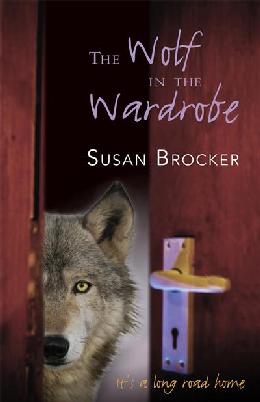
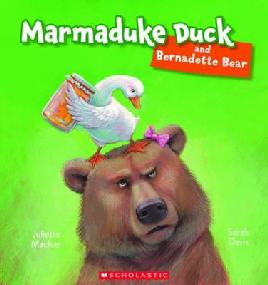
The shortlist for the 2012 LIANZA Children’s Book Awards were announced last week.  Awarded by Librarians for outstanding children’s literature in New Zealand, the LIANZA Awards are for excellence in junior fiction, young adult fiction, illustration, non-fiction and te reo Māori.  There are a great bunch of finalist books this year including some fantastic books that weren’t on the NZ Post Children’s Book Awards shortlist.  I was especially pleased to see Des Hunt’s The Peco Incident, Susan Brocker’s The Wolf in the Wardrobe, and Juliette MacIver and Sarah Davis’ Marmaduke Duck and Bernadette Bear in the shortlist.  What are your favourites?

LIANZA Junior Fiction Award – Esther Glen Medal

  • The Travelling Restaurant by Barbara Else
  • The Peco Incident by Des Hunt
  • The Wolf in the Wardrobe by Susan Brocker
  • Super Finn by Leonie Agnew
  • The Flytrap Snaps; Book One in The Fly Papers by Johanna Knox


LIANZA Young Adult Fiction Award

  • The Shattering by Karen Healey
  • Pyre of Queens by David Hair
  • Dirt Bomb by Fleur Beale
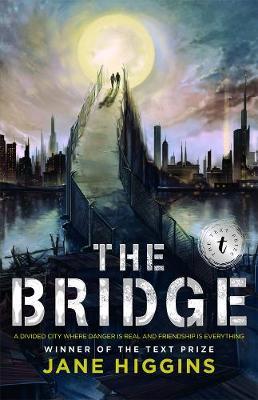
  • The Bridge by Jane Higgins
  • Recon Team Angel: Assault by Brian Falkner

LIANZA Illustration Award – Russell Clark Award

  • Rāhui (Māori ed) by Chris Szekely and Malcolm Ross
  • The Call of the Kokako by Maria Gill and Heather Arnold
  • Fantails Quilt by Gay Hay and Margaret Tolland
  • Bruiser by Gavin Bishop
  • Marmaduke Duck and Bernadette Bear by Juliette MacIver and Sarah Davis
  • Waiting for Later by Tina Matthews


LIANZA Non Fiction Award – Elsie Locke Medal

  • Digging up the Past: Archaeology for the Young & Curious by David Veart
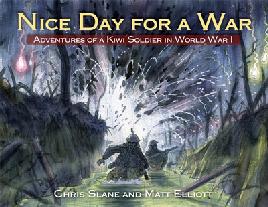
  • Nice Day for a War by Chris Slane and Matt Elliott
  • The Call of the Kokako by Maria Gill and Heather Arnold
  • New Zealand Hall of Fame: 50 Remarkable Kiwis by Maria Gill and Bruce Potter

Te Kura Pounamu (te reo Māori)

  • Rāhui (Māori ed) by Chris Szekely and Malcolm Ross, translated by Brian Morris 
  • Te Poiwhana by Te Kauhoe Wano and Andrew Burdan
  • Ihenga by Aunty Bea – Piatarihi Tui Yates and Katherine Quin Merewether
  • Kei Wareware Tātou by Feana Tu’akoi and Elspeth Alix Batt, translated by Katerina Mataira
  • Nga Taniwha i Te-Whanga-nui-a-Tara by Moira Wairama and Bruce Potter

Show Me a Story: Why Picture Books Matter

I’ve loved picture books from a young age.  I still remember those ones that my parents read to me when I was little, especially books by Janet and Allen Ahlberg like Each Peach Pear Plum.  When I was at school the wonderful librarians at my local public library introduced me to more sophisticated picture books, like Gary Crew’s The Water Tower. Now, as a librarian I read lots of picture books every week, both for my own enjoyment and to share with children in the library.  In New Zealand we don’t have many book festivals or events where we can meet authors and illustrators and hear about their work, but I always find it fascinating to hear about their passion for what they do and their reasons for creating a particular story.  A fascinating new book from Candlewick Press collects interviews with the world’s best illustrators and takes us inside their incredible minds.

Show Me a Story: Why Picture Books Matter features interviews with 21 of the world’s best illustrators, including Eric Carle, Maurice Sendak, Helen Oxenbury, Mo Willems, and Quentin BlakeLeonard S. Marcus (the editor of the book and the interviewer) takes you inside the minds of these extremely talented artists to find out why they do what they do, what influences them, and the truth behind the fiction.  Inside this entertaining and enthralling book you’ll discover how Quentin Blake came to be Roald Dahl’s illustrator, which author introduced Eric Carle to the world of picture books, and what Mo Willems learned from Charles Schulz.  As well as the interviews there are also a series of beautiful full-colour plates, showing each illustrators artistic process from sketch to final product.  Whether you’re a teacher, librarian, bookseller, student, or a lover of children’s literature Show Me a Story is a wonderful book and useful resource that you’ll delve into again and again.

Picture Book Nook: The Hueys in The New Jumper by Oliver Jeffers

Oliver Jeffers is one of those illustrators whose work is instantly recognisable.  He has a really unique style that’s quite sparse but very effective.  I fell in love with Oliver’s illustrations when I first picked up The Book Eating Boy, which is one of my favourites along with The Great Paper Chase.  Oliver’s latest book is The Hueys in The New Jumper, the first in a new series which is sure to be a hit.

The thing about the Hueys was that they were all the same.  They looked the same, thought the same, and did the same things, until the day that Rupert knitted a new jumper.  At first, everyone thinks Rupert is silly and he stands out like a sore thumb.  Then some of the other Hueys start knitting their own jumpers, and they all start to look the same again.  How will Rupert stand out?

The Hueys in The New Jumper is a quirky picture book about how cool it is to be different.  Rupert shows children that it’s OK to be different (and you might even start a new trend at the same time).  The book itself is quite different from a lot of other picture books, because there is very little detail or colour in the illustrations.  I love that Oliver can make such simple characters show so much emotion (he shows happiness, shock, anger and embarrassment with a few quick strokes of his pencil).  The Hueys are characters that children and adults will love and I look forward to seeing what they get up to next.

Oliver has been in NZ recently for the Auckland Writers and Readers Festival and an event in Wellington.  I’m really looking forward to hearing Oliver talk at the Children’s Book Council of Australia Conference in Adelaide this week, and I’ll be queuing up with everyone else to get my books signed.

Picture Book Nook: April Favourites

I’ve been reading a heap of picture books lately.  Some of them have been pretty average but most of them have been perfect picture books that I want to read over and over again.  Here are a selection of my favourites that I read in April:

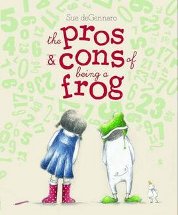
The Pros and Cons of Being a Frog by Sue deGennaro

Finding the right animal wasn’t easy. It was Camille who finally gave me the idea of being a frog! Frogboy and Camille are best friends but they are very different. Camille speaks in numbers and Frogboy likes to dress up. With Camille’s help he finds that dressing up as a frog is perfect for him, but when he tries to convince his friend to be a frog too, his plan goes terribly wrong.

This is a beautiful story about friendship and how, even if you’re completely different you can still be friends.  I really like Sue deGennaro’s illustrations, which are a blend of different media, including collage, pencil and ink.

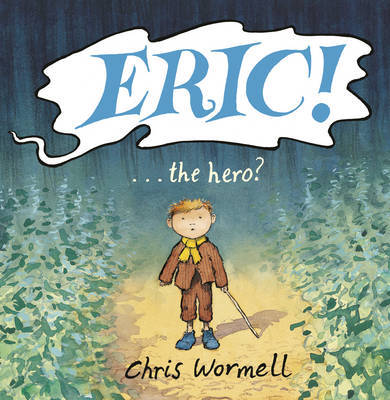
Eric!…the Hero? by Chris Wormell

Eric is a boy who sometimes gets things wrong. Some days he’s a little bit slow, some days he’s a little bit clumsy and most days people would agree that he’s the opposite of a hero. But when a huge monster stomps down from the mountains, Eric might just get the chance to prove them wrong.

I absolutely love Chris Wormell!  When I was working at The Children’s Bookshop a few years ago my boss introduced me to Chris’s Two Frogs and I’ve been a fan ever since.  I love the way he captures emotions in his illustrations and he often writes stories about characters who are different or misunderstood(like Eric in this story).

Cloth From the Clouds by Michael Catchpool and Alison Jay

The boy who spins cloth from the clouds is wise. He spins only enough cloth for a warm winter scarf, not one stitch more. But a greedy King sees the marvellous cloth and demands that the boy spin cloaks and gowns galore. Soon there are fewer clouds in the sky and finally the rain stops. Will it be possible to undo the damage done by greed?

This is a perfect picture book for older readers, with an environmental message about the impact of human greed on the natural world.  The story is a pleasure to read aloud and the words just roll off your tongue (it would make a great story to act out with costumes and props).  Alison Jay’s illustrations are stunning and they seem to glow on the page.  I keep picking this book up just to look at the pictures.

Six Little Chicks by Jez Alborough

Busy Hen has five little chicks to look after while making sure number six – still an egg- stays warm. The last thing she needs is hairy, scary Fox sniffing about. She is frantic when the other birds warn her that her chicks are in danger, but her five little chicks are a lot braver than she realises!

Jez Alborough (creator of Duck in the Truck) is the king of picture books for preschoolers and this is another great book from him.  The text is rhyming and is full of fun sounds for children to join in with (which make it fun for adults to read aloud too).  The illustrations are bright and bold and the chicks are incredibly cute, which will appeal to preschoolers.

Picture Book Nook: A Mammoth in the Fridge by Michael Escoffier

If you find a mammoth in your fridge, there are two questions you should ask: How did it get there? and How do you get it out?  One day, Noah opens his fridge to find there is a mammoth in his fridge.  At first his father doesn’t believe him, but when he looks for himself he freaks out and they call the fire brigade to solve the problem.  When they try to catch the mammoth it escapes and runs through the streets and ends up stuck in a tree, but when it gets dark Noah goes out to help it.

A Mammoth in the Fridge by Michael Escoffier and illustrated by Matthieu Maudet is a deceptively simple story with a surprise ending.  At first I didn’t think there was anything special about the story, until I got to the last few pages.  The ending left me with a smile on my face and children will love it too.  Both the text and the illustrations are quite sparse and simple but they’re fun and there’s a sense of anticipation throughout the story to keep children guessing what might happen next (will the firemen catch the mammoth? Where will he run to?).  I especially like the illustration of the mammoth squashed into the fridge.  The father is telling the children to stay away because it might bite, but the mammoth just looks upset that his hiding place has been discovered.  Thanks Gecko Press for another unique, curiously good picture book!

4 out of 5 stars

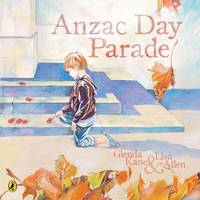
Guest Post: Glenda Kane on Anzac Day Parade

Today I’m joined by Glenda Kane, author of the picture book, Anzac Day Parade.  Glanda tells us about her Anzac memories and why she wrote her story.

My husband is Australian and I’m a Kiwi, so we’re Anzacs. Having travelled a lot, we realise we’re pretty lucky to live in this peaceful corner of the world.

We have three sons who love playing war games. To them, it’s fun. But I wanted them to understand that, in real life, war is not a game.

“There he stood on the sun-parched hill, a straggler from 18th Battalion.”

I’d attended an Anzac Day service at the Auckland Cenotaph with my family. Afterwards, I noticed an old man dressed in his best jacket – complete with medals – leaning on a walking stick, staring out towards Rangitoto. A small boy was looking at him with an expression of awe.

At that moment, I wondered what the old soldier was seeing as he gazed into the distance. What was he remembering? What had he been through? And what did the little boy think?

I’ll never know who they were. I just went away and made up the story.

“Did ya shoot them dead,” asked the bright-eyed boy. “Did it feel real cool to kill?” With a voice bereft of joy, he sighed: “No son, it was no thrill.”

When the illustrator, Lisa Allen, needed an old soldier to become her model, we contacted 92-year-old Crete veteran Noel Dromgool and his wife, Peggy. They allowed us to photograph Noel while he reminisced about training, battle, defeat, and his long internment in a prisoner of war camp.

We were privileged to hear his stories over the course of an afternoon. We left with immense respect for a man and his mates who sacrificed so much for their country and for future generations – us, and our children.

Quite a long time passed before the book was printed. Finally, I phoned Noel and Peggy to tell them it was published. There was no reply. Eventually I called another number listed under ‘Dromgool’ in the phone book. It turned out to be Noel’s son.

I explained who I was and said I wanted to show his father the new book. “Bad news, I’m afraid,” he said. “Dad died.” I wanted to cry. Instead, I asked if I could send the book to Peggy. “I’m afraid she died, too.”

The youngest soldiers from the Second World War are now at least 85 years old.

If anyone has a grandparent or great-uncle or neighbour who fought in the war, talk to them; ask them questions; write down their story. Do it now. There isn’t much time left.

I’m proud to say that when Noel’s son saw Anzac Day Parade he said he thought it was “pretty bloody good,” and that his dad would’ve thought so, too.

I hope young readers think it’s pretty good as well.

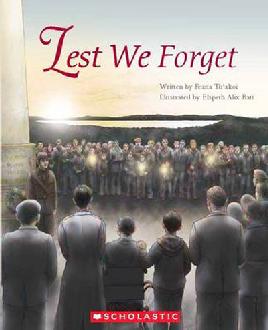
Guest Post: Feana Tu‘akoi on Lest We Forget

Today I’m joined by Feana Tu’akoi, author of the picture book, Lest We Forget.  Feana tells us about her Anzac memories and why she wrote her story.

When I was a kid, war horrified me. The terror, hardship and ruined lives – it seemed like such a stupid way to sort out our countries’ differences. I didn’t want any part of it. And I definitely didn’t want to celebrate it.

But I was a brownie and then a girl guide in small town South Canterbury. So, every year I had to march in the ANZAC parade.

I hated it – all those speeches, raving on about the brave soldiers who fought for victory. How could it be a victory when so many people died? What about the fathers, brothers and sons, on both sides, who never came back? What about the people who did come back, but were permanently damaged? I thought we should have been able to find a better way.

When my family moved to the North Island, I stopped going to the parades. But then I studied history at university. I talked to people who were involved in World War II and I realised that things weren’t as black and white as I’d thought.

Lots of people actually wanted to go to war, for lots of different reasons. They thought that they were protecting their families and helping to make the world a better place.

So my husband, Sione, and I went along to a Dawn Parade. I was shocked. Nobody talked about how glorious war was, or even that it was the right thing to do. They just talked about how important it was for us to remember, so that we could all continue to live in peace.

That was when I realised. We weren’t there to celebrate war. We were there, Lest We Forget. And that’s why I wrote this book. We need to remember the past, so we can make better decisions in the future.

I think that the next generation is smart enough to do just that. And that’s why I dedicated this book to my kids.

Feana Tu‘akoi, March 2012.

Guest Post: David Hill and Fifi Colston on The Red Poppy

This year there are a bumper crop of books about New Zealand’s involvement in war being published to coincide with Anzac Day on April 25.  The Red Poppy is one of them that really stands out for me because of it’s well-told story by David Hill and it’s stunning illustrations by Fifi Colston.  It’s a story full of tension, but ultimately about the friendship between enemies and the loyalty and bravery of one little dog.

I asked both David and Fifi if they would be able to tell me a little about their book and what it meant to them:

David Hill

The Red Poppy is a senior picture book which tells the story of a young soldier in a terrifying battle on the Western Front in France, during World War 1. Jim McLeod and his battalion have to attack across the open ground, into the face of artillery and machine-gun fire from the German trenches. With them goes the little black messenger dog, Nipper, whose job is to carry back requests for help, to save wounded men. As they charge across the open ground, past a place where red poppies grow among the shattered trees and buildings, Jim is hit by a bullet. He falls into a deep shell-hole, at the bottom of which lies a wounded German soldier. What happens between the two men, and the part played by Nipper in trying to save them, is the rest of the story.

I’ve dedicated my part in The Red Poppy to my uncles who fought in both World Wars. Their stories of the great battles and the courage of soldiers fascinated me from when I was a kid, and finally I had the chance to honour them in a story. Mud and huge guns and fear and the red poppies that have become the symbol of Anzac Day are all in this book.

Fifi Colston

My husband’s grandfather Rothwell, wrote postcards to his fiancé Hilda, from 1914-1918. Particularly poignant were two from France; they said simply “Am O.K” and “Keep smiling!” I was in the process of scanning and blogging these cards for the family (http://wartimepostcards.blogspot.co.nz/) when Scholastic asked me if I would look at a very special story to illustrate. I had decided some time ago that the next book I illustrated had to really mean something to me on a very personal level. Illustrating a book is a labour of love and I wanted to make a body of work that would enthrall me and push me to produce as excellent work as I could. For that I’d need to relate to the story; it had to move me. Then I read David’s manuscript. Jim’s letter home never mentioning the horrors of the trenches struck an immediate chord with me; those cheerful words from a young man, disguising the reality of his situation. Rothwell did come home from France to be a husband and father, but was far from ‘o.k’; dying just a few short years later from the cruel ravages of his war experience. Illustrating this book has been a journey through his time for me. I visited war museums, studied WW1 uniform, grew red poppies, photographed mud and rubbed chalk pastel until my fingers bled. I have learned much and my artwork is a tribute to him. It’s been a real pleasure working with David, Diana and Penny at Scholastic and Penny Newman the brilliant book designer who created the vision with me.


Win a Kyle Mewburn book pack

Kyle Mewburn is one of my favourite New Zealand authors.  He has an incredible imagination and writes some wonderful stories, for all ages.  Kyle’s latest picture books, Seesaw Po and Melu are among my favourite books at the moment.

Thanks to the wonderful people at Scholastic New Zealand I have a Kyle Mewburn book pack to give away, which includes a copy of Seesaw Po and Melu.  To get in the draw just tell me ‘What is your favourite Kyle Mewburn book?” and  enter your details below.  Open to NZ and Australia only.  Competition closes Wednesday 18 April.

Thanks to everyone for entering.  The winner is Rosie.