Sylvie the Second by Kaeli Baker

With some of the larger publishers moving offshore there have been some wonderful independent publishers set up, one of these being Mākaro Press.  They have a commitment to publishing books for children and young adults and are helping to ensure local authors can still get their stories published.  Their most recent publication for young adults is Sylvie the Second by debut author Kaeli Baker.

sylvie-cover-copyIt’s another hospital trip in the witching hours for Sylvie, as part of the support crew for her crazy sister, Calamity Cate. An overdose, this time. As usual, it seems like the family is so caught up in all of Cate’s drama that Sylvie goes unnoticed.

Invisible. Always coming in second.

Not anymore.

After a makeover, a friendship breakdown, and a whole lot of pizza, Sylvie starts to get noticed, but by the wrong people. That’s when things unravel with painful consequences. Visibility, Sylvie discovers, is not about how other people see you, but how you see yourself.

Sylvie the Second tells the story of Sylvie’s journey of discovery.  It is a story of identity, family, friendships both good and bad, and choices that can affect the rest of your life.  The story is told in the first person, so we go on this journey with Sylvie and know everything that she is thinking and feeling.  There were times that I wanted to yell at Sylvie in frustration and moments that I wanted to hug her. She has a strong voice that teen readers will be able to relate to.

Sylvie feels invisible.  Her parents don’t pay her any attention because they’re always wrapped up in what is happening with her crazy sister Calamity Cate.  Cate has tried to commit suicide several times, without success, and so she is in and out of psychiatric care.   Sylvie’s parents are rarely home, and when they are they don’t seem interested in Sylvie and what is happening in her life.  Sylvie becomes so sick of going unnoticed that she changes her clothes and her look to stand out more.  This certainly seems to get the attention she desires, particularly from Chris, the hot guy at school.  However, things take an unexpected turn at a party and Sylvie’s world is turned upside down.  When she needs support the most Sylvie discovers who her real friends are and that she stands out more than she thought.

My favourite character is Belle (or Bookish Belle as Sylvie calls her).  She is the voice of reason in the story and helps to pick Sylvie up.  She’s an incredible friend (nothing like Sylvie’s so-called friends at the start of the book) and if it wasn’t for Belle I don’t know what might have happened to Sylvie.  I also really like Adam but I wanted to know more about him.

I loved the way that the story is wrapped up.  Kaeli leaves you with a sense of hope, while also realising that Sylvie’s life will be tough and still have its challenges.

Sylvie the Second is a stand-out debut novel from a wonderful new local author.

I’m very excited to be part of the blog tour to promote Sylvie the Second.  Make sure you check out the blog on Friday 18 March to read Kaeli’s post about her Top 5 Sisters in Fiction and enter the competition to win a copy of Sylvie the Second.

Interview with Maria Gill

Maria Gill is one of our queens of children’s nonfiction in NZ.  She has written some fantastic books for all ages and on many different topics, from dogs to Kiwi and volcanoes to politics.  Some of Maria’s most recent books have profiled remarkable Kiwis from all walks of life.  In Maria’s latest book, Anzac Heroes, she tells the stories of the triumphs and tragedies of 30 heroic Australasians during World Wars One and Two.

I had a few questions about Anzac Heroes and Maria Gill kindly offered to answer them for me.  Maria talks about some of the extraordinary men and women she discovered while writing her book and the collaboration process with Marco Ivancic.  Thanks for joining me Maria!

  • Who is the ANZAC that fascinated you the most?

Hard to pin down to one. Charlie Upham, perhaps. Not just for his bravery on the field – he sacrificed his life many times for his men and the Anzac army – but also, for his tenaciousness at trying to escape prisoner of war camps eight times! When he came back to New Zealand, locals had fundraised and bought him a farm to thank for his service to his country. He refused it. As far as he was concerned, unless they were going to give a farm to all the soldiers, he wasn’t going to be singled out for a gift. Australian Joice Loch was another.

anzac-heroes

  • Did you have a personal connection with any of the heroes in your book?

None of the heroes are relatives or friends’ relatives. However, Albert Knight’s story touched me personally. It was very difficult finding any information about Aboriginal soldier Albert Knight. I only found two sentences online about his life. There were no archived newspaper stories about him. Sadly Aboriginal soldier stories have gone unreported. I had to find his family and speak to them. I only had his surname and the town he was born in over 120 years ago. I rang many phone numbers until I found a family member. That person put me on another family member, and they told me to ring another. Between Albert’s relatives, I pieced together his life story. There was a lovely outcome that came out of talking to his family – read his story to find out.

  • How did you choose the heroes to be featured in your book?

First I had to define ‘what is a hero’. Then I had criteria. I wanted Army, Navy, and Air Force servicemen. They had to have a range of jobs within those military forces and fight in different places so that I was covering as many of the wartime arenas as possible. Next I wanted four indigenous soldiers: two Aboriginal and two Maori. Lastly, I wanted to include women. Women couldn’t fight in the two wars, but the five women I chose were incredibly brave while operating in the war zones as ambulance drivers, doctors, nurses, rescuing refugees or as a spy. It means there aren’t just Anzac soldiers in the book, but in the Introduction, I say why I included all the others.

  • We hear so much about the male heroes but your book also features some incredible female heroes.  Can you tell us a little about one of these amazing women?

Dr. Jessie Scott was a young doctor from Canterbury. When she received a personal invitation from the Scottish Women’s Hospital to work in Europe – she caught the first boat out. She had been working in a hospital close to the frontline when the Austrians then Germans invaded Serbia. She and the other doctors decided not to desert their patients. Instead, they stayed. The Germans crammed Jessie and the other nurses and doctors into a train carriage with little food or water. For several weeks, they were taken from one country to the next while the American Red Cross negotiated with the Germans for their release. When they arrived back in London and Jessie was interviewed about her ordeal, she perkily said the Germans had treated them well, and they had enjoyed the scenery. They had only eaten once a day, slept on straw, and the Germans had taken most of their possessions off them. Jessie’s story didn’t end there, though…

  • What was your collaboration process like for this book? Did you work closely with Marco Ivancic?

I worked closely with the illustrator and designer of the book. For Marco, I took photographs at museums in Australia and New Zealand so he could use them for photo reference when drawing the pictures.  I also spent a day with an Army re-enactment group and took photographs of them doing a drill, acting out a war scene, and holding different guns. They kindly stood still in poses while I took photographs of them at all angles. Marco had asked for close-ups of details on their clothing, how they held a gun and expressions on their faces. The re-enactment group even stood in formation so Marco could see the stance and angles for the front cover illustration. For designer Luke Kelly I gathered different maps of Europe during WWI and WWII and marked in battle zones. I also found all the medals for the heroes, and for the medal page. Sometimes I could not get the real medals that belonged to that hero so had to line single medal images up in order and send to Luke. Luke, Jack Hayes (New Zealand military expert) and I put a lot of work into those medals! I also collaborated with different experts, museums, and Creative NZ enabled it to happen with their grant.

  • What does ANZAC Day mean to you? How do you celebrate it?

I believe Anzac Day recognises not only the sacrifice men and women made during the different wars but also the kinship between Australia and New Zealand while fighting. Common themes that resonated throughout the different Australian and New Zealand stories were their comradeship, incredible bravery, modesty, and down-to-earthness. Leaders fought with their men instead of sitting in their offices. It shows how alike Australians and New Zealanders are, compared to other nationalities.

I’m going to attend my first Anzac Day dawn parade this year. I have to confess my only interest, before writing this book, was in reading war stories. I love adventure stories where the hero survives at incredible odds. Most of the heroes in ‘Anzac Heroes’ fit that category.

anzac-heroes

Anzac Heroes by Maria Gill, illustrated by Marco Ivancic is available now from Scholastic New Zealand.


My Favourite NZ Books for Kids and Teens

I love New Zealand books and I’m happy to shout it from the rooftops.  We have so many wonderful, talented authors and illustrators here in NZ who write for kids of all ages.  My personal mission, as a librarian and a blogger is to spread the word about New Zealand books and get as many kids (and adults) reading them as possible.  I’ve also had the absolute joy of judging our New Zealand Book Awards for Children and Young Adults, which really highlighted the breadth of literature that we have here in New Zealand for our young people.

I’ve read and reviewed many NZ books here on My Best Friends Are Books over the years.  I’ve got so many favourite books that I come back to again and again (especially picture books).  Here are just a few of my favourite NZ books for kids and teens, along with the links to my reviews if you want to know more about them:

There are many more fantastic books that I’ve missed off this list, so it is no way complete.  I have a New Zealand category here on the blog so if you want to find more New Zealand content click on the category on the right hand side of the page.

Seriously Spooky Month: Guest Post – R.L. Stedman

As part of my Seriously Spooky Month I asked some of my favourite spooky authors to write a guest post for My Best Friends Are Books.  Today I’m joined by R.L. Stedman, award-winning author of A Necklace of Souls, A Skillful Warrior, and her new book, The Prankster and the Ghost.  She joins me talk about the inspiration for her great new book.

Perhaps places have memories. Like an old camera, or a computer. They fill up with fragments of the things that have taken place inside them. I don’t know if that is right or not, but I used that idea when I was writing The Prankster and the Ghost.

Most of the spooky things in Prankster are totally made up: the ghost school is not real, nor the Inspector. And the secret government agency she works for (BUMP) is, as far as I know, total fiction. But there is actually a real ghost story in Prankster.

I based this story on something that happened to a lady I worked with. Let’s call her Belinda. This is what really happened:

Belinda was on holiday in Scotland, and like lots of visitors, she went on a tour of Edinburgh Castle. She was enjoying herself, looking at the old rooms and the armour and so on. Until she reached the Great Hall. Then, quite suddenly, she felt weird. It was a hot day, and the room was crowded, and something was just not right. Beside a piano stood a woman in a long woolen dress. She looked at Belinda out of dark eyes. Belinda felt sick.

‘What is it?’ asked her husband.

Belinda pointed. ‘That woman, over there. By the piano.’

Her husband looked around. ‘What woman?’

‘In the black dress. We have to get out of here.’

Once they were outside the sickness faded and her husband laughed. ‘You’re imagining things! There was no one there.’

The tour guide came over. ‘Are you okay? You looked really pale.’

When Belinda told her what she’d seen, the tour guide nodded. ‘Plenty of people see that lady. I’ve never seen her myself. But yes, usually they don’t like it.’

‘Who is she?’ Belinda asked.

‘Oh, just one of the ghosts. There’s lots of them here.’ The tour guide made it sound like Belinda had seen something quite ordinary, like a chair or a table.

But Belinda had never met a ghost before – and she never wants to again.

Stories like the one Belinda told made me think that ghosts are maybe just part of a place: like a memory. So who knows – perhaps, one day in the future, people living in my house might see me typing on a computer keyboard. They might think I’m a ghost! I’ll have to try not to scare them.

Boo!

The Prankster and the Ghost by R.L. Stedman

I’ve been a fan of R.L. Stedman’s since I read her debut YA novel, A Necklace of Souls, when it was first released.  I absolutely loved her dark, gripping fantasy story and it reignited my love of fantasy.  You can read my review of A Necklace of Souls from 2013 here on the blog.  Since writing A Necklace of Souls, R.L. Stedman has gone on to write a sequel, called A Skillful Warrior, and a standalone YA novel, called Inner Fire.  She has just released her new book, aimed at younger readers, called The Prankster and the Ghost and it’s a terrific read.

Stuck in a hospital bed, unable to move, Tayla decides to leave his body. But floating around intensive care is kind of boring, although being invisible means he can do some cool practical jokes…Until the inspector arrives, that is. Jamie, newly arrived from Scotland, is lonely. No-one can understand his accent and all his practical jokes are going wrong. Plus, his new school is seriously weird. Perhaps it’s haunted.

The Prankster and the Ghost is a fun, spooky story, packed with ghosts, practical jokes, and a whole lot of heart. It’s also a story about friendship and how good friends can help you through tough times, whether it’s moving countries to live on the other side of the world or grieving for a loved one. Young readers, especially boys are going to lap up this story, with all the pranks that Tayla and Jamie like to play.

The story starts off with a bang (literally) when the car that Tayla’s dad is driving crashes and Tayla wakes up in hospital to find himself floating over his body. As Tayla is coming to terms with the events of the crash a strange woman called Mrs Myrtle Mannering (or the Inspector) turns up at the hospital looking for him.  She is an inspector from the Bureau of Unexplained and Malicious Phenomena, or BUMP, and she tells Tayla that he is stuck between his body and death.  Mrs Mannering explains that the best thing for Tayla to do until his mum gets better and his body heals is to go to a special school, a school of ghosts. This is where he meets Jamie, a boy from Scotland, who has just moved to New Zealand with his parents and two annoying sisters.  Jamie loves pranks just as much as Tayla and luckily he can see ghosts (or boys who are in between life and death).  With the help of Jamie and some ghostly children Tayla tries to get his old life back.

I especially loved the ghostly elements of the story.  I really like the idea of BUMP and  I could imagine Jamie growing up to have a job in BUMP, helping other ghosts just like Tayla.  The idea of a school for ghosts is really cool too.  There are ghost children from different periods of time and an old fashioned ghost teacher who becomes obsessed with modern technology.

One of the cool added extras in this book is the list of jokes from the story that R.L. Stedman has put in the back of the book. There are jokes involving cling film and a toilet, itching powder and stink bombs. She challenges readers to find all the jokes that happen in the book, but suggests that if you do try them you might want to tell an adult first.

Grab a copy of The Prankster and the Ghost in paperback or eBook now.  Check out Rachel Stedman’s website for details about where to buy the book.

Win a copy of Pukeko Dancing on the Old Dirt Track

Pukeko Dancing on the Old Dirt Track is a wee gem of a book about a Kiwi Christmas.  It follows the Sandersons as they prepare for Christmas and the pukeko family as they prepare for the arrival of their chicks.  You can read my review here on the blog.

Thanks to the author and illustrator Lotte Wotherspoon I have a copy of Pukeko Dancing on the Old Dirt Track to give away.  All you have to do to get in the draw is email bestfriendsrbooks@gmail.com with the subject line ‘Pukeko Dancing,’ along with your name and address.

Competition closes Friday 23 October (NZ only).

Seriously Spooky Month: Guest Post – Sue Copsey

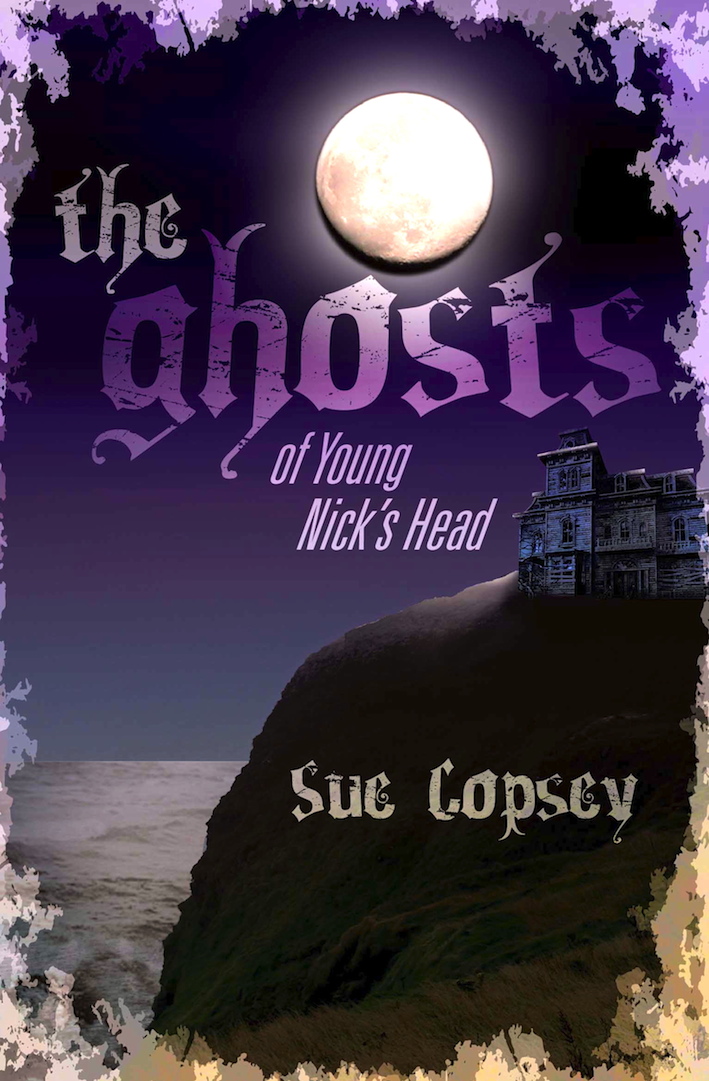
As part of my Seriously Spooky Month I asked some of my favourite spooky authors to write a guest post for My Best Friends Are Books.  Today I’m joined by New Zealand author Sue Copsey.  Sue is the author of the Spooky Adventures series, which includes Young Nick’s Head and Ghosts of Tarawera.  Sue joins me today to talk about why she writes spooky stories for kids. Thanks for joining me Sue!

Here’s a question for you. Do you like scary books and movies?

Did you answer “yes”? Next question: Why do you like them?

Weird, isn’t it, how we enjoy being a little bit scared. The sort of scared when you can hug a cushion or the cat and know you’re not in any actual danger. Where you stick your fingers in your ears and squeeze your eyes shut … then open them just a tiny bit, or put your hands over your face but peep between your fingers.

05_Ghost of Nicks Head reduced

When you look over your shoulder and take a deep breath before turning the page of a ghost story.

Or maybe you’re reading a spooky story in bed, and you pull the covers right up to your chin, and keep glancing at the bedroom door to check that dark shadow really is just your dressing gown hanging on the hook. And before turning out the light, you make sure there’s nothing under the bed (except your dirty socks, and … oh, missing maths worksheet!).

When Zac asked me the question “Why do you write spooky stories for children?” I realised that the question I really needed to answer was, “Why do I love ghost stories so much?”

I grew up in England, where every town and village has its spooks, and I was always fascinated by these stories. On Halloween, my friends and I would dare each other to walk through the local churchyard, which was said to be haunted by the Grey Lady. We never saw her, but I won’t forget the terror of walking amongst the gravestones, eyes straight ahead and fixed on the far wall of the churchyard, muttering “it’s okay it’s okay” to myself. Once we had all walked the walk of terror, we would make our way to the village chip shop for a bag of hot chips (the end of October in England is cold – so cold) before making our way home down the dark, empty lane. (This was before trick or treating was a thing. Okay yes, that makes me quite old.)

But for me, it didn’t stop there. I wanted to know, who was the Grey Lady? Why was she haunting the churchyard? What was the story? And so it began. Behind every haunting is a tale of days gone by, of unsolved murders, revenge, tragedy, and slips in time. Rich pickings for an author!

So another question for you – do you like history? Are you yawning? Well you can stop that, because history is the coolest of subjects – really, it’s just another name for stories, and it should never be boring! I don’t think there’s enough history taught in New Zealand schools, so I like to include plenty of it in my stories. But how to make it interesting for you guys? Just add spooks!

GoT cover

There are plenty of ghost story opportunities in New Zealand history. The first book in my Spooky Adventures series is set at Young Nick’s Head on the East Coast. Interesting name don’t you think? Any idea why it’s called that? See – history can be intriguing! The second book was inspired by the eruption of Mt Tarawera in 1886. Did you know that a phantom waka warned of the eruption? And that local legend says it will appear again if the volcano reawakens? How could I not write a story about what would happen if two modern-days boys, out kayaking on the lake, happened to see the phantom canoe?

So I guess the answer to the question, why do I write ghost stories, is to give New Zealand kids a delicious scare – just enough to thrill, not enough for nightmares – and to teach them some of our history in such a way that it is fun, never boring.

Happy Halloween everyone!

Be sure to visit Sue Copsey’s website for more information about her books and ghostly facts and jokes – www.suecopsey.com

The Ghosts of Tarawera by Sue Copsey

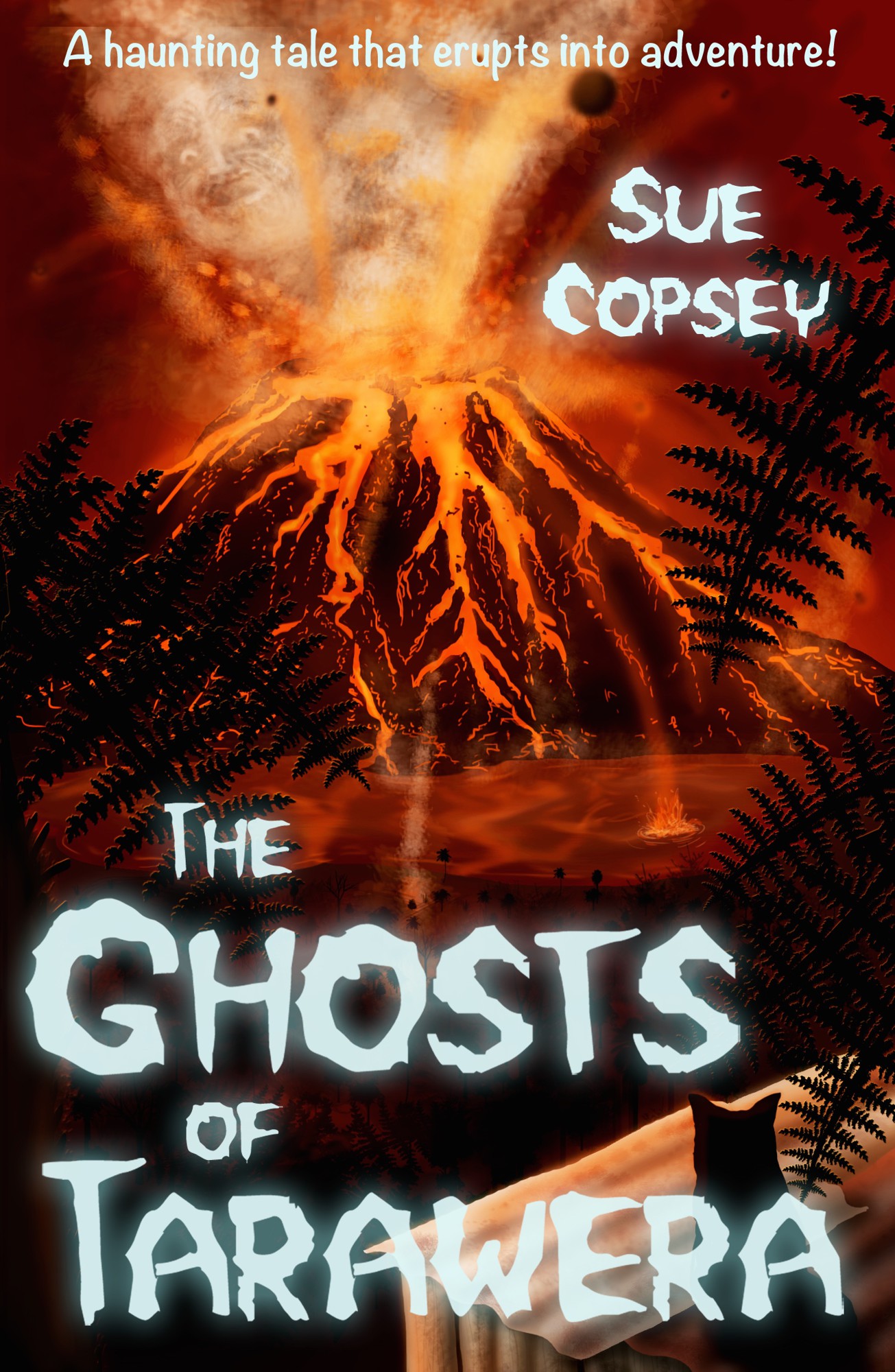
I love ghost stories, adventure stories, and stories set in New Zealand.  Sue Copsey has combined all of my favourite types of stories in to her explosive new book, The Ghosts of Tarawera. 

On holiday near Rotorua, Joe and Eddie are fascinated by the area’s bubbling mud pools and boiling geysers. Local volcanologist Rocky tells them about the Pink and White Terraces that existed on the lake where they’re staying, and how they were destroyed in the cataclysmic 1886 eruption of Mount Tarawera. But Joe’s fascination turns to unease when strange sightings on the lake and dark rumblings from the Earth hint that the volcano is reawakening. Can he persuade Rocky, who puts his faith only in science, to sound a warning?

The Ghosts of Tarawera is an action-packed adventure with a good dose of spookiness.  Much like the pressure building inside a volcano, the suspense builds until it reaches its explosive conclusion.  There is a sense of impending doom right from the start which made me want to keep reading to find out how it all ended.  The front cover (which I love) suggests that an eruption will occur, but when, where and how you just don’t know.

The story is set around Rotorua in the modern day and follows Jo and Eddie who are on holiday with Jo’s family.  It reminded me of Elsie Locke’s Canoe in the Mist (which was set in 1886 at the time of the huge eruption of Mount Tarawera).  The ghostly waka that warned of the 1886 eruption appears in The Ghosts of Tarawera to warn Joe of the trouble that is brewing below them.  Sue also looks at how ghosts might use other ways to communicate in the age of smart phones.  Not only does Jo see the ghostly waka, he is also sent strange text messages and Facebook messages that are trying to tell him something.  I loved this idea!

Sue really emerses you in the setting.  There is a real sense of place in this book – you feel like you are there at Lake Rotomahana and you can almost smell the sulphur, hear the mud bubbling, hear the birds singing in the bush, and feel heat of the hot pool.  Sue made me want to visit Lake Rotomahana and see everything for myself, even with the fictional eruptions of the story.

I really like Sue’s characters.  The kids are very relatable and the adults are role models that the kids look up to. I especially like Rocky and Buzz, the two cool GNS geologists who are camped beside the lake investigating the Pink and White Terraces. They take Jo and Eddie under their wings and get their help with taking readings around the lake.  Thanks Sue for giving boys some great positive male role models in Rocky and Buzz!

This is something for everyone in Sue Copsey’s books.  They are perfect for fans of Des Hunt or anyone who just loves a good adventure story.

Make sure you check out Sue Copsey’s Seriously Spooky Guest Post about why she likes scary stories.

Interview with Elizabeth Pulford, author of Bloodtree Chronicles

Elizabeth Pulford is one of our great Kiwi authors.  She has written books for all ages, from picture books to novels for children, young adults and adults.  Elizabeth has two new books that have just been released, a picture book called Finding Monkey Moon and the first book in her fantastic new Bloodtree Chronicles series, Sanspell.  You can read my review of Bloodtree Chronicles: Sanspell here on the blog.

I had a few questions about the Bloodtree Chronicles and Elizabeth has very kindly answered them for me.  Read on to find out more about Elizabeth’s new series and her favourite story worlds.

  • What inspired you to write the Bloodtree Chronicles?

It was more a case of resistance in the beginning. I was having time away from writing in the garden when into my head slipped the first line of Sanspell. I told it to go away and that I wasn’t interested. Then an hour or so later the same line, word for word, arrived. I ignored it. Later than evening it made another appearance so I wrote it down, not really interested. Two days later I found the piece of paper and typed it into the computer. As soon as I did that my curiosity was stirred and I started to ask questions, eg ‘whose mother’s dress was it?’ It went on from there until the idea caught me completely and wouldn’t let me go.

  • In Sanspell, Abigail gets transported into the Silvering Kingdom, a magical place made of stories.  If you could be transported into a story, which one would you choose?

Definitely the Robin Hood stories. I would love to be in his gang and living in Sherwood Forest.

  • What sort of character would you be in the Silvering Kingdom?

Zezmena. I always think villains are so interesting. What makes them behave the way they do? What makes them tick? Trying to find the one redeeming quality that they keep hidden beneath all their evil deeds.

  • What is your favourite fantasy world?

The Magic Faraway Tree world created by Enid Blyton. Growing up there was an old apple tree in our garden. I kept wishing for this to be the same as the Faraway Tree and that Moonface would appear. Sadly it never happened!

  • In the next two books in the Bloodtree Chronicles you take us to Bragonsthyme and Thatchthorpe. Can you give us a taste of what Abigail might find in these stories?

The Bragonsthyme’s story is frozen. To be a proper fairy story it needs to have a happy ending, otherwise it cannot help the Bloodtree to heal. It is up to Abigail / Spindale (with help from Flint and Bramble) to find its ending.

In Thatchthorpe the King of Silvering Kingdom dies. Rackenard sees his chance to rule, thereby putting the Bloodtree at a greater risk than it has ever been. The only way to stop this happening is finding the two parts of the magical code, which will reveal to the people of the kingdom who is the true king.

Sequel to the award-winning A Necklace of Souls

A Necklace of Souls was one of my favourite books of 2013.  Written by fantastic local author, R.L. Stedman, A Necklace of Souls won the Tessa Duder Award in 2013 and went on to win the Best First Book Award at the 2014 New Zealand Post Book Awards for Children and Young Adults.  It’s a truly original fantasy story that follows Dana as she comes to terms with having to bear the burden of the Necklace of Souls.  You can read my review here on the blog.

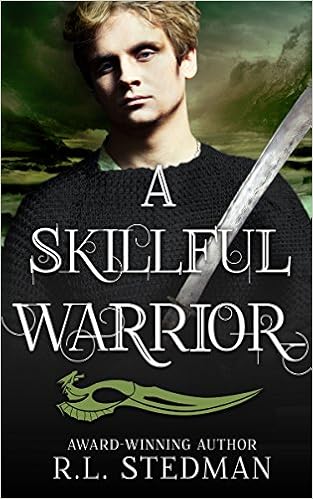
A Necklace of Souls finished on a cliff-hangar and I’ve been waiting to find out what happens next for Dana and Will.  I’m pleased to say that the wait is finally over.  The sequel, A Skillful Warrior, is available now (as an ebook exclusive) on Amazon.  Here is the blurb and the wonderful cover:

‘The warrior’s principal task: to make each moment count.’

Dana and Will must find the weapon to defeat the Emperor. But his army is close behind and the Kingdom and its Guardian have vanished – only N’tombe and Jed remain. As the comrades flee, Dana is hampered by dreams of dragons and by a deep, unbearable sorrow. A fire is coming, and she is in its path. Dana and Will must learn to overcome despair and to fight on, despite the darkness. For a warrior must adapt, or die.

R.L. Stedman has also republished A Necklace of Souls with a new cover too so look out for this one:

Grab A Skillful Warrior and A Necklace of Souls now on your e-reader.