Lest we forget: Books to remember the ANZACs

Last year in the lead up to Anzac Day I had some of our wonderful New Zealand authors and illustrators join me on the blog to talk about their Anzac books and what Anzac Day means to them.  You can read their posts by clicking on the links below.  You can also read about my favourite Anzac books and Philippa Werry’s fantastic new non-fiction book about Anzac Day, Anzac Day: The New Zealand Story.

Christchurch City Libraries has a great info page about Anzac Day and Gallipoli for children, with basic facts and links to some interesting websites.

Anzac Day: The New Zealand Story by Philippa Werry

Why do we celebrate Anzac Day?  Why were donkeys used at Gallipoli?  Why do we wear poppies on Anzac Day? Why is the last post played at the Dawn Service?  Why do we have Anzac biscuits?  All these questions and more are answered in Philippa Werry’s new book, Anzac Day: The New Zealand Story – What it is and why it matters

Anzac Day: The New Zealand Story – What it is and why it matters is a fascinating, beautifully designed, thoroughly researched, and very accessible book for New Zealand children about Anzac Day.  It’s one of those non-fiction books that is both great for teachers to use in the classroom or for children to delve in to by themselves.  Philippa has written it in such a way that it is accessible for children of different ages, from 8 years and up, with lots of images to break up the text.  This book is different from other non-fiction books about Anzac Day and New Zealand’s involvement, as it looks at not only the past, but also the present and how we commemorate today.

Everything you would expect to find in a book about Anzac Day is here – what it is and why we celebrate it, a timeline of the Gallipoli campaign, profiles of key New Zealanders who played a part, and statistics of casualties and deaths.  However, it’s the focus on why Anzac Day matters and how we celebrate it now that really makes this book stand out.  There is a whole chapter about how we remember the war dead with poppies and war memorials, and another chapter on Anzac Day commemorations both in New Zealand and around the world.  There are also lots of fact boxes with tidbits of information about the animals at Gallipoli, Anzac biscuits, the New Zealand flag, and why the New Zealanders had ‘lemon-squeezer’ hats.

There are lots of primary resources in the book (which makes it great for teachers), from photos and newspaper clippings, to soldier’s diaries and paintings.  Philippa has created some incredibly helpful material at the back of the book too, including a glossary, bibliography, a list of helpful and authoritative websites, and a list of ‘More things to do’ to extend children’s understanding of the topic.

Anzac Day: The New Zealand Story – What it is and why it matters should be in every home, school and library in the country.  It’s a book that will be well-used and well-read.

2013 New Zealand Post Children’s Book Awards Finalist: The Nature of Ash by Mandy Hager

Mandy Hager’s The Nature of Ash is one of the finalists in the Young Adult category of the 2013 New Zealand Post Children’s Book Awards.  It was one of my favourite Young Adult books of 2012 so I’m really glad to see it as a finalist.  I reviewed it back in June last year, so if you want to hear all about it and find out what makes it such a worthy finalist, read on.

I love books with lots of action, but I also want to read about characters that I care about and can relate to.  Those books are the ones that make me keep reading furiously, just to make sure the characters make it to the end of the book alive.  I love books like Hunger Games, Divergent and The Maze Runner for this very reason, but there aren’t many books like this for teenagers set in New Zealand (Fleur Beale’s Juno series and Brian Falkner’s Tomorrow Code are the only ones that come to mind).  Mandy Hager has set a new standard in thrilling, action-packed stories for NZ teens with her new book, The Nature of Ash, and I’ll say it can proudly stand alongside these international, best-selling dystopian thrillers.

Ash McCarthy thought he finally had it made: away from home and all its claustrophobic responsibilities, he’s revelling in the freedom of student hostel life. But life is about to take a devastating turn, when two police officers knock on his door. Their life-changing news forces him to return home to his Down Syndrome brother Mikey, and impels him into a shady world of political intrigue, corruption, terrorism and lies . . . so many lies. As if this isn’t bad enough, the whole country is imploding, as the world’s two greatest super-powers start a fight that leaves New Zealand ‘piggy-in-the-middle’ of their deadly games. While trying to protect Mikey, along with strangers Travis and Jiao, his fight to uncover the truth turns into a nightmare race to save their lives and stop the destruction of all the principles he holds dear.

The Nature of Ash is an exciting, explosive, action-packed thriller that had me on the edge of my seat from start to finish.  From the first page I got caught up in Ash’s life and the horrific situation he finds himself in.  Mandy Hager has painted a picture of a future New Zealand that you could imagine turning from fiction into fact.  Our country is caught in the middle of a conflict between the two super powers of the world, the Western Alliance (USA, UK, Australia, Taiwan, Malaysian Federation, Republic of Indonesia, Peru) and the United People’s Republic (China, East Russia, United Korea, Japan, Republic of Indochina, Fiji, Chile).  Our Prime Minister is corrupt and will sell his loyalty to the highest bidder, there are protests, riots and looting breaking out all over the country, and food is running low.  In short, the country is falling apart and things keep getting worse.  In the middle of it all is Ash, who had gone to study in Christchurch, but gets called back to Wellington when a bomb explodes at his dad’s office.

In my opinion, Ash is one of the most authentic male teen characters in New Zealand fiction.  Mandy Hager is absolutely spot-on with Ash’s voice, his actions and decisions.  Sure, he swears, he drinks, and smokes some weed, but in the crappy situation that he’s in you can completely understand why he talks the way he does and makes those decisions.  He’s fiercely loyal to his family, especially his brother Mikey, who has Down Syndrome.  Even though it’s hard to look after Mikey and keep him calm and happy, Ash does all that he can to help him and protect him from harm.  I also loved Jiao and Travis, the other teenagers that escape from the city with them.  Jiao is an Asian girl who often looks after Mikey and is someone that he trusts (and has a bit of a crush on) and Travis is the son of policewoman Jeannie.  The group have some tense moments but they pull together when they need to.

The adult characters are a real mixed bag.  Ash and Mikey’s Dad is a very loving parent who really cares about his kids.  He’s always telling them he loves them and provides them with what they need.  Ash is left with no doubt that his father loves him and does all he can to protect them, even hiding secrets from them so they don’t need to worry.  There are many other adults who help them along the way, including Jeannie, Lucinda, Simon, and one of my favourite characters, Erich.  Then there are the immoral, sadistic characters, like the members of Muru, whose actions made me so angry.

Mandy Hager has created a story and characters that will stay with me long after I’ve put the book down.  I’m sure that teenage boys in particular will relate to Ash and his struggle to do what’s right.

5 out of 5 stars

Please note:  Ash uses some quite strong language (which I think is perfectly acceptable because of his situation) so please consider this if buying for your school library.  I would recommend the book for 13+.  Teaching notes are available through the Random House New Zealand website.

Win When We Wake signed by Karen Healey

Last Friday we were lucky enough to host Karen Healey in Christchurch as part of NZ Book Month.  Karen talked about her latest book, When We Wake, and the ‘Sleeping Beauty’ stories that inspired her.  Karen is a great speaker, as well as an amazing writer, so it was a thoroughly entertaining hour.  You can read my review of When We Wake here on the blog.

I have a copy of When We Wake, signed by Karen Healey, to give away.  To get into the draw just enter your name and email address in the form below.  Competition closes Monday 8 April (NZ and Australia only).

Thanks to everyone who entered. The winner is Rachel Crewe.

Guest Author: Melinda Szymanik on A Winter’s Day in 1939

Today I’m joined by the wonderful Melinda Szymanik, author of the powerful new book, A Winter’s Day in 1939.  Based on her father’s experiences during World War II, A Winter’s Day in 1939 is a story of family, the harsh realities of war, and the fight for survival against the odds. Melinda has written a really interesting post for My Best Friends Are Books about why and how she wrote A Winter’s Day in 1939.

Why and How I wrote A Winter’s Day in 1939

When the Soviet soldiers come and order them out, Adam and his family have no idea where they are going or if they will ever come back.  The Germans have attacked Poland and the world is at war. Boarding a cattle train Adam and his family embark on a journey that will cover thousands of miles and several years, and change all their lives forever. And mine too. Because Adam’s story, the story told in my new novel A Winter’s Day in 1939, is very much my Dad’s story.

I often heard fragments of this story from my dad when I was growing up.  It was shocking, and sad, and amazing.  My Dad’s family was forced out of their home and taken to a labour camp in Russia. It was freezing cold, and many people died from disease or starvation. Even when the Soviets finally let them go, they spent weeks travelling around the USSR , were made to work on Soviet farms and were still hungry and often sick, with no idea of where they might end up next.  As a child growing up in a peaceful place like New Zealand it was hard to imagine the real dangers and terrible conditions my father experienced.

I didn’t get to know the full story until I was grown up with children of my own and was regularly writing stories for children.  I wrote a short story, also called A Winter’s Day in 1939, based on a single event I knew fairly well  from my Dad‘s childhood – when Soviet Soldiers first come to order them off their farm, the only home my father had known up till that point in his life. The story was published in The Australian School Magazine.  I showed the short story to the publishers Scholastic who liked it too. They wondered if I could turn it in to a novel.  This was a chance to tell my father’s story. By now I knew it was an important story that should be shared

Luckily my Dad had made notes about his life during World War Two; about twenty pages all typed up.  However I know people’s real lives don’t always fit into the framework of a novel and I knew I would have to emphasize some things and maybe leave other things out.

I read and researched to add the right details to the story. And asked my parents lots of questions. How cold was it in Poland in January 1940? Who or what were the NKVD? What were the trains like? What are the symptoms of typhoid? How do you make your own skis? Some information was hard to find. Some of the places that existed in the 1940s aren’t there anymore. And people didn’t keep records about how many people were taken to the USSR from Poland or what happened to particular individuals. But what I wanted to give readers most of all was a sense of how it felt to live that life.  So this then is the story of a twelve year old Polish boy in the USSR during World War 2 that all started on A Winter’s Day in 1939.

Fast Five with Tania Hutley

  • Why did you want to be a writer?

I think most writers start by being enthusiastic readers, and I’m no different.  Through reading I discovered how much I loved the feeling of falling into another world, of living another life, becoming someone completely different to myself.  Writing is just another way of visiting different worlds – ones that I can control!

  • What’s the best thing about being a writer?

The best thing about being a writer is when someone reads your book and tells you how much they enjoyed it.

  • What’s your favourite New Zealand book?

That’s a hard one – there are so many great New Zealand books!  One that stands out for me is Salt by Maurice Gee. I love the characters and the way he has made the world they live in come to life.

  • What do you love most about New Zealand?

I love our beautiful beaches!

  • What do you love most about libraries?

All the great memories of when Mum used to take me and my brother to our local library once a week all through my school years.  Being allowed to check out five books a week gave me the freedom to try lots of different authors and types of books, so I read a lot of wonderful books I would never have discovered otherwise.  Come to think of it, that hasn’t changed!  I still love going to the library and checking out books I wouldn’t otherwise get the chance to read.

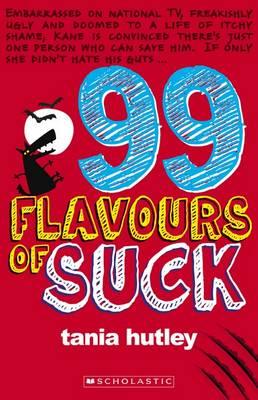
Tania Hutley has published short stories for adults and children, which have been published in Pick n’ Mix and Great Mates. Tania has also published two novels, Tough Enough and 99 Flavours of Suck.  She currently works full-time as the editor of an online newspaper.

Fast Five with Rachel Steadman

  • Why did you want to be a writer?

Because I love reading so much. I could never find enough books that were exactly what I wanted to read. So that’s why I wrote my own.

  • What’s the best thing about being a writer?

You get to write :).  Most writers seem to really like finding out new things. I think most writers are little like ‘fact magpies’ we get to learn new stuff every day and we can call it ‘research.’ For example, through writing A Necklace of Souls, I learned a lot about knife fighting. I read a whole lot (and watched a lot of you-tube videos) about Kali knife fighting, which is from the Philippines. And I know how long an English longbow is – over seven foot. That is taller than most men. Do you know, if you use a long bow a lot, the bones in one arm grow heavier than the other? Skeletons of archers have bigger left arm-bones than the right.  That is why writing is so cool, you get to learn random stuff every day. (Makes you good in quizzes, too!)

  • What’s your favourite New Zealand book?

I have lots of favourite books. It’s pretty hard to pick just one. At the moment, my favourite NZ book is Tu, by Patricia Grace, because I like her descriptions of how war changes a family.

  • What do you love most about New Zealand?

I love the wide open skies and the white-topped mountains. And I like the way you can walk along a beach and see only your footprints. And I like the way you find strange things in unexpected places. Like last week we went to Hampden Beach, near Moeraki, and dolphins swam past.

What do you love most about libraries?

The books! And the friendly librarians…

Rachel Steadman is the author of the wonderful new YA fantasy, A Necklace of Souls.  When she’s not writing Rachel works for the Ministry of Health and she enjoys hiking, cycling, running and reading.

A Necklace of Souls by R.L. Steadman

Thanks to the various book prizes that are awarded both here in New Zealand and overseas there have been some fantastic new authors for children and young adults discovered.  Some of my favourite authors have won the Text Prize in the last few years, including Richard Newsome and Leanne Hall, which has started them on their writing career.  The Tessa Duder Award is a relatively new award in New Zealand and it is given annually to the unpublished author of a work of fiction for young adults aged 13 and above.  Last year’s very deserving winner was Rachel Stedman.  I’m extremely glad she won because her book, A Necklace of Souls is a brilliant fantasy that left me awestruck.  It has just been published in New Zealand, just in time for NZ Book Month.

In the hidden Kingdom of the Rose a Guardian protects her people with the help of a magical necklace. But evil forces are also seeking the necklace, and as the Guardian grows weaker these forces threaten to destroy the Kingdom. Dana, the rightful heir, must claim the necklace and save her people. Her duty is clear: to protect her homeland she must submit to the power of the necklace. But all power comes at a price – a price that Dana may not be willing to pay.

A Necklace of Souls is gripping, dark fantasy that sweeps you up takes you on a wild ride.  It has reignited my love of fantasy stories.  R.L. Steadman transported me to a medieval world similar to ours, where illness and war has ripped through the world leaving death in its wake.  The one place that is safe, clean and peaceful is the Kingdom of the Rose, a magical, legendary place that is protected by a guardian.  We’re introduced to the two characters who are central to the story – Will and Dana.  Will lives outside the walls of the kingdom with a loving family, until the plague reaches his town and he is one of the only survivors.  Luckily for Will, his Auntie and Uncle provide safe passage for him into the Kingdom, where he becomes an apprentice.  It is inside the walls of the Kingdom that he meets Dana, the princess with a very important role to play.

I found the story absolutely fascinating.  Rachel draws you in with the mystery surrounding the Kingdom, the necklace and its Guardian, Dana’s strange gift of true dreaming, and the threat from an army from a far off land.  You know that all these pieces of the puzzle fit together somehow and you don’t want to stop reading until you find out how.  N’tombe was one of the characters that intrigued me the most because her past was so shadowy.  One of the things I liked most about the story was that, even when you got to the very last page, there is still a sense of mystery to the characters.

The story initially alternates between Will and Dana, but focuses more on Dana as the story progresses.  I found it interesting that Dana’s story was narrated by her, but Will’s story was told in the third person.  This seemed to fit the story though and I really enjoyed switching between the two.  Dana and Will are both wonderful characters but Dana stood out more for me.  She’s definitely not your average princess!  She’s not afraid to get dirty, she’s a skilled fighter, and she’s not interested in being the center of attention or attending to her royal duties.  She’s the complete opposite of her mother, who is incredibly vain and more interested in her face creams than the welfare of her people.  Dana’s journey through the course of the story and the burden she has to carry has a huge effect on her.

A Necklace of Souls is a story that will stay with me for a long time and I hope that there is more of Dana and Will’s story to come.  I think that A Necklace of Souls can stand proudly beside the likes of Christopher Paolini’s Eragon, and Rachel Hartman’s Seraphina as a great fantasy story for teens and adults alike.  Everybody should go out and buy a copy for NZ Book Month and support this wonderful New Zealand author.

5 out of 5 stars


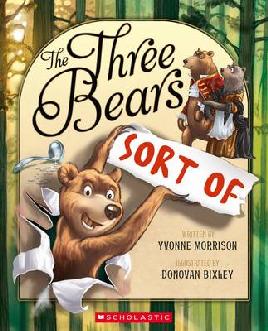
Picture Book Nook: The Three Bears (Sort of) by Yvonne Morrison and Donovan Bixley

If you think you know the story of Goldilocks and the Three Bears then you better think again.  I’m sure you’ve never had a child pointing out the loop holes in the story as you read it before.  This is exactly what happens in Yvonne Morrison and Donovan Bixley’s new take on the story, The Three Bears (Sort of).

A mother starts to read the story of Goldilocks and the Three Bears to her son before bed, but he doesn’t just sit there quietly and listen to the story.  This boy is both switched-on and rather annoying.  His mother can only read a sentence or two before he points out an issue with the story.  First, he wants to know what sort of bears they were (Grizzly bears? Polar bears?). He also points out that daddy bears don’t live with mummy bears (mummy bears raise their cubs alone), that bears don’t have thumbs so they couldn’t pick up a pot for the porridge, and that bears would probably just eat fish instead of porridge.  Every time he questions a detail of the story you wonder why you hadn’t thought of that yourself.

The Three Bears (Sort of) is an entertaining and unique retelling of Goldilocks and the Three Bears that adults will enjoy as much as children.  Yvonne Morrison’s text will have you in stitches! It’s full of sarcasm that adults especially will love and she’s captured the voice of an inquisitive toddler and the mother (who’s making it up as she goes along) perfectly. Donovan Bixley’s illustrations are absolutely wonderful and really match the humour of the story and the way it’s being told.  The hands of the mother and son can be seen on some of the pages, as they draw or add pictures into the story.  Donovan’s Goldilocks looks both cute and bratty, and I love the facial expressions of the bears.  I think Donovan is New Zealand’s own Anthony Browne, because of the way he adds extra details into his illustrations that add another layer to the story.  On the very first page, above the publication details, there are some interesting objects on the mantelpiece, including soft toy bears, a card for a locksmith, and a postcard from Svalbard.  You’ll also notice the tree patterns on the wallpaper.  I also really love the way that Donovan has designed the book, with the son’s interruptions inside a box on the page and in a different, childish font.  This makes it clear to see when the son is talking and when the mother is talking.

It’s perfect for reading aloud one-on-one or with a large group, and it’s ideal for acting out, as one person could be the mother and one person could be the son.  This is how we’ll be performing it at our Three Bears Breakfast at Shirley Library in Christchurch next Saturday (16 March).

5 out of 5 stars

Fast Five with David Hill

Throughout NZ Book Month I”ll be posting lots of mini interviews with New Zealand authors and illustrators.  My first Fast Five is with David Hill.

  • Why did you want to be a writer?
Became an author partly because i wasn’t much good at anything else. Also because I liked telling jokes and stories to people and making them laugh and listen. Also (No 2) because when our kids were born, I thought they were so special that I wanted the whole world to know about them – so i started writing stories about them for adults.
  • What’s the best thing about being a writer?
When you write a story / poem/ review, you’ve made something that never existed in the world before. It’s an amazing feeling, and it’s one of the special pleasures of being an author.
  •  What’s your favourite New Zealand book?
I’m a great fan of any of Maurice Gee’s books. I love the ways he mixes reality and fantasy. He turns our world into something strange and fascinating.
  • What do you love most about New Zealand?
I like the light of NZ. It’s bright and clear and very special. I also like the fact that so many of our museums, libraries, art galleries, places like that are FREE! It doesn’t happen in many other countries.
  • What do you love most about libraries?
Libraries are gyms for the mind and the imagination. You read books; your mind becomes fitter and more active. You go on trips that people who don’t read will never experience. Books provide you with this. Libraries provide you with those books!

My Brother's WarDavid Hill is the author of See Ya Simon, Aim High, Journey to Tangiwai, and My Brother’s War.