Fast Five with Rachel Steadman

  • Why did you want to be a writer?

Because I love reading so much. I could never find enough books that were exactly what I wanted to read. So that’s why I wrote my own.

  • What’s the best thing about being a writer?

You get to write :).  Most writers seem to really like finding out new things. I think most writers are little like ‘fact magpies’ we get to learn new stuff every day and we can call it ‘research.’ For example, through writing A Necklace of Souls, I learned a lot about knife fighting. I read a whole lot (and watched a lot of you-tube videos) about Kali knife fighting, which is from the Philippines. And I know how long an English longbow is – over seven foot. That is taller than most men. Do you know, if you use a long bow a lot, the bones in one arm grow heavier than the other? Skeletons of archers have bigger left arm-bones than the right.  That is why writing is so cool, you get to learn random stuff every day. (Makes you good in quizzes, too!)

  • What’s your favourite New Zealand book?

I have lots of favourite books. It’s pretty hard to pick just one. At the moment, my favourite NZ book is Tu, by Patricia Grace, because I like her descriptions of how war changes a family.

  • What do you love most about New Zealand?

I love the wide open skies and the white-topped mountains. And I like the way you can walk along a beach and see only your footprints. And I like the way you find strange things in unexpected places. Like last week we went to Hampden Beach, near Moeraki, and dolphins swam past.

What do you love most about libraries?

The books! And the friendly librarians…

Rachel Steadman is the author of the wonderful new YA fantasy, A Necklace of Souls.  When she’s not writing Rachel works for the Ministry of Health and she enjoys hiking, cycling, running and reading.

Fast Five with Roger Hall

  • Why did you want to be a writer?

So girls would like me. (It didn’t work.)

  • What’s the best thing about being a writer?

You can get to work in less than a minute.

  • What’s your favourite New Zealand book?

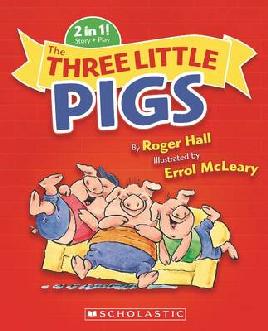
The Three Little Pigs by…..me.

  • What do you love most about New Zealand?

Serious now: the small population.

  • What do you love most about libraries?

They are a mark of a civilised society.

Roger Hall is one of New Zealand’s most well-known playwrights.  He has written for the stage, as well as scripts for radio, television and for children.  Roger’s retelling of The Three Little Pigs has recently been published by Scholastic New Zealand, which includes a play for five characters.

Fast Five with Michael Oehley

  • Why did you want to be a writer?

I wanted to write since I was a little boy. There has never been a time when I didn’t want to be a writer. I think I was born to write.

  • What’s the best thing about being a writer?

Being able to make up a whole world in my imagination and put it to paper. It’s pretty cool.

  • What’s your favourite New Zealand book?

Probably the stories of Barry Crump – he wrote really good yarns.

  • What do you love most about New Zealand?

It’s the best country in the world to live in – and I’m not just making that up! Lots of international lists have New Zealand in the top five places to live. We’ve got some of the best schools and hospitals. We’re safe and clean, and Kiwis are rated the friendliest people in the world.

  • What do you love most about libraries?

Libraries are a great place to escape and find another world to read about.

Michael Oehley is the author of The 4 Powers of Daren Saner and The Vitality Code. When he’s not writing Michael works as a doctor in remote Australian hospitals and loves to travel.

Fast Five with Craig Smith

  • Why did you want to be a writer?

Watching kids laugh and have fun is my idea of a good time.

  • What’s the best thing about being a writer?

Watching kids enjoy the stories and songs.

  • What’s your favourite New Zealand book?

Baa Baa Smart Sheep.

  • What do you love most about New Zealand?

The lifestyle, the people and the beauty.

  • What do you love most about libraries?

How they’re slowly becoming more like community centres, where not only can you learn/have fun from reading books but do all the other things that modern libraries have to offer.

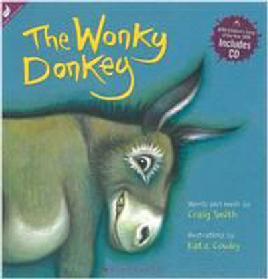
Craig Smith is a musician and the creator of The Wonky Donkey, Willbee the Bumblebee and Kaha the Kea.  Craig has also produced his own children’s album, Not Just for Kids.

Fast Five with Diana Noonan

  • Why did you want to be a writer?

I wanted to be a painter but found I couldn’t paint well enough to please myself, so I decdied to be a writer and “paint with words” instead.

  • What’s the best thing about being a writer?

I get to work in my own home with my beautiful garden, beach, forest, donkeys, and chooks just outside the window. And, every day, I get to be at home with my wonderful husband of 27 years. I am able to become excited about an idea and then bring that excitement to fruition by producing a piece of writing. Writing gives me an outlet for expressing the things that are most important to me.

  • What’s your favourite New Zealand book?

Barbara Anderson’s short stories are a favourite, as are Owen Marshall’s. I also adore Ronald Hugh Morrison’s work.

  • What do you love most about New Zealand?

I love the political stability we have in New Zealand. I have visited many countries over the years, because I love to travel and learn about new places, and I feel grateful each time I work in the garden that I don’t have to be concerned about encountering a landmine. I am always mindful that I will still be in the same place to harvest the food I grow because war won’t have been forced to leave my home.

  • What do you love most about libraries?

I love the feeling that the whole world is there before me, in words and colour. Because I live in a very rural place, I’m often rushing when I’m visiting the city, with a thousand things to get done, so on the rare occasion that I do have time, it’s a real treat to have hours to just sit and look at books.

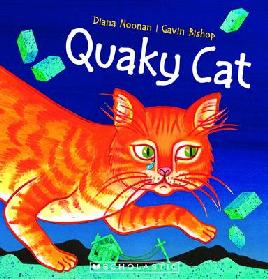
Diana Noonan is the author of many books, from educational readers to picture books and nonfiction.  Her books, which include The Best-loved Bear and The Best-dressed Bear, are family favourites.  Quaky Cat, which was illustrated by Gavin Bishop, raised thousands of dollars for Christchurch charities and helped Christchurch children through the recent earthquakes.

Fast Five with Sharon Holt

  • Why did you want to be a writer?

I was naturally good at it and I loved reading. I believe we are born with talents and gifts and that was one of mine. I am also very passionate about writing, reading and books.

  • What’s the best thing about being a writer?

The best thing is getting feedback that your hard work has made other people happy.

  • What’s your favourite New Zealand book?

Most things by Kate DeGoldi – at the moment, it’s The 10pm Question and The ACB with Honora Lee.

  • What do you love most about New Zealand?

Everything! The friendly people, green open spaces, positive can do attitudes and easy going lifestyle.

  • What do you love most about libraries?

Everything! I would live in one if I could! My happy place is sitting among piles of picture books. (Librarians are great people too!)

Sharon Holt is the author of novels, picture books and the wonderful Te Reo Singalong series.  Her books include two of the My New Zealand Story books, No Survivers and Sabotage.

Fast Five with Nikki Slade-Robinson

  • Why did you want to be a writer?

Why not!  I think if the ideas are there, and the characters are demanding to be let out, you don’t get much choice really.  Writing and illustrating was always my dream.  And luckily my parents let me have plenty of paper so I didn’t have to draw and write on the walls.

  • What’s the best thing about being a writer?

Ooooh it’s soooo fun!  I put writing and illustrating together because I do both.  I can spend lots of my day playing with my imagination and not many jobs let you do that.  I love being self employed too, and having so much flexibility.   It’s also very cool when you see one of your books picked up and turned into something else like a show.

  • What’s your favourite New Zealand book?

Oh that’s not fair – there are so many wonderful NZ books, how can I choose just one?  Is it ok to list a few?  I do love Jack Lasenby’s ‘The Lake’ and his Seddon St gang ones.  Nobody can go past Margaret Mahy of course, horracapotchkin! (Oh dear – did I spell that right?)  And I use Andrew Crowe’s ‘Which NZ Insect?’ a lot.  Des Hunt’s books because they are set in areas I know… Joanna Orwin – oh there’s so many good writers here – sigh!  In terms of picture books, that too is really hard to choose.  I just really enjoy being able to read NZ stories.

  • What do you love most about New Zealand?

The environment.  We do live in paradise really, you only need to travel away from here to realise how good we really have it.  And our society, really it’s great.  I just hope we can all look after it and really cherish what we have.

  • What do you love most about libraries?

We’ve got this really old picture book about a little boy who can hold an elephant and a lion and a rocket under one arm.  He can hold anything you can think of under his arm.  And at the end you find out it’s because he can go to the library and get a book about anything out.  Libraries are like that – you can find so much there… and it’s free so nobody has to miss out.

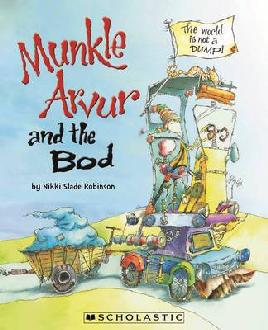
Nikki Slade-Robinson is an author and illustrator whose books include Munkle Arvur and the Bod, That’s Not Junk! and Hannah Bandanna’s Hair.  Nikki has also illustrated books for other authors, including Mind Your Gramma and The Seven Stars of Matariki.

Fast Five with Sherryl Jordan

  • Why did you want to be a writer?

I wanted to write books even before I could write. My first book, made when I was four years old, was a picture story about a little mermaid. I had to draw pictures to make the book, because I couldn’t write. The book doesn’t exist anymore (it probably went up the vacuum cleaner!) but my love of books and writing has never left me.

  • What’s the best thing about being a writer?

I get paid to day-dream.

Also, it’s an awesome thing to live in the world inside my head, the world of the imagination. While I’m writing a book, that imagined world is much more real to me than this world.  Another wonderful thing about being a writer is receiving letters from readers who love my stories. It’s amazing to realise that my dreams have been shared by someone else.

  • What’s your favourite New Zealand book?

Ah… a hard question. I have several favourite NZ writers – Margaret Mahy and Joy Cowley at the top — but no single book I love the best.

  • What do you love most about New Zealand?

Freedom of speech. The freedom to write what we want to write, and not be imprisoned for it.

  • What do you love most about libraries?

A library is like a cave full of treasure — every book another world to be explored, another dream to be shared. What riches! I always feel overwhelmed in a library, hoping I choose the right world for me, and don’t miss out on another one that I’d also love.  Mind you, books can be dangerous, too … a book could change your life.  My life has been changed several times, by books I’ve read.

Sherryl Jordan is the author of many wonderful books in her long career, including Rocco, The Wednesday Wizard, The Raging Quiet, Finnigan and the Pirates, and her latest book Ransomwood.

Fast Five with David Hill

Throughout NZ Book Month I”ll be posting lots of mini interviews with New Zealand authors and illustrators.  My first Fast Five is with David Hill.

  • Why did you want to be a writer?
Became an author partly because i wasn’t much good at anything else. Also because I liked telling jokes and stories to people and making them laugh and listen. Also (No 2) because when our kids were born, I thought they were so special that I wanted the whole world to know about them – so i started writing stories about them for adults.
  • What’s the best thing about being a writer?
When you write a story / poem/ review, you’ve made something that never existed in the world before. It’s an amazing feeling, and it’s one of the special pleasures of being an author.
  •  What’s your favourite New Zealand book?
I’m a great fan of any of Maurice Gee’s books. I love the ways he mixes reality and fantasy. He turns our world into something strange and fascinating.
  • What do you love most about New Zealand?
I like the light of NZ. It’s bright and clear and very special. I also like the fact that so many of our museums, libraries, art galleries, places like that are FREE! It doesn’t happen in many other countries.
  • What do you love most about libraries?
Libraries are gyms for the mind and the imagination. You read books; your mind becomes fitter and more active. You go on trips that people who don’t read will never experience. Books provide you with this. Libraries provide you with those books!

My Brother's WarDavid Hill is the author of See Ya Simon, Aim High, Journey to Tangiwai, and My Brother’s War.

Interview with Life in Outer Space author Melissa Keil

If you’ve read my review of Life in Outer Space you’ll know how much I loved it.  Life in Outer Space is Melissa Keil’s debut YA novel and Melissa was lucky enough to have it published as part of the Ampersand Project.  I’m incredibly thankful to the Ampersand Project and Hardie Grant Egmont for publishing Melissa’s wonderful story, as I still can’t get it out of my head.  Melissa kindly answered some of my questions about Life in Outer Space.

  • Sam’s voice is so authentic that I’m sure you have a teenage guy trapped inside you.  Did Sam’s voice come to you easily?

Thanks – that is very flattering (in an odd way!) Sam’s voice was really the catalyst for the novel – one of those weird writing moments where one second he wasn’t there, and then he just was. In the back of my mind I was always aware that I was writing the experience of a person who I had never been, but I chose early on not to let it hamper me. I did make some conscious decisions about certain ‘boy’ things – the way he would interact with his friends, for instance (and writing conversations between teenage boys was lots of fun!) But Sam always felt like a real person to me, and his voice was the driving force behind the story.

  • Which of your characters are you most like?

I guess there are little parts of me in all of these people; Sam’s befuddlement about the world around him was quite familiar to me in high school! I never had Camilla’s confidence or self possession, but perhaps a little of her optimism. I guess in a weird way I even relate to Adrian social awkwardness – but to me they were always people in their own right.

  • Do you have a hidden talent, like Sam’s screen writing or Camilla’s song writing?

I definitely have no musical abilities (I have mastered a few chords on guitar, but that’s about it). I do have a talent for storing useless trivia. I suppose writing was my ‘hidden’ talent for a long time; I was with my writing group for almost a year before I worked up the courage to actually bring some writing to workshop. It took quite a bit of prodding to send Life in Outer Space out to a publisher! If it wasn’t for my writing group, I think my ‘hidden’ talent would have remained hidden for quite a while longer.

  • If a movie were made of your book and you had an unlimited budget who would you want to play Camilla?

Wow, that is a very cool thing to be thinking about. One of the things I love doing when I’m writing is creating ‘mood boards’ for my characters – I have pages and pages of images of the clothes that they wear and the minutia of their bedrooms, right down to their jewellery and books – but in all my research, I’ve never found a real-life person who I think is right for either Sam or Camilla. I have her voice and face so clearly in my mind that it’s hard to equate her with anyone in the real world – I guess she would have to be an unknown! With, you know, musical ability, and great hair.

  • Sam says that everything useful he knows about real life he has learnt from the movies.  What’s the most important lesson that you’ve learnt from the movies?

Never ignore the quiet, bespectacled person in the corner; they’ll always turn out to be the most fascinating (and gorgeous) person in the room. Or they’ll turn out to be an insane serial killer. But most often, the first one.

  • Like the best movies Life in Outer Space is full of great, witty dialogue.  Did you find your characters having conversations in your head even when you weren’t writing?

Absolutely. I spent a lot of time ‘researching’ (read: procrastinating) by hanging out at the places they visited in the book and just imagining them chatting. It really did feel like they were with me all the time – I was that vague-looking person standing in the middle of the Astor Theatre or Minotaur just staring into space, usually with a note book in hand.

  • Camilla has an obsession with 80s movies.  What’s your favourite movie era and why?

As a film buff with wide and weird tastes, that is a very hard call. My favourite movies come from pretty much every era; I love those great Film Noir movies of the 40s and 50s, and I am a little obsessed with contemporary superhero movies. And I love Star Wars, though the first film was made before I was born. Even though I was a teenager in the 90s, I do have a soft spot for the teen movies of the 80s (The Breakfast Club gets a periodic re-watch every few months). There is something in the tone of 80s teen movies that I really wanted to capture; I love that the good ones can take what are, on the surface, stock characters, and imbue them with personality and warmth and heart.

  • Were there any scenes in the first drafts that didn’t make the final cut that would make your blooper reel?

Or directors cut? There were a few! One of the bits I had to lose was the scene where Sam asks Allison to the dance. In the first draft, right before he asks her, he mentions that he sometimes tries to frame uncomfortable conversations as pieces of a screenplay – I had a lot of fun writing that ‘screenplay’ dialogue between them, but it really was superfluous to the plot so didn’t make the final draft. And because these characters were always nattering in my head, I have lots of half-finished scenes which were only ever intended to be for me, for the purposes of character building and fleshing out the time between chapters – for instance, at some point in the book, Sam mentions in passing that he spent a few hours on the phone with Camilla talking about the screenplay of Alien – I may have this conversation between them somewhere in my notes as well.